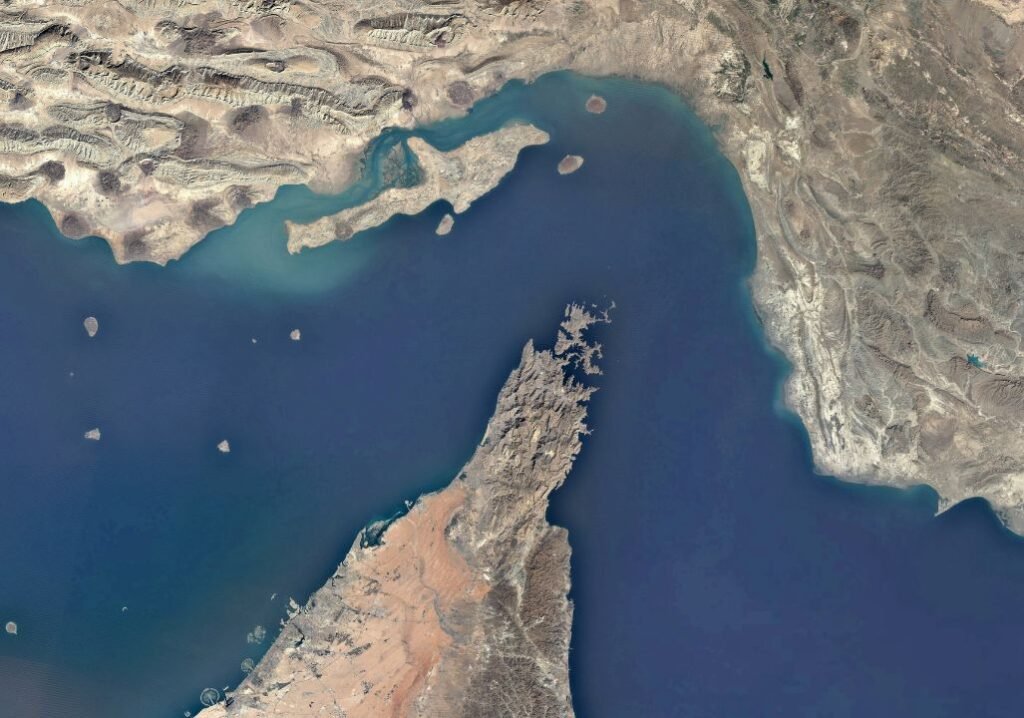
The Gulf woke on Friday to a familiar mix of diplomatic signalling and maritime unease. Shipping around the Strait of Hormuz is under growing strain, and Washington has still not said whether it will resume military operations against Iran. For residents of the UAE, the question is no longer abstract.
Attacks on shipping continue
The Joint Maritime Information Centre, in an advisory circulated through the UK Maritime Trade Operations office on Thursday, recorded four attacks in the strait over the previous 96 hours. The prior reporting period had seen three.
All four incidents took place within roughly 52 hours between 1 and 3 November, off the Musandam coast of Oman. Separately, UKMTO said a tanker was hit by two unidentified projectiles about 50 nautical miles north of Qatar on Thursday.
Tehran has given its own account. It said two oil tankers and a tugboat caught fire after trying to use “unauthorised” routes through the waterway. Traffic through the strait remains well below pre-conflict levels, and that keeps pressure on shipping costs and energy supply chains.
On Friday, Iran’s Revolutionary Guard also claimed it had brought down a fifth and sixth American drone over Qeshm Island, according to Iranian state-linked media. There has been no independent confirmation and no comment from the United States.
Washington weighs its options
President Donald Trump spoke at the White House on Thursday after meeting his national security team. He said the United States would soon decide whether to widen its military campaign. He added that he would prefer not to destroy what remains of Iran, but suggested he might have to if the country’s nuclear programme cannot be permanently contained.
He also said Iran could need 25 to 30 years to rebuild, and he acknowledged that 18 American service members have died in the conflict.
Citing US officials, Axios and Fox News reported that three paths are under review: renewed strikes, sustained economic pressure, or a negotiated settlement. No order has been announced. The USS Theodore Roosevelt is reportedly heading for the region and is expected to reach US Central Command’s area by mid-November, joining two other carrier strike groups.
The timing matters politically as well. The US midterm elections took place on Tuesday, and Democrats are reportedly preparing to challenge how the administration has handled the conflict and its military authority.
Tehran’s position
Iran has reportedly sent a nuclear proposal to Washington through Qatar, which keeps a channel open. But Tehran is insisting on seven conditions, with sanctions relief among them, before it will agree to any settlement. Foreign Minister Abbas Araghchi has been speaking with regional counterparts about security and de-escalation.
The gap between the two sides is still wide. Sanctions, limits on Iran’s nuclear work and security guarantees remain the main sticking points.
Moscow enters the picture
On Thursday, Russian President Vladimir Putin received Iranian security chief Mohsen Rezaei in Moscow. Rezaei reportedly carried a letter from Iran’s Supreme Leader, Mojtaba Khamenei. He also said Russia would build a gas pipeline to Iran, which he described as a way for Tehran to ease its own domestic gas use and sell Russian gas to neighbouring markets. The meeting suggests Moscow intends to stay closely involved.
What it means for people in the UAE
For residents, the practical effects show up in three areas.
Air travel. Several airlines have cancelled or delayed services on routes linking the UAE with Saudi Arabia. Etihad has extended its Riyadh and Dammam cancellations to 19 November. Emirates has also pulled a number of services.
Shipping and energy. Any further disruption in Hormuz could push up freight costs and unsettle oil markets, with knock-on effects for fuel and imported goods.
Security. The wider environment remains tense, even though diplomatic channels are open.
What to watch next
Four developments will matter most in the coming days. The first is any announcement of renewed US military action. The second is further incidents in or near the strait. The third is Qatar’s mediation, and whether Tehran softens its demands. The fourth is changes to airline schedules.
Until Washington decides, the region is in a holding pattern. Diplomacy and military preparation are moving in parallel, and the next few days may show which one prevails.


Comments 1