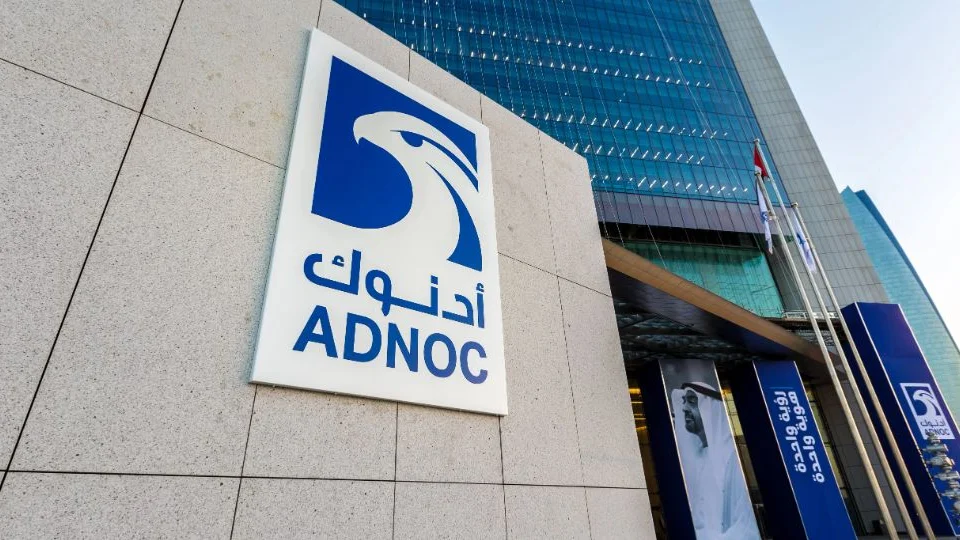
Abu Dhabi’s biggest energy company is about to become a testing ground for some of the most advanced artificial intelligence in the world.
ADNOC and the AI group G42 signed a multi-year agreement with OpenAI on Monday to deploy its frontier technology across ADNOC’s operations. ADNOC chief executive Sultan Al Jaber said it makes the company the first in the energy sector to adopt the platform. The signing took place at ADIPEC, the oil and gas gathering under way in the capital, and OpenAI chief executive Sam Altman travelled to the UAE for it.
What the ADNOC agreement covers
According to ADNOC, the technology will run on G42’s sovereign AI infrastructure inside the UAE. That detail matters. Keeping the systems on domestic infrastructure addresses concerns that energy companies, governments and regulators often raise about where sensitive operational data is processed.
The company has not published a list of specific applications. But large energy producers typically look to AI for tasks such as analysing seismic and reservoir data, scheduling maintenance, managing supply chains and monitoring safety. The announcement positions ADNOC as an early mover in applying such tools at industrial scale.
Four deals in one day
The ADNOC agreement was one of four signed in Abu Dhabi on Monday, according to the Abu Dhabi Media Office, as Altman met Crown Prince Sheikh Khaled bin Mohamed bin Zayed Al Nahyan.
- Investment: Mubadala, the emirate’s sovereign investor, and G42 unit Inception42 signed agreements to apply AI to investment analysis, opportunity identification and risk assessment.
- Business and education: Inception42 also signed a five-year arrangement to bring OpenAI’s models to businesses and schools across the UAE, according to technology outlet The Next Web.
- Government: The Abu Dhabi Government announced a “Machine-Readable Government” initiative, which will turn policies and regulations into a form that AI systems can read. Its first pilot is with the Abu Dhabi Agriculture and Food Safety Authority, where the models will help check permit and certificate applications against official rules.
Altman said the UAE is setting a global standard for how AI can be woven into both public and private sectors, and argued that the benefits should reach everyone.
The infrastructure behind the ambition
The deals sit on top of a much larger physical build-out. G42’s Khazna Data Centres is developing a one-gigawatt computing cluster inside the planned five-gigawatt UAE-US AI Campus in Abu Dhabi. OpenAI, Oracle, Nvidia, Cisco and SoftBank are named as partners. G42 is also building OpenAI’s Stargate data centre in the country.
Abu Dhabi’s investors are deeply involved on the financing side as well. MGX, the emirate’s AI-focused investment vehicle, co-led OpenAI’s $122 billion fundraising in March, according to CNBC. Reuters has reported, citing sources, that OpenAI is now seeking new commitments, including from MGX, in a round that could value the company above $1.4 trillion. Neither company has confirmed those terms.
Scrutiny remains part of the picture
Not everyone views the partnership without reservation. G42 has previously drawn attention from US lawmakers. A House select committee once raised concerns about the company’s links to entities including Huawei and the Beijing Genomics Institute, and named several American firms as doing business with it. Microsoft invested $1.5 billion in G42 in April 2024 under an arrangement it said was developed in consultation with both the UAE and US governments.
The Emirati side has consistently presented its AI strategy as a partnership with the United States, and the new agreements reinforce that framing by building on US technology and US-linked infrastructure.
Why it matters for the UAE economy
For the UAE, the logic is straightforward. The country has spent years positioning itself as a hub for AI talent, computing power and capital, and has argued that applying the technology across its flagship industries is the fastest way to turn investment into productivity. Energy is the obvious first target, because it still underpins the national economy and because ADNOC operates at a scale where even small efficiency gains are large in absolute terms.
The deals also arrive at a sensitive moment for the sector. With shipping through the Strait of Hormuz disrupted and oil prices volatile, energy companies are under pressure to run more resiliently and with fewer surprises. AI tools that can forecast, optimise and flag problems early are likely to be judged against that backdrop.
What to watch next
Several questions remain open: which ADNOC operations will go first, how performance will be measured, and how the sovereign infrastructure will handle the sensitive data involved. ADIPEC runs until 5 November, so further announcements from Abu Dhabi are likely before the week is out.


