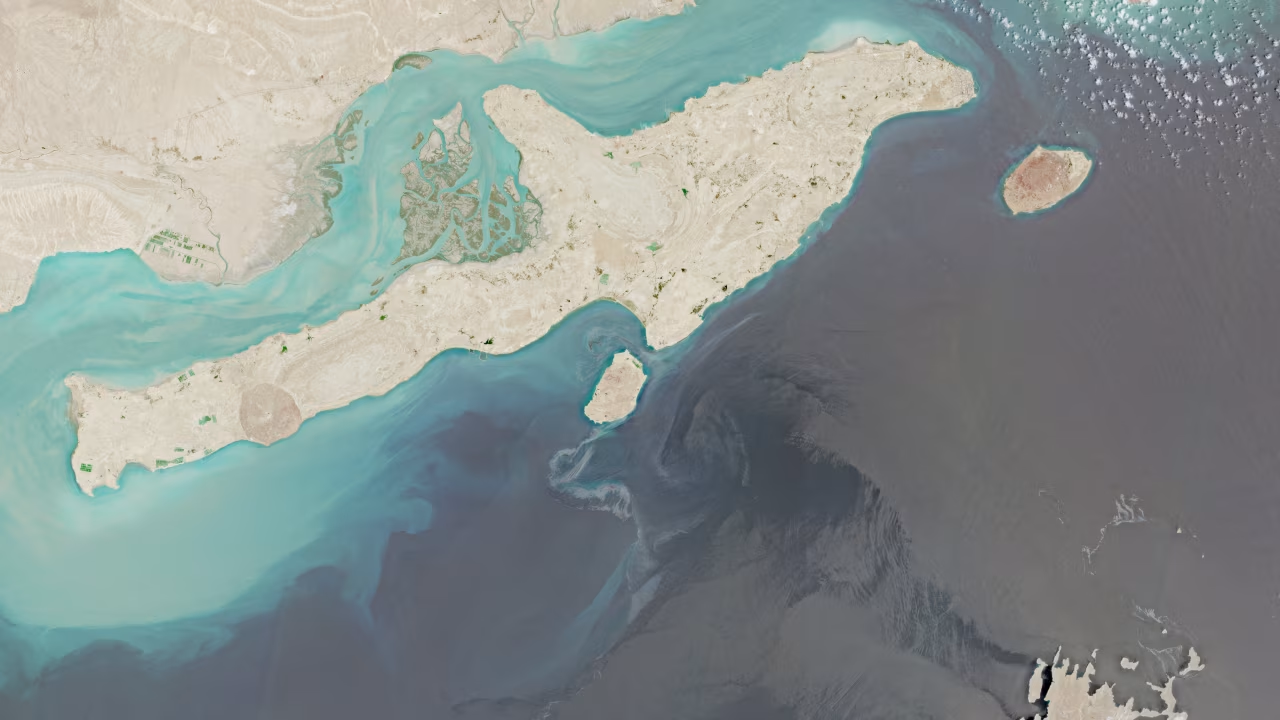
US forces struck targets on Iran’s Qeshm Island late on Monday, according to American media reports citing officials. The strikes add fresh uncertainty to a war now in its eighth month, and to the diplomacy that is trying to end it.
A US official described the operation as limited and defensive, saying it was aimed at Iranian forces that had been firing surface-to-air missiles at American assets. Iranian state media reported five explosions on the island, and residents said they saw two aircraft overhead. Tehran’s version of events differs from Washington’s, and neither account has been independently verified.
Why Qeshm matters
Qeshm is the largest island in the Strait of Hormuz, the narrow waterway through which roughly a fifth of the world’s oil and liquefied natural gas normally travels. Military activity there is felt quickly in shipping lanes, insurance markets and fuel prices. That is why an overnight exchange of fire near one island can move crude futures by morning.
Talks continue alongside the strikes
The timing is awkward for both sides. US Vice President JD Vance has said indirect negotiations are making progress, and President Donald Trump has said a deal with Tehran “could happen”. Iran, for its part, insists the US must lift its naval blockade of Iranian ports before any agreement is possible. It also wants guarantees that Washington will honour whatever is signed.
Qatar is acting as the main go-between. Its mediators held two rounds of talks with Iranian officials last week, and the discussions reportedly centre on a simple exchange. Iran would stop attacks in the strait, and the US would ease its blockade. Tehran says its proposal could be put into effect within 48 hours, down from an earlier timeline of seven days. China has also said it will send a special envoy to Iran, Oman and Saudi Arabia in early to mid-November.
The midterm shadow
Today’s US midterm elections hang over the whole situation. Israeli Prime Minister Benjamin Netanyahu has reportedly urged Trump to order fresh strikes on Iran once the vote is over. Trump has not committed to that. US officials have also reportedly warned regional allies to prepare for possible action after the midterms, and for Iranian retaliation.
Shipping under strain
The picture on the water is murky. Iran’s Revolutionary Guards say two crude tankers caught fire after hitting sea mines in the strait, a claim that has not been independently confirmed. Gulf states have condemned Friday’s attack on a Qatari LNG carrier, and UK maritime monitors reported that an unidentified projectile hit a vessel off Oman’s coast. The ship and its crew were reported safe.
Iran says it harbours no hostility toward its Gulf neighbours but will respond if their territory or military facilities are used against it. US Central Command rejects that framing. It accuses Tehran of targeting civilian infrastructure and says attacks on commercial vessels have killed more than 20 mariners in recent months.
Markets react
Oil traders have been trading the diplomacy more than the violence. Brent crude settled 7.63 per cent lower at $104.77 a barrel on Monday on optimism about a breakthrough. It edged up about 0.5 per cent to roughly $105.25 in early Asian trading on Tuesday after the Qeshm reports. A prolonged disruption in Hormuz would raise shipping and insurance costs and could strain supply chains well beyond the region.
The UAE’s position
Anwar Gargash, diplomatic adviser to the UAE President, said in recent days that the country hopes the US and Iran can reach a diplomatic breakthrough but remains “braced for the worst”. He warned that another round of fighting would not serve the interests of the region and called for political and diplomatic solutions.
For residents, daily life continues. There has been no general shutdown of businesses, schools or airports in the UAE. The practical effects are being felt in travel schedules, shipping costs and energy prices, and officials continue to urge people to rely on verified announcements rather than social media rumours.
What to watch next
Three things will shape the coming days: whether Qatar’s mediators can convert their latest rounds into a signed arrangement, whether Washington acts after the midterms, and what Beijing’s envoy achieves on his regional tour. The situation remains fluid, and updates are likely to come quickly.


Comments 1