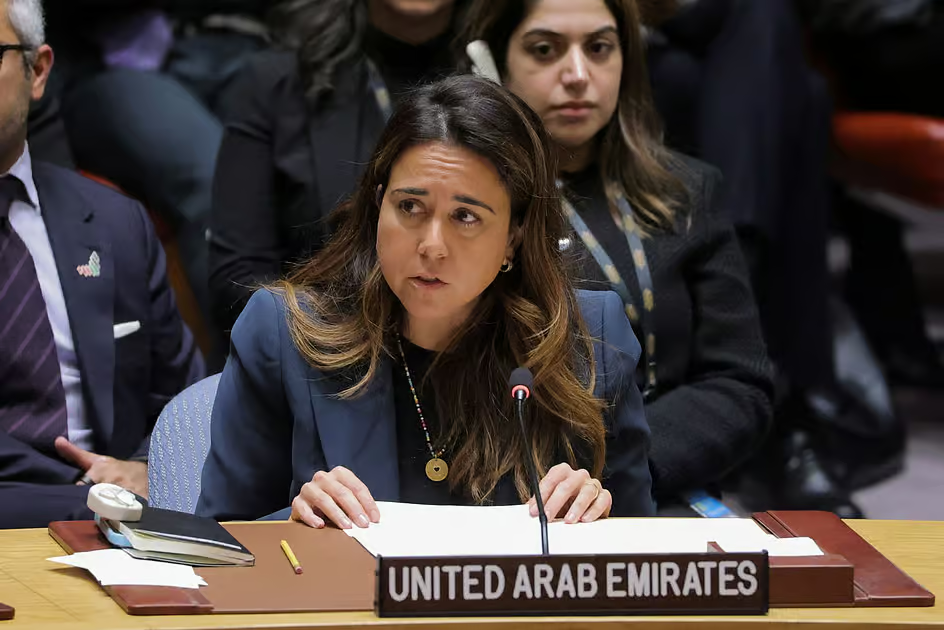
Senior UAE officials have pushed back against Iranian criticism of Lana Nusseibeh’s campaign to become the next secretary-general of the United Nations, defending the Emirati diplomat’s record as a consensus-builder.
The exchange began on Sunday, when Iranian Parliament Speaker Mohammed Bagher Ghalibaf, who is also Tehran’s top negotiator in talks with the United States, questioned Ms Nusseibeh’s agenda in a post on X. Ms Nusseibeh has since responded, telling Bloomberg that if chosen she would pursue dialogue with Iran as she would with every member state, in the interest of peace and stability.
Gargash: criticism lacks objectivity
Dr Anwar Gargash, diplomatic adviser to President Sheikh Mohamed, said debate over Ms Nusseibeh’s agenda was welcome but that Mr Ghalibaf’s comments lacked objectivity. He said they also ignored the purpose for which the UN was founded: to promote dialogue and resolve disputes, not to deepen hostilities or settle scores.
Dr Gargash described Ms Nusseibeh as a professional known for bridging differences and putting diplomacy first, qualities he said would naturally draw objections from hardline voices.
Federal National Council member joins the response
Dr Ali Al Nuaimi, chairman of the Federal National Council’s defence, interior and foreign affairs committee, went further. He accused Mr Ghalibaf of trying to lecture the UAE despite Iran’s record of fuelling instability in the region. He said Ms Nusseibeh stood for diplomacy, competence and the courage to build bridges, while Iran’s rhetoric reflected the mindset behind much of the suffering in the Middle East. The region, he added, deserves a future shaped by those who build peace rather than those who profit from conflict.
The race to succeed Guterre
Ms Nusseibeh entered the contest last Wednesday, after no clear front-runner emerged among the eight other candidates. Her campaign has drawn support from a wider range of countries. Antonio Guterres’s second and final term ends at the close of the year, and Security Council members have held several informal votes on a successor without reaching a consensus.
For readers following the process, the secretary-general is formally appointed by the UN General Assembly on the recommendation of the Security Council. Its five permanent members each hold a veto, which is why informal “straw polls” matter so much. Candidates need to avoid strong opposition from any of them, and that dynamic makes early diplomatic skirmishes such as this one closely watched.
Ms Nusseibeh has called for generational change at the organisation and pledged to reform the UN with clearer priorities if elected. She would be the first woman to lead the UN and only the second Arab, after Egypt’s Boutros Boutros-Ghali. She was appointed the UAE’s ambassador to the UN in 2013 and previously held several posts in the Ministry of Foreign Affairs.
A tense regional backdrop
The war of words comes at a delicate moment. Gulf News counts today as Day 240 of the US-Israel war with Iran. US President Donald Trump has renewed warnings over a nuclear-armed Iran while leaving room for a deal, and Iranian Foreign Minister Abbas Araghchi has said the management of the Strait of Hormuz will not return to pre-war norms.
In that climate, the UAE’s decision to answer Iran publicly, and Ms Nusseieh’s decision to pair her response with an offer of engagement, signal two parallel messages. One is that Abu Dhabi will defend its candidate firmly. The other is that she is positioning herself as someone able to talk to all sides, a key selling point in a race with no clear leader.
What happens next
No consensus candidate has emerged, and with Mr Guterres’s term ending in December, the window for a decision is narrowing. Ms Nusseibeh’s supporters will point to her broad backing and diplomatic record. Her critics, as the Iranian intervention shows, are already making themselves heard. How the Security Council’s informal votes shape up in the coming weeks will show whether her late entry has changed the race.


Comments 1