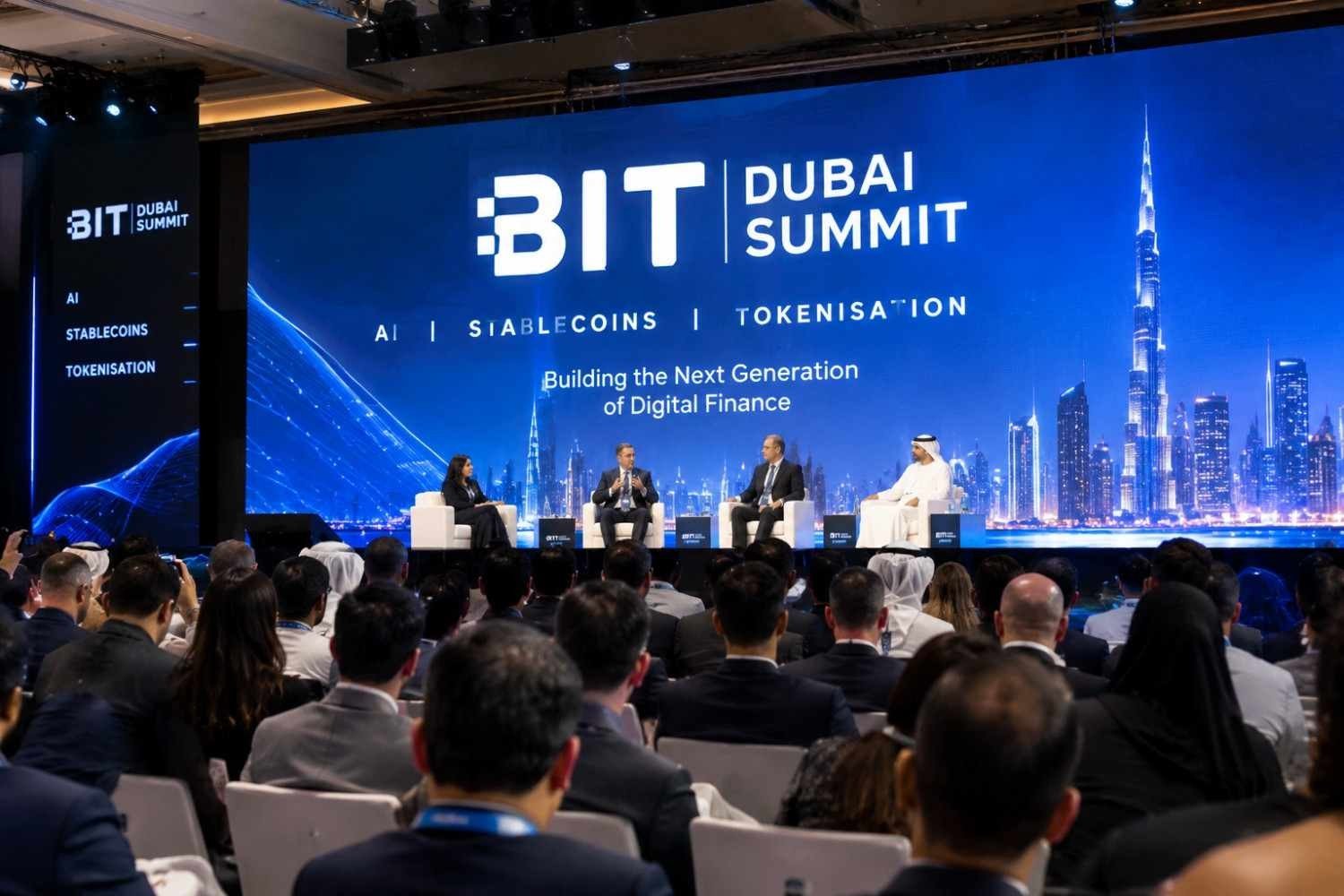
Some of the region’s most senior financial figures are in Dubai this week with a shared question. How do banks, payment firms and investors operate when money, assets and decision-making are all being rewired by technology?
More than 300 banking, fintech and financial services leaders have gathered for the Banking Innovation & Technology Summit (BIT) 2026. Airpay is presenting the event, which organises. This year’s theme is “reimagining financial services in a new global order”, and the programme covers capital, currency and the growing role of artificial intelligence in driving growth.
A forum built for disagreement
Opening the summit, Ted Kemp, Chief Content Officer, said BIT was designed to put the people who make decisions about the future of finance in the same room. He described the aim as letting industry leaders debate openly, with the sector facing change on several fronts at once.
That framing matters in a year when the financial backdrop is far from calm. Interest rates in the United States have risen again, with the Federal Reserve lifting its policy range to 3.75 to 4 per cent in September, and long-term Treasury yields have reached levels last seen in 2007. Regional tensions are also affecting energy markets and investor sentiment. Banks and fintech firms are being asked to adapt their strategies to that environment while also keeping pace with new technology.
Following the money
The opening sessions focus on capital and currency. Kemp said the first discussions would trace where global capital is choosing to land, looking at how funds are moving across markets and financial corridors.
The agenda also covers the digital routes money takes. Speakers are expected to look at mobile wallets and at how technology is widening access to credit for people who were previously shut out. These are practical questions for the Gulf, where large expatriate populations send money home regularly and where digital wallets have become part of everyday spending.
Stablecoins and tokenised assets move from theory to practice
A second strand examines the changing nature of currency itself. According to Kemp, the conversation will cover stablecoins being used to settle real transactions, not just trade on exchanges. It will also look at the tokenisation of assets, the process of representing ownership of an asset, such as property or a financial instrument, as a digital token on a blockchain.
Kemp summed up the idea by saying that assets which once sat still are now being put in motion. The summit’s organisers present both stablecoins and tokenisation as technologies moving beyond experiments into live use. The wider argument is that digital assets, blockchain infrastructure and AI are now being treated as tools that could change how money and financial services work, rather than as curiosities on the fringe.
AI at the centre of the industry’s agenda
Artificial intelligence runs through the whole programme. Banks are weighing how far to let automated systems handle customer service, risk assessment and compliance, and how much human oversight to keep in place. The summit’s live coverage has included a UAE financial firm describing a “human in the loop” approach as AI begins to take on more responsibility. The phrase captures the balance many institutions are trying to strike between efficiency and accountability.
What to watch from the summit
Several questions are likely to shape the discussions over the coming sessions:
- Regulation: how supervisors treat stablecoins and tokenised products as they move into mainstream settlement.
- Risk and control: how banks keep humans accountable as AI takes on more tasks.
- Access: whether digital wallets and new credit models genuinely reach underserved customers.
- Capital flows: where investors are putting money as rates and geopolitical risks shift.
BIT is one of several finance events on the UAE calendar, and its timing, amid higher rates and uncertain markets, gives the debate extra weight. Delegates will leave with views on each of these questions, but the outcomes will depend on regulators, banks and technology firms working through them in the months ahead.


Comments 1