A Wetter Season May Be on the Horizon
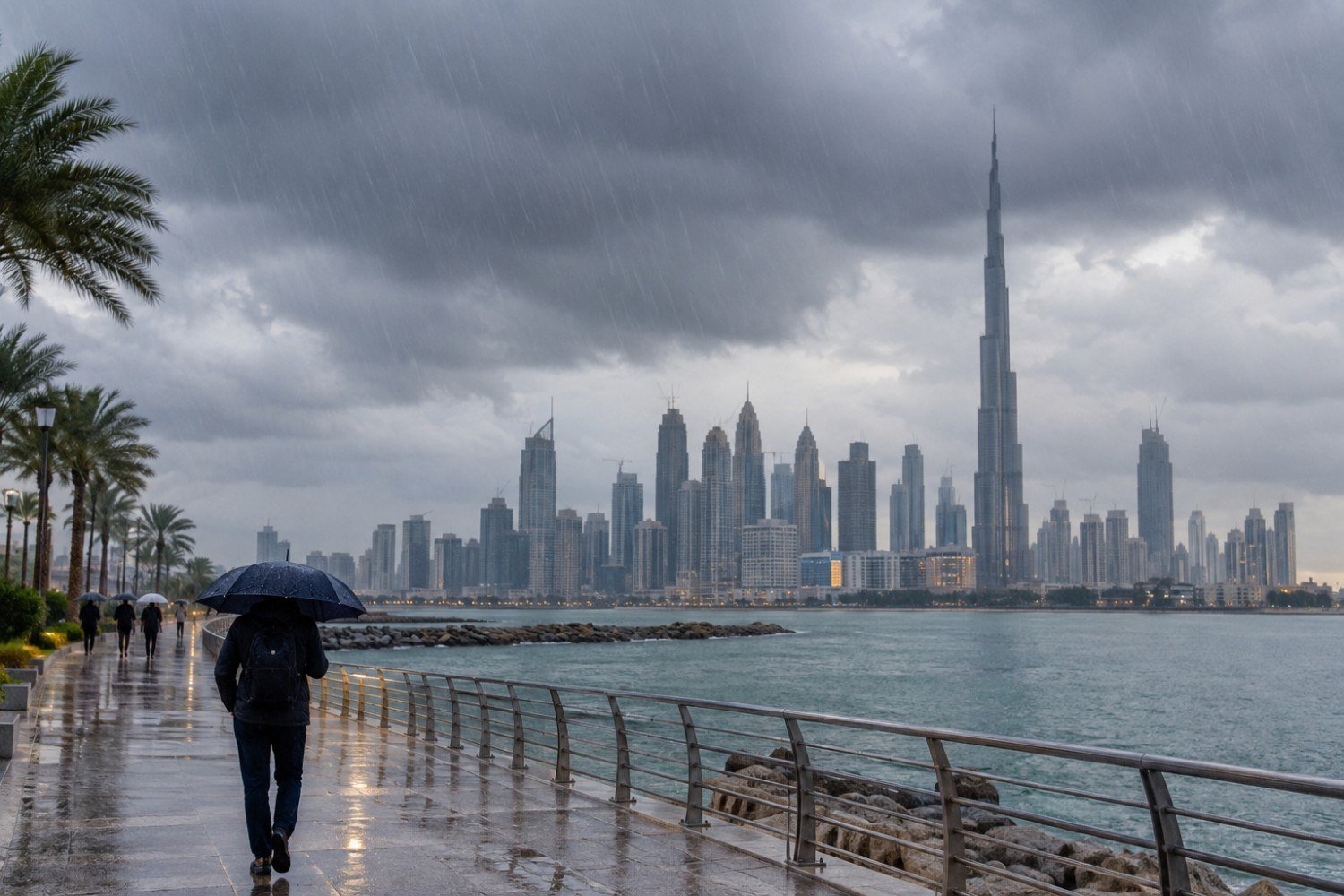
UAE residents preparing for the cooler months ahead may want to keep an umbrella within reach. According to the National Center of Meteorology (NCM), long-range weather models are pointing toward above-average rainfall across the country between October and January, as this year’s El Niño climate pattern continues to strengthen in the Pacific Ocean.
Ahmed Habib, a meteorologist at the NCM, confirmed that some forecasting models currently indicate rainfall levels higher than the seasonal norm during this stretch of the year. However, he was careful to temper expectations, noting that while the general trend points toward wetter conditions, pinning down an exact amount of rainfall with any real confidence remains beyond current forecasting capabilities.
Understanding El Niño’s Role
The renewed public interest in El Niño comes as the phenomenon — characterised by unusually warm surface waters in the eastern tropical Pacific Ocean — has been officially classified by the NCM as “very strong” this year. In a clarification issued earlier this month, the centre described the current El Niño as a broad indicator of beneficial rainfall for the region, while cautioning that such rain could, under the right conditions, turn heavy.
It’s an important distinction for residents to grasp: El Niño itself is a global climate signal, not a localised weather event. Its effects ripple outward through shifts in atmospheric circulation patterns that touch nearly every region of the planet, from East Asia to Europe to the Americas, but how — or whether — those shifts translate into actual rain over any single country depends on a separate set of local atmospheric conditions.
Why El Niño Doesn’t Guarantee Local Flooding
Habib was explicit in separating the global pattern from what residents might actually experience on the ground. He explained that El Niño does not directly affect the UAE in isolation; rather, its influence flows through broader atmospheric shifts whose ultimate local impact can vary dramatically from one region to the next.
Historical weather data backs up this nuance, showing that El Niño has coincided with both wetter and drier periods across different years in the region, undercutting any simple assumption that a strong El Niño automatically means heavy UAE rainfall this particular season.
NCM Pushes Back Against Viral Flood Warnings
The clarification also serves a more immediate purpose: countering a wave of viral social media posts that have warned residents of imminent severe flooding, framed as a direct and certain consequence of this year’s El Niño. The NCM has urged the public to treat such claims with scepticism and to rely instead on official forecasts and advisories issued through its own verified channels.
This isn’t a new challenge for UAE meteorologists. Viral misinformation around extreme weather has become a recurring headache in recent years, particularly following the unprecedented rainfall the country experienced in previous seasons, which left many residents on high alert for any suggestion of a repeat event.
What Actually Determines Rainfall Locally
For meaningful rain to develop over the UAE, several atmospheric ingredients need to align simultaneously — including sufficient moisture and water vapour in the air, appropriate surface and upper-atmosphere temperatures, and favourable pressure systems moving through the region.
Habib pointed to atmospheric phenomena known as Rossby waves as one of the key factors influencing exactly where weather systems and any resulting heavy rainfall ultimately develop. Even with El Niño active in the background, he noted that predicting precisely which country or region within the wider Middle East might see extreme weather remains impossible this far in advance, whether that ends up being the northern Gulf, elsewhere in the region, or nowhere significant at all.
“At the moment, El Niño is active in the ocean, but the pressure system in our area is not leading to extreme weather conditions,” Habib said, underlining that current local conditions have not yet translated the broader climate signal into anything unusual on the ground.
What Residents Can Expect in the Near Term
For now, the transition into autumn is expected to follow a fairly typical pattern. Daytime temperatures are forecast to remain elevated, potentially reaching between 44°C and 46°C in the coming weeks, even as the season nominally shifts toward cooler weather. Increasing nighttime humidity is also expected to raise the likelihood of fog or mist forming, particularly along the UAE’s coastal areas.
Staying Prepared Without Overreacting
While the NCM’s guidance stops well short of predicting a repeat of past severe flooding events, officials are encouraging residents to stay attentive to official updates as the season progresses rather than either dismissing the El Niño signal entirely or panicking based on unverified online claims. As atmospheric conditions evolve heading into October, the picture is expected to become clearer, giving both residents and businesses more concrete guidance on what the coming wet season may actually bring.


Comments 1