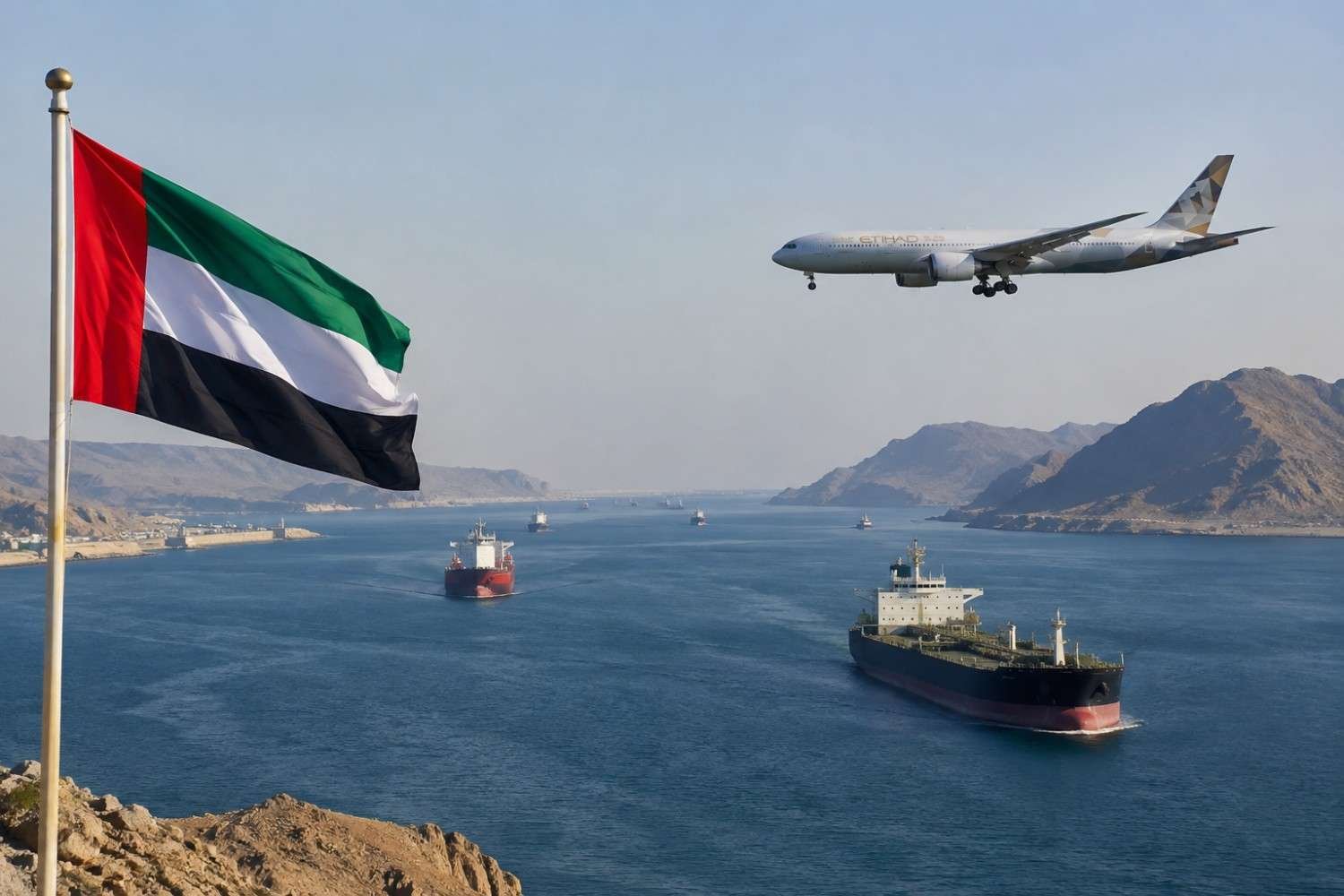
Hormuz Traffic Stirs Back to Life, But UAE Travel Disruption Lingers
The Strait of Hormuz, one of the world’s most important energy and shipping corridors, is showing tentative signs of recovery even as the broader US-Iran conflict continues to cast a shadow over aviation and maritime traffic across the Gulf. For UAE residents, that mixed picture is translating into a familiar routine: most flights and daily services continuing largely as normal, but with schedules, routes and even insurance terms still capable of shifting with little notice.
Tuesday brought a fresh round of disruption for some travellers. Air Arabia cancelled several flights linking the UAE with Kuwait and Bahrain, while Emirates, Etihad Airways and flydubai continued to operate their scheduled services, albeit alongside a mix of delays and occasional cancellations. At Dubai International Airport, multiple Emirates and flydubai flights faced delays, with services to Abha and Kochi among those cancelled outright. At Abu Dhabi’s Zayed International Airport, an Air Arabia Abu Dhabi flight to Sialkot was also cancelled.
A Corridor Under Continued Strain
Oil and tanker traffic through the Strait of Hormuz remains far below the levels seen before the conflict began, even as early indicators point toward gradual improvement. The strait, through which a significant share of the world’s seaborne oil trade passes, has functioned as one of the clearest barometers of regional stability throughout the months of hostilities between Washington and Tehran. Its slow, uneven recovery mirrors the broader pattern seen across Gulf aviation: progress, but progress that remains fragile and easily disrupted.
For households and businesses across the UAE, the practical implications are becoming increasingly familiar. Major hubs, including Dubai International and Zayed International, remain fully operational, but the underlying environment continues to be disruption-prone. Some carriers are continuing to reroute flights around higher-risk airspace, a workaround that adds flying time and can create knock-on delays across an airline’s wider network, even for passengers whose own individual flight is technically operating on schedule.
Practical Guidance for Travellers
Aviation analysts and travel advisories both point to the same piece of practical advice for anyone flying in or out of the UAE in the current environment: check flight status shortly before leaving home, and again en route to the airport. Because disruption in one part of an airline’s network can affect aircraft rotations and crew positioning elsewhere, an itinerary that looks unaffected in the morning can still shift by the time a passenger reaches the terminal.
European aviation safety regulator EASA has continued to update its guidance on the region, shifting over recent months from a broad Middle East and Gulf-wide bulletin toward more narrowly targeted conflict-zone notices. That shift reflects a partial de-escalation in parts of the region even as risk remains concentrated in specific corridors and airspace zones closer to the immediate conflict area.
A Region Adjusting to a New Normal
What is emerging across the UAE’s aviation and logistics sectors is less a story of crisis than one of adaptation. Airlines, airport operators and regulators have spent months refining contingency protocols, rerouting strategies and passenger communication systems in response to a conflict that has proven longer-lasting and more unpredictable than many initially expected. The UAE’s own air defence systems have played a central role in protecting the country’s airspace throughout the period, a factor that officials and aviation executives alike have credited with allowing airports to maintain a far greater degree of operational continuity than might otherwise have been possible.
Even so, the message from aviation officials remains one of cautious realism rather than an all-clear. Recent months have shown that spikes in regional tensions can translate quickly into delays and cancellations, even during periods that otherwise look calm. For now, the guidance to UAE residents is consistent: expect most flights to operate as scheduled, but build in flexibility, monitor official updates closely, and treat any period of apparent calm as provisional rather than permanent.
As mediators continue efforts to bring the wider conflict to a close, the pace at which the Strait of Hormuz and Gulf airspace fully normalise will remain one of the clearest signals of how quickly the region’s aviation and shipping sectors can return to pre-crisis levels of activity.


Comments 1