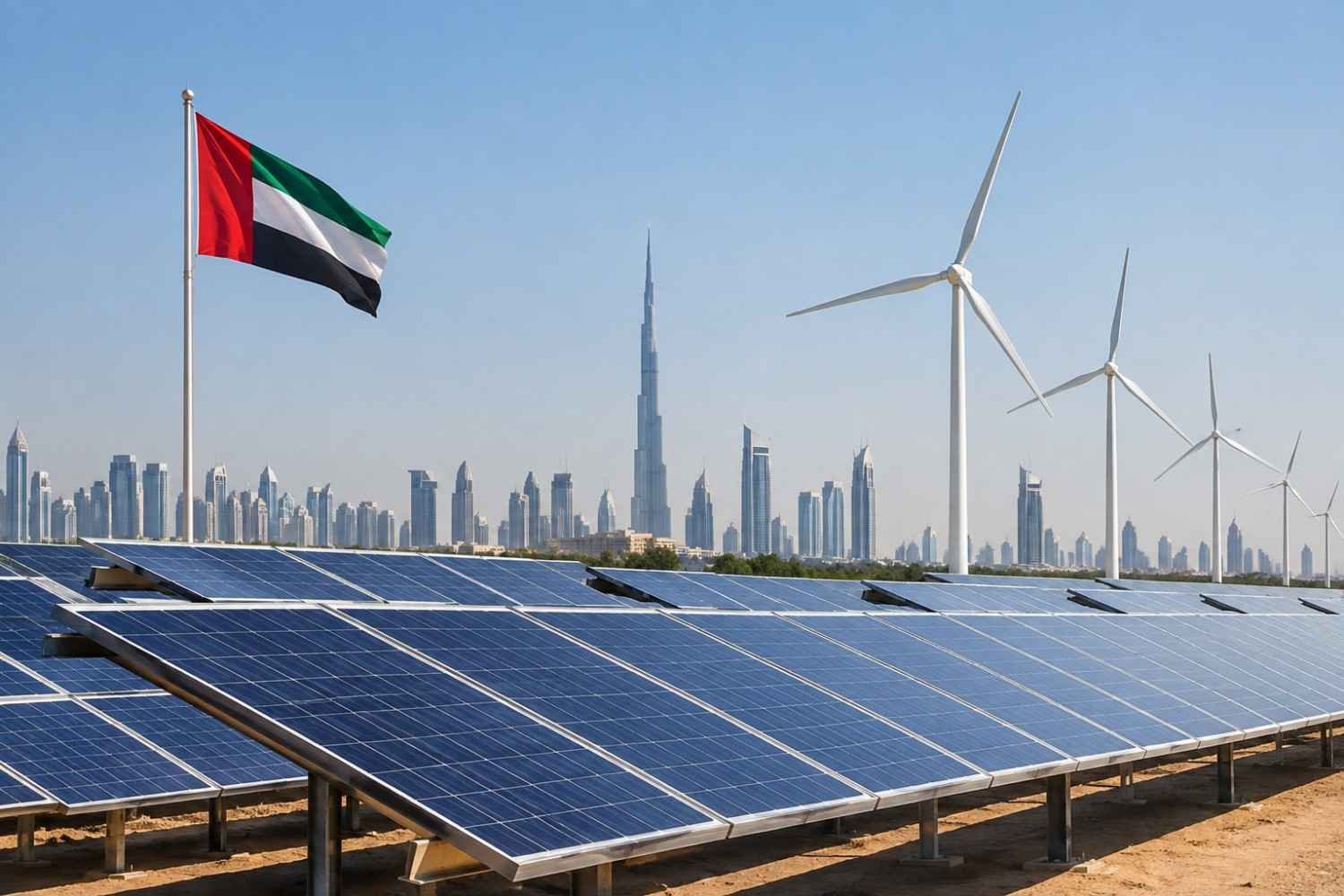
UAE Sets Higher Bar for Clean Power as Battery Breakthroughs Change the Math
The UAE has quietly raised the stakes on its energy transition, with Minister of Energy and Infrastructure Suhail Al Mazrouei confirming that the country is now targeting 35 percent of its total energy mix from clean sources — nuclear and renewable combined — by 2030-31.
The minister shared the update on the sidelines of Middle East Energy, the region’s largest energy exhibition, held this year at Dubai World Trade Centre and drawing around 1,500 exhibitors from 70 countries. Speaking to the national news agency, Al Mazrouei framed the higher target less as an aspirational statement and more as a recalibration driven by hard economics: renewable technology has simply become cheaper and more capable than it was when the UAE’s earlier targets were set.
Why the Target Moved
At the heart of the shift is a genuine breakthrough in energy storage. Batteries capable of holding power for up to 24 hours are now reaching competitive price points, a dramatic leap from the two-to-three-hour storage windows that were standard not long ago. That change matters enormously for solar power in particular: with enough storage capacity, a solar plant can effectively supply electricity around the clock, closing the gap that has traditionally separated renewables from steady baseload sources like natural gas and nuclear power.
Al Mazrouei was explicit that the UAE’s energy strategy isn’t static — it’s being continuously updated in response to falling costs and advancing technology, rather than locked in place once targets are announced. That approach reflects a broader philosophy the country has followed since it began diversifying its energy mix: build in enough flexibility to capture new opportunities as they emerge, rather than treating any single target as final.
What It Will Take to Get There
Reaching 35 percent clean energy within roughly five years is not a passive goal. The minister was direct about what’s required: new generation projects, sharper competition among developers, and a considerably larger role for private capital in the power sector. The UAE has increasingly leaned on public-private partnerships to fund large-scale solar and nuclear infrastructure, a model officials credit with helping drive down the cost of electricity even as demand climbs.
Alongside new generation capacity, the country is investing heavily in its grid infrastructure — expanding transmission networks and building new plants designed to cut losses, improve efficiency and keep consumer electricity prices as low as possible. The underlying strategic goal, as Al Mazrouei described it, is to maintain enough surplus capacity to meet the needs of the UAE’s entire population under a range of different circumstances, whether that means population growth, industrial expansion, or unexpected demand spikes.
Part of a Bigger Regional Moment
The announcement landed against the backdrop of Middle East Energy 2026, an exhibition the minister singled out as a chance to showcase the UAE’s regulatory framework and long-term strategy to an international audience, while giving exhibitors room to demonstrate the technologies that could help the country hit its new target. With participants from 70 countries in attendance, the event has become something of a barometer for where Gulf energy policy is heading — and this year, storage technology and grid modernisation dominated the conversation.
The UAE’s clean energy push sits within a wider set of national commitments around decarbonisation and energy diversification that have taken on increasing importance as the country positions itself as a regional hub for both traditional and next-generation energy investment. Nuclear power, anchored by the Barakah plant, continues to play a significant role in that mix alongside solar projects scattered across Abu Dhabi and Dubai.
For now, the raised target gives the UAE a clearer marker to be measured against over the coming years — one that officials insist is achievable, provided the pace of private investment and technological progress that made the higher goal possible in the first place continues unabated.


Comments 1