Motorists Feel the Pinch as UAE Fuel Prices Rise for September
Drivers across the UAE are digging a little deeper into their pockets this month, after the UAE Fuel Price Committee confirmed another round of increases to petrol and diesel rates for September 2026. The revised prices, which came into effect on September 1, mark the second consecutive monthly rise following a similar uptick in August.
The New Numbers
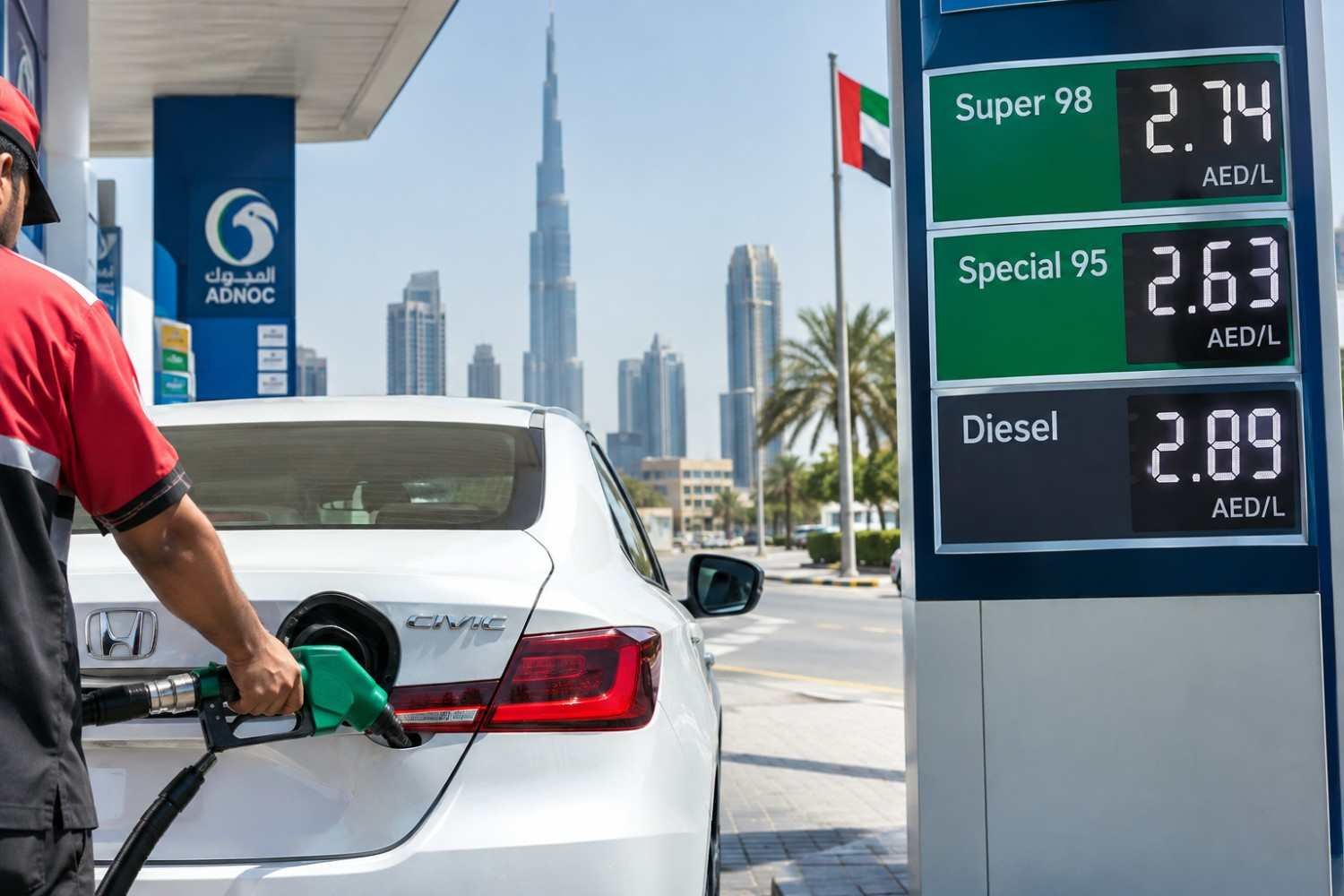
Under the updated pricing structure, Super 98 petrol now costs Dh3.80 per litre, up from Dh3.60 in August. Special 95, the most widely used grade among UAE motorists, has risen to Dh3.69 per litre from Dh3.49, while E-Plus 91 climbed to Dh3.61 per litre from Dh3.41. Diesel recorded by far the sharpest jump, rising to Dh4.30 per litre from Dh3.80, an increase of 50 fils in a single month.
In percentage terms, the three petrol grades each rose by roughly 5.6 to 5.9 percent compared with August, while diesel surged by around 13 percent, the steepest single-month increase of any fuel category since the price swings seen earlier in the year. For a typical business running a fleet of diesel vehicles, that kind of jump can add up quickly, particularly for logistics, delivery and construction firms that rely heavily on diesel-powered transport.
Why Prices Are Moving Again
The UAE adjusts retail fuel prices on a monthly basis through its Fuel Price Committee, using a mechanism designed to reflect movements in global energy markets rather than fixing prices administratively. This approach, in place since deregulation was introduced several years ago, means UAE pump prices tend to track international crude oil benchmarks fairly closely, with adjustments announced ahead of each new month.
This year has proven particularly volatile for regional energy markets. Since the outbreak of the wider Middle East conflict earlier in 2026, UAE retail fuel prices climbed by more than 60 percent at their peak, driven largely by concerns over regional supply disruptions and shipping risk in the Gulf. Prices eased somewhat in July before rising again through August and now September, reflecting the continued uncertainty tied to the ongoing tensions between the US and Iran, including the expiry of a temporary ceasefire arrangement that had briefly calmed markets earlier in the summer.
How It Compares to This Year’s Peaks
Despite the latest increase, September’s prices still sit meaningfully below the highs recorded earlier in 2026. Diesel, for instance, peaked at Dh4.69 per litre in April and May, meaning the current Dh4.30 rate remains roughly 8 percent below that high point. Similarly, Special 95 peaked at Dh3.83 per litre in June, putting September’s Dh3.69 rate a few percentage points lower.
For households and businesses tracking their fuel spend, the difference can still add up over time. A driver consuming around 240 litres of Special 95 a month, roughly equivalent to four 60-litre tank fills, would pay close to Dh885 at September’s rate, compared with more than Dh919 at June’s peak, a saving of around Dh34 a month. Diesel users see a larger gap given the size of the swing earlier this year, with monthly savings potentially reaching close to Dh94 for businesses consuming similar volumes compared with the April-May peak.
The Bigger Picture for Household Budgets
Fuel remains one of the most visible, recurring expenses for UAE households and businesses alike, and even modest month-on-month changes can influence broader spending patterns. Rising diesel costs in particular tend to filter through supply chains, potentially nudging up prices for goods transported by road across the country, from groceries to construction materials.
Financial advisors in the UAE often recommend that residents and small business owners build some flexibility into monthly budgets to accommodate these routine fuel price adjustments, given how directly the mechanism is tied to volatile global oil markets rather than fixed local policy.
What to Expect Going Forward
With the regional security situation around the Gulf remaining fluid, further fluctuations in UAE fuel prices are widely expected in the months ahead. Analysts note that any escalation in tensions near the Strait of Hormuz, a critical corridor for global oil shipments, could put renewed upward pressure on prices, while any signs of de-escalation could help stabilise or even lower rates in future months.
The Emirates Times will continue to track monthly fuel price announcements and their impact on UAE households and businesses as the year progresses. Next Article


Comments 1