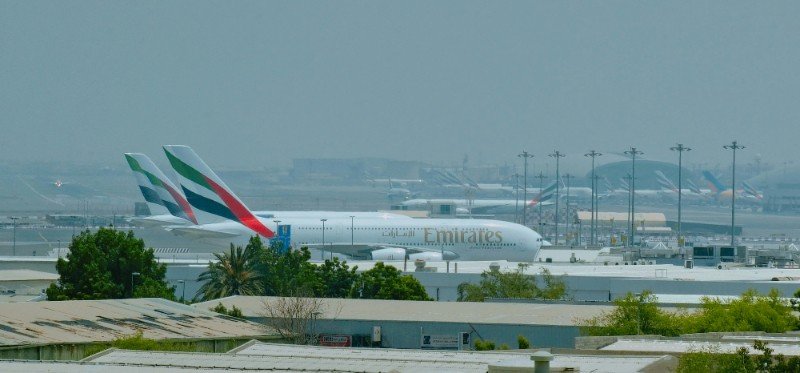
Travellers Urged to Check Status Before Heading to UAE Airports
Passengers travelling through the UAE’s two busiest airports are facing a bumpy few days, as renewed hostilities between the United States and Iran continue to send ripples through Gulf aviation schedules. Both Dubai International Airport and Abu Dhabi’s Zayed International Airport reported services running behind schedule this week, with airlines cautioning that timings remain subject to change at short notice.
The disruption follows an overnight exchange of fire between American and Iranian forces, with US strikes targeting sites in Iran and Tehran responding with missile and drone attacks across the wider region. While UAE airspace has remained open throughout, the knock-on effect on flight punctuality has been unmistakable, with a noticeably higher number of delayed departures and arrivals compared with recent weeks.
Which Routes Are Affected
At Abu Dhabi, a string of regional departures felt the impact first. Etihad Airways and Air Arabia Abu Dhabi both reported delays on routes to destinations including Cairo, Bahrain, Sialkot, Faisalabad and Tbilisi, while an Air India Express service to Delhi also ran late. Etihad’s Bahrain and Kuwait routes saw a mix of on-time departures and delayed services, underscoring how unevenly the disruption has been distributed across the network.
In Dubai, the picture has been similarly mixed. Emirates confirmed a cancellation on its New York-bound service, while a number of long-haul arrivals from Europe and North America were pushed back. Affected inbound flights included services from London Heathrow, Manchester, Geneva, Munich, Lyon and Moscow, alongside arrivals from Toronto, Houston, San Francisco and Los Angeles. The airline has been updating its schedule in near real time as conditions on the ground and in the air continue to shift.
Airlines Urge Caution, Not Panic
Despite the wave of delays, it is important to note that the vast majority of flights at both airports continued to operate throughout the disruption. Airlines including Emirates, Etihad, flydubai and Air Arabia have all reiterated that services remain largely intact, even as they closely monitor conflict-zone advisories issued by European and international aviation regulators, which currently flag elevated risk levels for Gulf airspace.
For travellers, the guidance has been consistent: check individual flight numbers directly through airline websites or apps before setting off for the airport, rather than relying on general schedule information. Airlines have stressed that even flights showing as “on time” earlier in the day can shift status quickly given the fluid security situation.
Why the Strait of Hormuz Matters
Much of the current volatility traces back to tensions around the Strait of Hormuz, one of the most strategically important waterways in the world for global energy shipments. The latest US strikes targeted rocket launch positions that American forces said were being prepared to threaten commercial shipping through the strait. Iran’s response, in turn, triggered a fresh wave of airspace caution across the wider Gulf, prompting airlines to reassess routings that pass near or over the affected areas.
This is not the first time this year that Gulf carriers have had to adapt on the fly. Since the conflict first flared, airlines operating out of the UAE have repeatedly adjusted flight paths, schedules and, in some cases, temporarily suspended routes altogether in response to evolving security assessments. What distinguishes the current episode is the speed at which conditions have changed, leaving passengers with a narrower window to plan around disruptions.
Practical Advice for Passengers
Travel experts recommend building in extra time for connections during this period, avoiding especially tight layovers through Dubai or Abu Dhabi, and keeping essential items in hand luggage in case of an unplanned overnight stay. Passengers who booked through travel agents are typically advised to contact their agent directly for rebooking or refund support if a flight is cancelled or significantly delayed.
Both Dubai International and Zayed International Airports continue to publish general flight status updates online, though officials note that details can change quickly during periods of heightened disruption, reinforcing the importance of checking directly with the operating airline shortly before departure.
As the security situation across the Gulf remains fluid, aviation authorities and airlines alike say they are committed to keeping passengers informed, even as the broader geopolitical picture continues to evolve day by day. Next Article


Comments 1