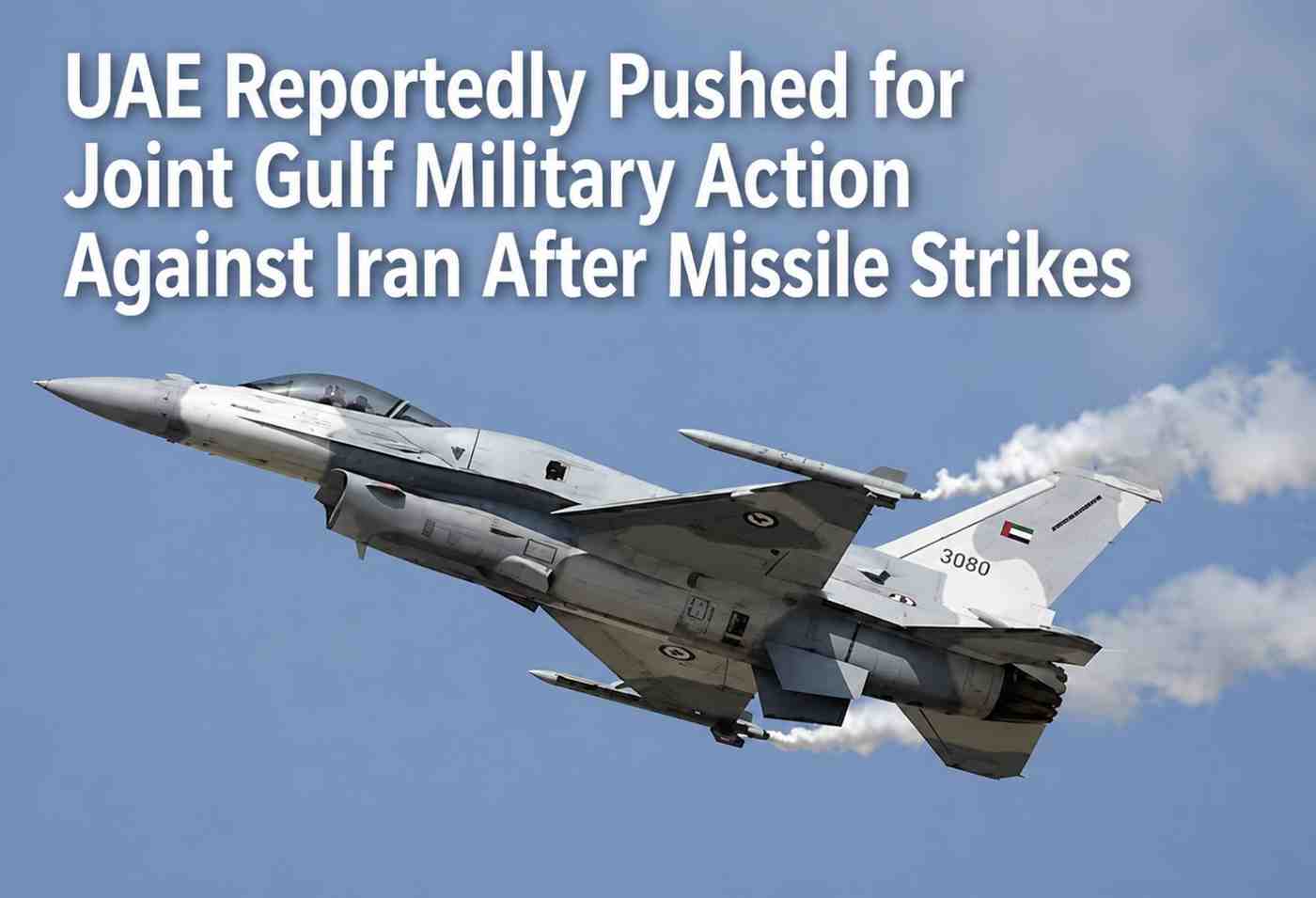
Saudi Arabia and Qatar Opposed UAE’s Proposal for Unified Gulf Response to Iran Attacks
The United Arab Emirates reportedly attempted to organise a unified Gulf military response against Iran following a series of missile and drone strikes across the region, but Saudi Arabia and Qatar resisted the proposal due to fears of further escalation and a wider regional conflict. The development highlights growing divisions within the Gulf Cooperation Council over how aggressively to respond to Iran amid rising tensions in the Middle East.
According to reports citing sources familiar with regional discussions, UAE President Sheikh Mohamed bin Zayed held urgent conversations with Gulf leaders shortly after the United States and Israel launched military operations against Iran earlier this year. During those talks, the UAE reportedly pushed for a coordinated military strategy aimed at deterring further Iranian attacks on Gulf countries.
However, Saudi Arabia and Qatar reportedly opposed direct escalation, with leaders in both countries arguing that entering a broader military confrontation with Iran could destabilise the entire region and damage economic and security interests.
The disagreement reportedly created fresh tensions between Gulf allies at a time when the region is already facing one of its most dangerous geopolitical crises in recent years. Iran’s retaliatory strikes following the US-Israeli attacks targeted several Gulf states, including the UAE, Saudi Arabia, Qatar, Kuwait, and Bahrain. Airports, oil infrastructure, ports, and facilities linked to US military operations were among the reported targets.
The UAE is believed to have been one of the hardest-hit Gulf nations during the conflict. Reports suggested that hundreds of drones and ballistic missiles were directed toward Emirati territory, with several attacks affecting airports, residential districts, and energy-related infrastructure.
Faced with growing security threats, UAE leadership reportedly concluded that a stronger and collective military response from Gulf nations was necessary to deter further Iranian aggression. According to Bloomberg-related reports cited by regional outlets, Abu Dhabi wanted Gulf Cooperation Council countries to present a united front instead of relying solely on defensive measures.
Saudi Arabia, however, appeared more cautious despite reportedly carrying out limited covert retaliatory strikes against Iranian-linked targets later during the conflict. Riyadh is believed to have prioritised diplomatic engagement and regional de-escalation over joining a formal anti-Iran military coalition.
Qatar also reportedly rejected broader military escalation despite suffering attacks on energy facilities linked to its critical liquefied natural gas sector. Doha is understood to have preferred diplomatic channels and crisis management rather than risking a prolonged regional war.
The divisions reflect the complex geopolitical calculations shaping Gulf policy toward Iran. While all Gulf states condemned the attacks and reserved the right to defend themselves, several countries remain reluctant to become directly involved in a full-scale conflict alongside the United States or Israel.
For years, Gulf nations attempted to balance close security ties with Washington while also pursuing cautious diplomatic engagement with Tehran. Saudi Arabia and Iran had restored diplomatic relations through a China-brokered agreement in 2023, and several Gulf governments publicly supported negotiations over Iran’s nuclear program before the latest conflict erupted.
The recent attacks have complicated that balancing strategy. Iranian strikes reportedly affected not only military installations but also civilian infrastructure and economic assets, raising fears about regional stability and investor confidence. Oil facilities, airports, residential towers, and LNG infrastructure across the Gulf came under threat during the escalation.
Despite growing anger toward Tehran, Gulf leaders remain deeply aware of the risks associated with direct military confrontation. Economies across the Gulf rely heavily on energy exports, tourism, financial markets, and international investment. A prolonged regional war could severely damage those sectors while disrupting global oil and gas supply chains.
Analysts say Saudi Arabia’s position reflects its broader strategic priorities. While Riyadh has strengthened military capabilities significantly over recent years, Crown Prince Mohammed bin Salman has also focused heavily on economic diversification projects linked to Vision 2030. Regional instability could threaten those long-term development goals.
The UAE, meanwhile, appears to have adopted a more assertive security posture after repeated attacks targeted Emirati territory and economic infrastructure. Some reports claimed the UAE later carried out independent retaliatory strikes against Iranian targets, although Abu Dhabi has not publicly confirmed such operations.
The latest revelations also highlight evolving dynamics within the Gulf Cooperation Council itself. While Gulf countries continue cooperating on defence and regional security, differences remain regarding how aggressively to confront Iran and how closely to align with US and Israeli regional strategies.
Experts believe the situation demonstrates the fragile nature of Gulf unity during major regional crises. Although Gulf states share security concerns regarding Iran, their economic interests, diplomatic priorities, and domestic political calculations often differ significantly.
The Middle East conflict has already reshaped regional alliances and intensified fears of wider instability involving major global powers. Any direct Gulf military coalition against Iran could dramatically increase the risk of broader confrontation across the region.
Also Read: Trump Responds After Xi Jinping Calls America a ‘Declining Nation’
As tensions continue, Gulf leaders appear to be balancing two competing priorities: deterring future Iranian attacks while avoiding a prolonged regional war that could threaten economic growth, energy exports, and national stability.


