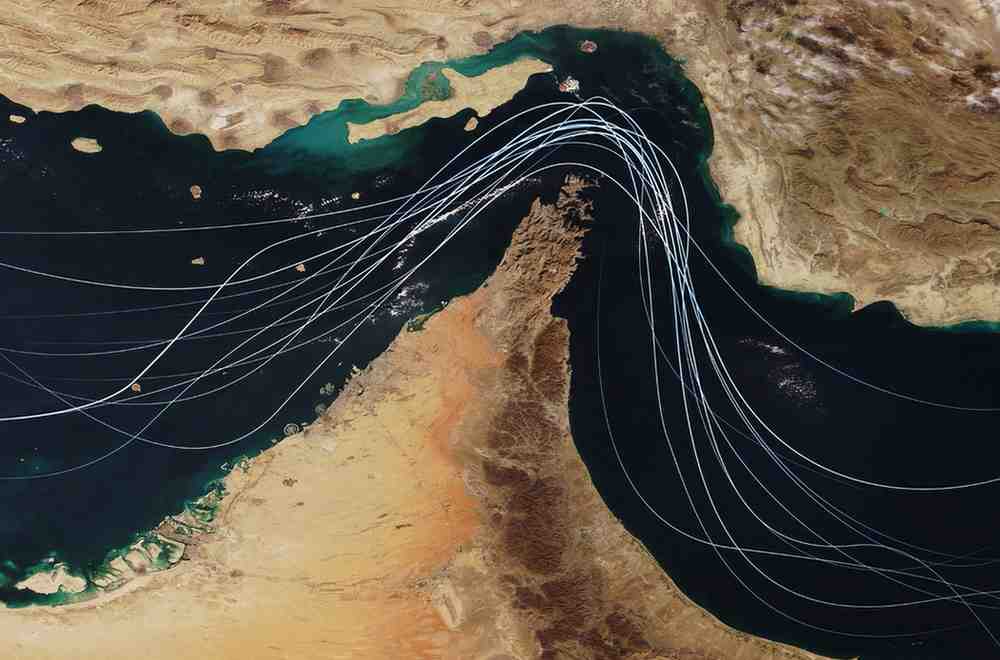
US Reroutes Ships Through Oman Waters as Strait of Hormuz Tensions Rise
The United States has instructed commercial vessels navigating the Strait of Hormuz to use an alternative route through Oman’s territorial waters, amid escalating tensions and growing security concerns in one of the world’s most critical maritime chokepoints. A strategic reroute to avoid danger.
According to an advisory issued by the US Naval Forces Central Command, ships have been directed to pass south of the main shipping lane—known as the Traffic Separation Scheme—and instead move closer to Oman’s coastline. The move comes after warnings that the primary transit route remains highly dangerous due to sea mines that have not yet been fully cleared or surveyed. Primary route unsafe due to sea mines.
Authorities also urged vessel operators to exercise extreme caution, conduct detailed risk assessments before entering the region, and stay in close communication with Omani authorities using designated radio channels. With increased traffic expected along the alternative route, coordination is being seen as critical to avoid further incidents. Extreme caution and close coordination urged.
The directive is part of a broader US-led effort known as “Project Freedom,” aimed at restoring safe navigation in the strait. Under this initiative, US Navy warships—including guided-missile destroyers—have been deployed to assist and escort neutral commercial vessels stranded in the Gulf due to ongoing hostilities. US Navy escorts under Project Freedom.
The situation in the Strait of Hormuz has deteriorated significantly in recent months following military escalation between the United States, Israel, and Iran. After airstrikes launched in late February, Iran retaliated by effectively closing the strategic waterway, disrupting global shipping and energy supplies. Iran closes strategic waterway after airstrikes.
Adding to tensions, Iranian state media has claimed that its forces targeted a US warship during recent operations in the strait. However, US officials have strongly denied these reports, stating that no American vessels were hit and that operations are continuing as planned. Iran claims US warship hit; US denies.
Despite a brief ceasefire mediated by Pakistan and subsequent diplomatic talks, no lasting agreement has been reached. As a result, the region remains volatile, with risks to commercial shipping still high. No lasting agreement, region remains volatile.
The Strait of Hormuz is a vital global trade artery, particularly for oil shipments, and any disruption has far-reaching economic consequences. The US decision to reroute ships through Omani waters highlights both the severity of the current security threats and the urgent need to maintain the flow of international trade. Vital trade artery under threat.
Overall, the new advisory underscores the fragile security environment in the Gulf, where military tensions continue to shape shipping routes and global energy dynamics. Fragile security in the Gulf. Ships rerouted through Oman waters. Sea mines and military tensions persist. Global trade at risk.


Comments 1