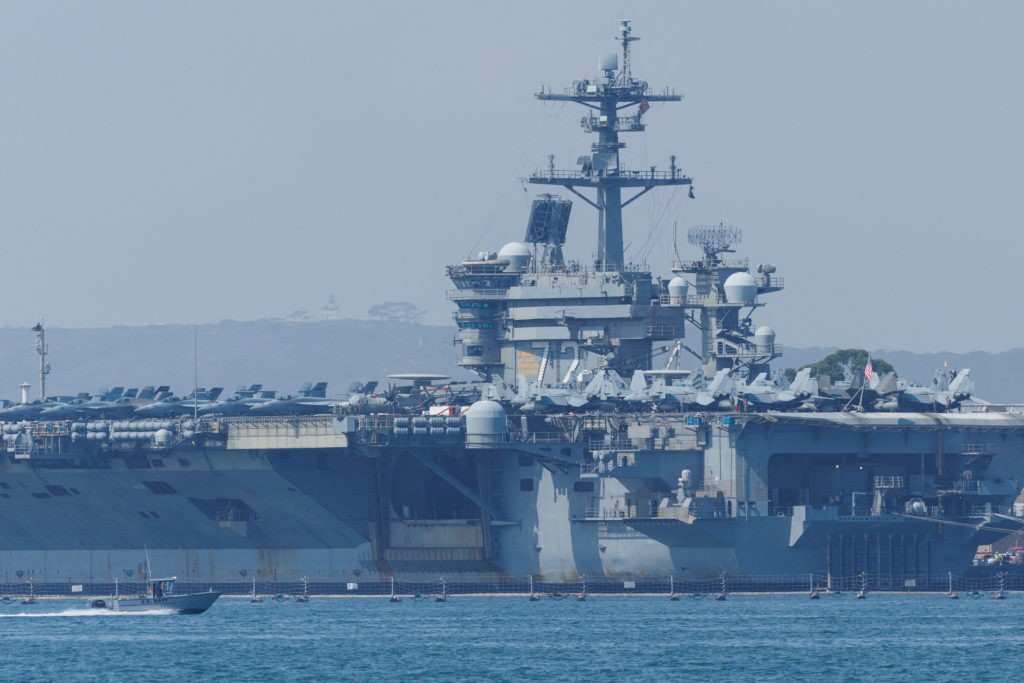
Iran Claims Cruise Missile Strike on USS Abraham Lincoln After Issuing Warning to US
In a dramatic escalation of tensions in the ongoing West Asia conflict, Iran has claimed that it launched a cruise missile targeting the United States aircraft carrier USS Abraham Lincoln. The announcement came shortly after Iranian military officials issued a direct warning to Washington, cautioning that the warship would be attacked if it entered the range of Iranian missile systems.
According to Iranian state media, the country’s naval forces fired shore-based cruise missiles toward the US carrier group positioned in regional waters. The Iranian Army’s public relations wing stated that the strike was carried out using coastal defence systems, underscoring Tehran’s readiness to confront American military presence in the region.
Iranian officials further claimed that the missile launch forced the US naval fleet to alter its position. Reports suggested that the weapons used were Qader anti-ship cruise missiles, which are designed to strike maritime targets with precision from land-based launch systems. These missiles have a range of approximately 200 kilometers and are capable of carrying a significant warhead.
The move followed a strong warning issued earlier in the day by Iran’s naval command. Officials said that the USS Abraham Lincoln was under constant surveillance and would be targeted immediately if it came within striking distance. The statement highlighted Iran’s assertive posture amid rising hostilities with the United States and its determination to contest American naval movements in the region.
Despite the seriousness of the claim, there has been no independent verification of the missile strike. US authorities have not confirmed any such attack, and there has been no official response indicating damage to the aircraft carrier. This lack of confirmation adds to the ongoing information battle between Tehran and Washington, with both sides often presenting conflicting narratives during the conflict.
This is not the first time Iran has claimed to have targeted the USS Abraham Lincoln during the current war. Earlier in March, Iran’s Islamic Revolutionary Guard Corps (IRGC) had said it struck the same carrier using ballistic missiles. However, those claims were also not independently verified, and US officials maintained that the vessel remained fully operational and continued its missions without interruption.
The latest development comes amid a broader escalation in the region, where military exchanges between Iran, the United States, and its allies have intensified. The USS Abraham Lincoln has been a key component of US naval deployments in the Middle East, serving as a strategic platform for air and sea operations. The carrier strike group includes multiple destroyers, cruisers, and support vessels, making it a formidable presence in regional waters.
Iran’s actions appear to be part of a wider strategy to deter US military movements near its territory and assert control over surrounding waters, including critical shipping lanes. The Strait of Hormuz, a vital route for global oil supplies, remains a focal point of tensions as both sides continue to demonstrate military strength. Approximately 20 percent of the world’s oil passes through this narrow waterway, making any escalation there a matter of global concern.
The incident also follows Iran’s recent rejection of a US-backed proposal aimed at ending the conflict. Tehran has insisted on its own set of conditions for peace, including a halt to attacks, compensation for damages, and recognition of its sovereignty over the Strait of Hormuz, while continuing to signal its readiness for confrontation if its demands are not met.
Security analysts warn that such incidents significantly increase the risk of a direct military clash between the two countries. Even unverified claims of missile strikes can heighten tensions and trigger retaliatory actions, potentially leading to a broader regional conflict. The psychological impact of such claims, whether verified or not, contributes to an already volatile security environment.
As the situation evolves, the international community is closely monitoring developments, urging restraint from both sides. However, with diplomatic efforts stalled and military posturing intensifying, the chances of de-escalation appear uncertain. European and Gulf mediators have continued their efforts, but no breakthrough has been reported.
Also Read: Strong Response: Qatar Dismisses Mediation Role, Focuses on Security Amid Iran Crisis
The claim of a missile attack on a major US aircraft carrier marks yet another flashpoint in an already volatile conflict, raising concerns about the possibility of further escalation in the days ahead. Whether this incident leads to a direct confrontation or remains a rhetorical threat will depend on how both sides choose to respond in the coming hours and days.


