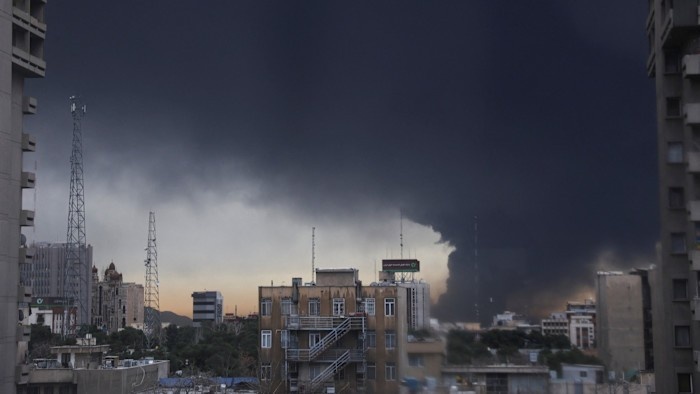
Black Rain Falls Over Tehran After Airstrikes Hit Oil Facilities, Raising Health and Environmental Fears
Tehran, Iran — Reports of “black rain” in Tehran have drawn global attention after airstrikes on oil facilities triggered massive fires and thick clouds of smoke over the Iranian capital, creating an environmental disaster. Scientists say the unusual rainfall is the result of heavy pollution in the atmosphere caused by burning petroleum, which mixes with rainwater and turns it dark and potentially hazardous to human health.
What Is Black Rain?
Black rain is a rare environmental phenomenon in which rainfall becomes dark because it absorbs soot, ash, and other pollutants suspended in the air. Instead of clear droplets, the rain carries tiny particles from smoke or industrial emissions, giving it a black or oily appearance that can stain surfaces and contaminate water sources.
In Tehran’s case, the phenomenon emerged after several oil storage depots were hit in airstrikes during the ongoing Israel–Iran conflict. The strikes ignited large fuel fires that released dense plumes of smoke containing hydrocarbons, sulfur compounds, and nitrogen oxides into the atmosphere.
How the Tehran “Black Rain” Formed
When oil storage facilities burn, they release enormous quantities of soot and chemical particles into the air, creating a toxic cloud. These particles rise into the atmosphere and mix with moisture in rain clouds. As rain begins to fall, the water droplets capture the suspended pollutants — a process known as “atmospheric scavenging” . This causes the rain to appear dark or black as it reaches the ground.
Witnesses in Tehran reported dark clouds covering the sky and rainfall that appeared to contain oily residue shortly after the explosions at the fuel depots. Thick smoke from the fires also reduced visibility across the city and left soot covering buildings, vehicles, and streets.
Health and Environmental Risks
Experts warn that black rain can be dangerous because it may carry toxic chemicals produced by burning oil. These substances can irritate the skin, damage the respiratory system, and contaminate soil and water sources, posing long-term risks.
Emergency agencies in Iran warned residents that the smoke released during the fires contained harmful compounds. If these chemicals mix with rainwater, the resulting precipitation may become acidic and harmful to both humans and the environment. Exposure could lead to breathing problems, skin irritation, and other health complications.
Authorities therefore advised people in affected areas to remain indoors, limit outdoor exposure, and take precautions such as wearing protective masks if they must go outside.
A Phenomenon Seen in Other Disasters
Although unusual, black rain has occurred before in the aftermath of major disasters, serving as a grim historical marker. It was famously reported after the atomic bombings of Hiroshima and Nagasaki in 1945, when soot and radioactive debris from the explosions mixed with rainfall. Similar events have also been documented after large wildfires or industrial fires where smoke heavily pollutes the air.
Scientists say these incidents show how large-scale fires can alter local weather patterns and air quality, producing contaminated rainfall that can persist until pollutants disperse from the atmosphere.
Environmental Impact of the Conflict
The Tehran incident highlights the environmental consequences of modern warfare, which can be as devastating as the immediate destruction. Large energy infrastructure sites such as oil depots and refineries contain huge amounts of combustible fuel. When they are struck and catch fire, they can release massive clouds of smoke and pollutants that spread across cities and surrounding regions.
Following the strikes, the Iranian capital was reportedly blanketed by a thick haze of smoke, with residents describing the air as extremely polluted and difficult to breathe. Environmental experts say such events can cause lasting ecological damage, including soil contamination, water pollution, and long-term air quality problems.
A Warning Sign for Urban Environments
The appearance of black rain over Tehran demonstrates how fragile urban environments can be during large industrial fires or military strikes. Once pollutants enter the atmosphere in large quantities, they can quickly interact with natural weather systems, spreading contamination far beyond the initial site of destruction.
Scientists warn that similar phenomena could occur in any major city if large oil facilities or industrial complexes burn for extended periods. The Tehran event therefore serves as a reminder that the environmental effects of conflict can be as serious as the immediate physical damage caused by the attacks.
Conclusion
Black rain over Tehran is more than a visual curiosity—it is a warning. As war fuels industrial fires, the skies themselves become toxic, and the rain that once gave life now carries death.
Tehran’s skies turn black as burning oil rains down. The environmental toll of war is just beginning.


