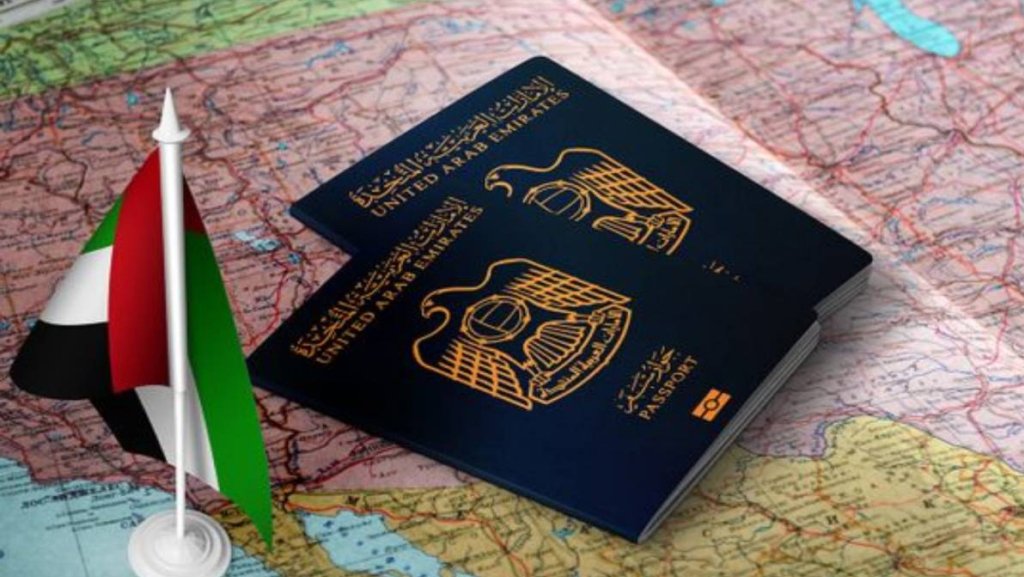
UAE Passport Reaches Second Place Globally in Record-Breaking Climb
The UAE passport has officially entered the world’s elite travel tier, rising to become the second strongest passport globally according to the latest update to the Henley Passport Index, one of the most closely watched benchmarks of international mobility. UAE passport holders now enjoy visa-free or visa-on-arrival access to 187 destinations worldwide, placing the country alongside Japan and South Korea near the very top of the global rankings.
The milestone represents a significant jump from just a year earlier, when the UAE sat in tenth place, and caps what the index’s own data describes as the most dramatic long-term improvement recorded by any country since Henley & Partners began tracking passport strength two decades ago.
A Two-Decade Climb Like No Other
The scale of the UAE’s rise becomes clearer when viewed across a longer timeframe. As recently as 2016, the UAE passport sat in 38th position globally. Over the past decade alone, the country has added 152 additional visa-free destinations to its passport, a pace of improvement unmatched by any other nation tracked by the index. Looking back over the full 20 years the index has existed, the UAE has gained 149 visa-free destinations since 2006, the single largest improvement logged in the index’s history.
Dr Christian H. Kaelin, Chairman of Henley & Partners and creator of the index, has described the UAE’s trajectory as “without parallel,” noting that it demonstrates how sustained long-term vision, political stability and proactive diplomacy can translate directly into tangible mobility benefits for a country’s citizens, alongside growing soft power on the international stage.
How the Index Works
The Henley Passport Index, widely regarded as one of the most authoritative rankings of its kind, is based on exclusive data supplied by the International Air Transport Association (IATA) and ranks the passports of nearly 200 countries according to the number of destinations their holders can access without requiring a prior visa. Singapore currently holds the top overall position with visa-free access to 192 destinations, a spot it has retained through multiple recent editions of the index.
The UAE’s current second-place standing places it just behind Singapore and ahead of a number of traditionally dominant Western passports, including the United Kingdom and Australia, which both sit further down the rankings, alongside New Zealand and Canada. The United States, which briefly dropped out of the global top 10 for the first time in late 2025, has since returned to that tier but remains well behind the UAE’s current position.
Driven by Diplomacy, Not Just Trade
Officials and mobility analysts attribute the UAE’s rapid ascent to a deliberate, sustained strategy of diplomatic engagement and visa liberalisation carried out over many years, rather than any single policy shift or trade agreement. The approach has involved actively negotiating visa waiver agreements with governments around the world, expanding bilateral and multilateral partnerships, and consistently prioritising passport strength as a tangible metric of the country’s broader international standing.
That strategy appears to have paid particular dividends over the past year, with the UAE’s climb from tenth to second place representing one of the single largest short-term jumps recorded anywhere in the current edition of the index. For context, the UAE stood at fifth place with access to 184 destinations earlier in 2026, meaning the latest ranking reflects continued, rapid improvement even within the current year.
What It Means for UAE Citizens
For Emirati citizens, the practical implications of the ranking are substantial. Visa-free or visa-on-arrival access now extends to major global destinations including the European Union bloc, the United Kingdom, Thailand, Switzerland, Singapore, South Korea and Japan, dramatically simplifying international travel for business, leisure and family purposes alike. A ranking of this kind also tends to carry symbolic weight beyond its practical travel benefits, often being read by international observers as a broader signal of a country’s diplomatic reach and global standing.
IATA Director General Willie Walsh, commenting on the broader findings of the index, noted that a record number of people are expected to travel globally in the current year, with the economic and social benefits generated by that travel continuing to grow as it becomes more accessible, even as many other nationalities find that passport strength alone is increasingly insufficient to guarantee smooth cross-border movement in today’s more complex travel environment.
A Marker of Broader National Ambition
The UAE’s rise on the Henley Passport Index fits within a broader pattern of the country positioning itself as an increasingly connected, globally integrated nation, a theme that has run through much of its foreign policy and economic diversification efforts over the past two decades. As the country continues to expand its diplomatic and economic partnerships across regions, from Europe to Asia to Africa, its passport ranking now stands as one of the clearest, most measurable indicators of that strategy’s success.
With the index continuing to track passport strength on a rolling basis throughout the year, attention will now turn to whether the UAE can close the remaining gap with Singapore in future updates, a milestone that, given the pace of recent progress, no longer looks entirely out of reach.


Comments 1