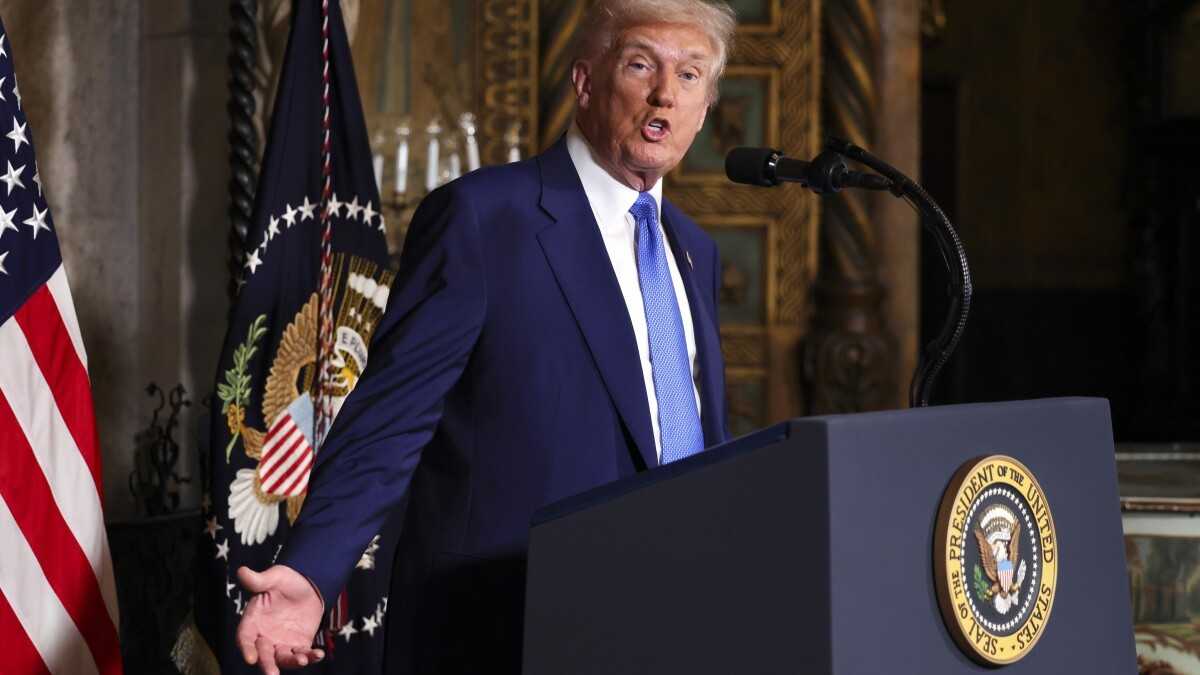
Trump Set to Attend Saudi-Backed Investment Conference in Miami, Highlighting U.S.–Gulf Economic Ties
Washington D.C./Miami — U.S. President Donald Trump is expected to attend the Future Investment Initiative (FII) conference in Miami later this year, marking his second consecutive participation in the Saudi-backed global investment summit since returning to the White House, according to sources familiar with arrangements .
The conference, scheduled for March 26–29, 2026, brings together international investors, business leaders, and government officials to explore investment opportunities and economic partnerships. Trump’s anticipated presence underscores the increasing centrality of Gulf economic diplomacy in his administration’s foreign policy approach .
Sources, speaking on condition of anonymity, also indicate Trump is expected to attend an opening-day dinner hosted by Yasir Al-Rumayyan, Governor of Saudi Arabia’s Public Investment Fund (PIF) —the kingdom’s $925 billion sovereign wealth vehicle .
Why the FII Conference Matters
Originally launched in Riyadh and widely nicknamed “Davos in the Desert,” the Future Investment Initiative has evolved into a global platform for Saudi Arabia’s economic transformation agenda under Vision 2030 . The initiative now extends beyond its Saudi base, with international editions in cities including Miami, London, and New York designed to court investors across the Americas and strengthen transatlantic economic bridges .
For Riyadh, FII serves multiple strategic purposes:
Showcasing investment opportunities in technology, infrastructure, energy, and finance
Attracting private capital to Vision 2030 megaprojects facing funding gaps
Building networks with Western institutional investors and sovereign funds
Countering regional competition, particularly from UAE financial hubs
Saudi officials have acknowledged that some ambitious Vision 2030 projects require greater private sector participation than initially anticipated. The pivot toward public-private partnerships and foreign direct investment has intensified as the kingdom seeks to sustain long-term diversification without over-relying on state resources .
The Miami edition specifically targets investors across North and South America, leveraging Florida’s position as a gateway to Latin American markets and its growing role as a hub for international capital .
Trump’s Engagement and U.S.–Saudi Relations
Trump’s anticipated attendance signals continuity in U.S.–Saudi strategic engagement following his administration’s reset of bilateral ties .
During Crown Prince Mohammed bin Salman’s high-profile Washington visit in November 2025, the two countries finalized a series of investment and defense agreements. Most notably, Saudi Arabia pledged to expand its investment footprint in the United States to as much as $1 trillion—a dramatic escalation from previous commitments .
Key elements of the evolving economic relationship include:
PIF’s growing U.S. portfolio, spanning technology, infrastructure, and entertainment
Joint ventures between American and Saudi companies in renewable energy and advanced manufacturing
Defense procurement agreements strengthening bilateral security cooperation
Energy market coordination amid global supply concerns
The $1 trillion investment pledge, while aspirational, reflects deepening financial engagement even as Riyadh recalibrates its own economic priorities under Vision 2030. For Washington, Saudi capital represents a critical component of industrial policy, supporting American jobs and innovation .
Competing Gulf Ambitions
Trump’s FII attendance comes amid intensified Gulf competition for international investment and financial primacy.
Both Saudi Arabia and the United Arab Emirates are aggressively positioning themselves as the Middle East’s preeminent financial hub:
Riyadh leverages Vision 2030, PIF’s scale, and events like FII to attract global capital
Abu Dhabi and Dubai counter with established financial free zones, world-class infrastructure, and rival platforms including the Milken Institute Global Conference
The competition extends beyond forums to tangible outcomes: corporate headquarters relocations, fund manager mandates, and talent attraction. Each Gulf capital frames itself as the more stable, accessible, and opportunity-rich environment for international investors .
Trump’s presence at FII Miami implicitly endorses Saudi Arabia’s convening power and economic vision—a significant soft power advantage for Riyadh in its rivalry with Abu Dhabi .
Strategic Context: Energy, Security, and Investment
The U.S.–Saudi relationship under Trump’s administration has re-emphasized the interconnection of energy security, defense cooperation, and investment flows .
Key strategic dimensions:
Energy coordination: Saudi production decisions continue influencing global oil markets and U.S. inflation dynamics
Defense collaboration: Arms sales and joint military exercises underpin regional security architecture
Technology partnership: PIF’s investments in American AI, fintech, and clean energy align with U.S. industrial priorities
Geopolitical alignment: Shared concerns regarding Iran, China’s regional influence, and Middle East stability
The FII gathering provides an opportunity to advance these multiple tracks within a single high-profile platform—investment announcements, strategic dialogue, and relationship maintenance .
What to Expect in Miami
While full agenda details await official release, insiders anticipate:
High-level participation:
President Trump’s keynote or featured conversation
PIF Governor Al-Rumayyan’s strategic overview of Saudi investment priorities
U.S. Cabinet officials and business leaders
Sectoral focus:
Artificial intelligence and digital infrastructure
Renewable energy and sustainability
Healthcare and biotechnology
Real estate and tourism development
Financial services and capital markets
Deal announcements:
Potential unveiling of new U.S.–Saudi joint ventures, PIF investment commitments, and corporate partnerships timed to maximize visibility .
Networking opportunities:
Private dinners, bilateral meetings, and informal gatherings enabling deeper relationship building beyond formal sessions .
Political and Diplomatic Dimensions
Trump’s attendance carries symbolic weight extending beyond economics.
For domestic audiences, it demonstrates the president’s ability to attract trillion-dollar investment pledges and create American jobs through international engagement .
For Gulf partners, it signals continued U.S. commitment to the region amid competition from China and Russia for economic influence .
For the broader international community, it underscores that economic diplomacy remains central to Trump’s foreign policy—even as geopolitical tensions persist .
Unanswered Questions
Neither the White House, FII Institute, nor Saudi authorities have formally confirmed Trump’s participation. Official announcements are expected closer to the March dates .
Key questions remain:
Will Trump’s attendance yield concrete investment announcements?
How will the administration balance Saudi engagement with human rights considerations?
Can Riyadh translate summit momentum into sustained capital inflows?
What role will Congressional sentiment play in U.S.–Saudi economic relations?
Also Read: Sri Lanka Crush Oman by 105 Runs in T20 World Cup 2026: Rathnayake, Shanaka Star in Kandy
Conclusion: A Summit Worth Watching
The convergence of America’s president, Saudi Arabia’s sovereign wealth fund governor, and thousands of global investors in Miami this March represents economic diplomacy at its highest level .
For Trump, FII offers a platform to showcase his administration’s ability to attract foreign capital and strengthen strategic partnerships. For Saudi Arabia, it provides visibility for Vision 2030’s next phase and access to Western investors essential for funding ambitious projects. For the broader U.S.–Gulf relationship, it reinforces the mutual economic interests underpinning a complex, often contentious, but ultimately indispensable partnership .
Whether Trump’s attendance yields billion-dollar announcements, strategic breakthroughs, or simply diplomatic atmospherics will depend on what happens in Miami’s conference halls and private dinners.
But one thing is certain: when the President of the United States sits down with the steward of nearly a trillion dollars in Gulf capital, the world pays attention.


