A Royal Endorsement for Abu Dhabi’s Newest Cultural Landmark
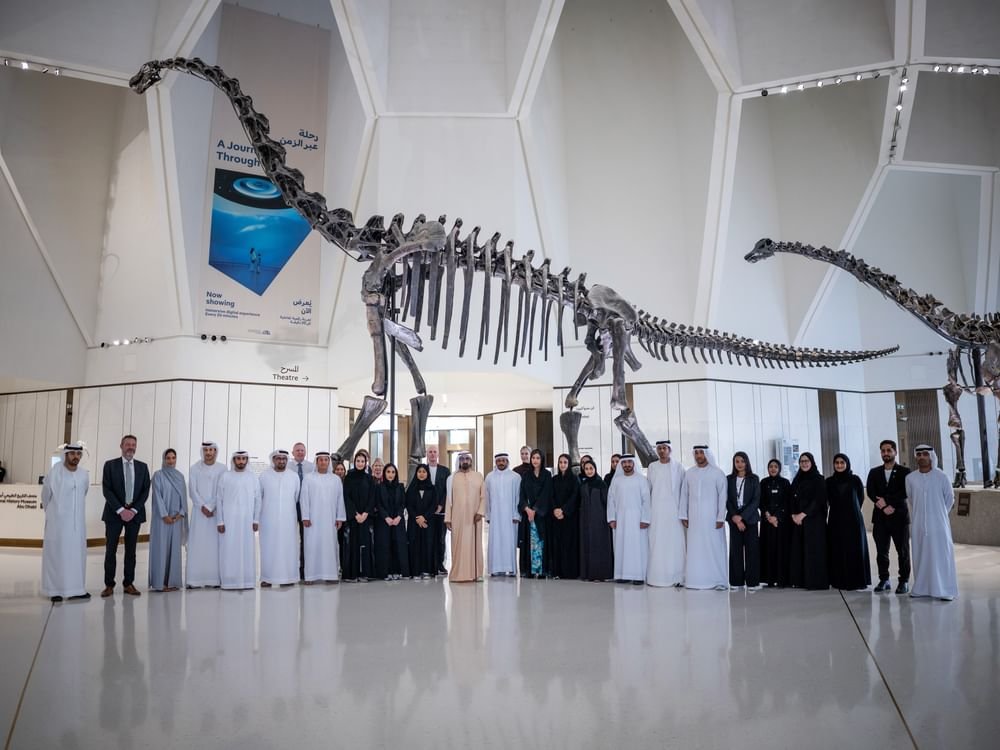
Sheikh Mohammed bin Rashid Al Maktoum, Vice President and Prime Minister of the UAE and Ruler of Dubai, made a notable visit this past weekend to the Natural History Museum Abu Dhabi, one of the capital’s newest cultural additions, offering a public endorsement of the UAE’s rapidly expanding museum sector in the process.
The museum, located within Abu Dhabi’s Saadiyat Cultural District, opened its doors last November and has quickly built a devoted following, particularly among visitors drawn to its dinosaur exhibits and broader natural history collections. Sheikh Mohammed was photographed touring the facility over the weekend, marking a high-profile visit that cultural officials are likely to view as a meaningful boost to the museum’s ongoing efforts to establish itself among the UAE’s must-see cultural attractions.
What Sheikh Mohammed Said
During his visit, Sheikh Mohammed offered a broader reflection on the value of museums as public institutions, stating that investing in museums represents an investment in humanity’s future — language that framed the visit not simply as a routine cultural outing, but as a deliberate statement about the strategic importance the UAE’s leadership places on cultural and educational infrastructure. He specifically highlighted how museums foster awareness among future generations, giving young people the tools to understand the past more deeply as they work to shape what comes next.
Sheikh Mohammed also used the visit to draw attention to the UAE’s broader museum sector, describing it as thriving and pointing to the visit as evidence of the country’s growing commitment to its cultural and heritage institutions more generally — comments that fit within a consistent pattern of UAE leadership publicly championing cultural investment as a core pillar of the country’s long-term national development strategy, alongside more commonly discussed priorities like economic diversification and technological advancement.
Part of a Broader Cultural Building Boom
The Natural History Museum Abu Dhabi’s rise sits within a much larger wave of cultural infrastructure development that has transformed Saadiyat Island into one of the region’s most ambitious cultural districts. The area already hosts Louvre Abu Dhabi, which continues to draw visitors with major exhibitions — including a rare Prince Al-Mughira ivory masterpiece from 10th-century Córdoba currently on display through 2027 — alongside Zayed National Museum, which has run an active public programme throughout September and October exploring the UAE’s archaeological and ancient history through guided tours, hands-on workshops and inclusive access programmes for visitors with disabilities.
Beyond Abu Dhabi itself, the UAE’s broader museum ecosystem has continued to expand its public programming this month. Al Ain Museum, for instance, launched a September programme combining archaeological talks with heritage-themed workshops and back-to-school activities for students, running through early October — evidence of a museum sector that’s grown not just in the number of major new institutions, but in the depth and regularity of public engagement each individual institution now offers.
Why This Matters for the UAE’s Cultural Strategy
Sheikh Mohammed’s visit and public comments reinforce a message UAE officials have repeated consistently in recent years: that cultural infrastructure isn’t a peripheral add-on to the country’s development story, but a central component of it. As the UAE continues positioning itself as a global hub not just for business and tourism but for cultural and educational exchange, high-profile institutional visits like this one serve a dual purpose — celebrating specific achievements like the Natural History Museum’s strong first year, while signalling to both domestic and international audiences that cultural investment remains a genuine, ongoing national priority rather than a one-time infrastructure push.
For the Natural History Museum Abu Dhabi specifically, the visit arrives at a useful moment, as the institution continues working to convert its early popularity — driven substantially by dinosaur enthusiasts and family visitors — into the kind of sustained, broad-based attendance that has helped establish Louvre Abu Dhabi and other Saadiyat Island institutions as fixtures on both local and international itineraries.


Comments 1