Table of Contents
ToggleCan Saudi Arabia’s 10 Billion Tree Green Initiative Turn Desert Into Forest?
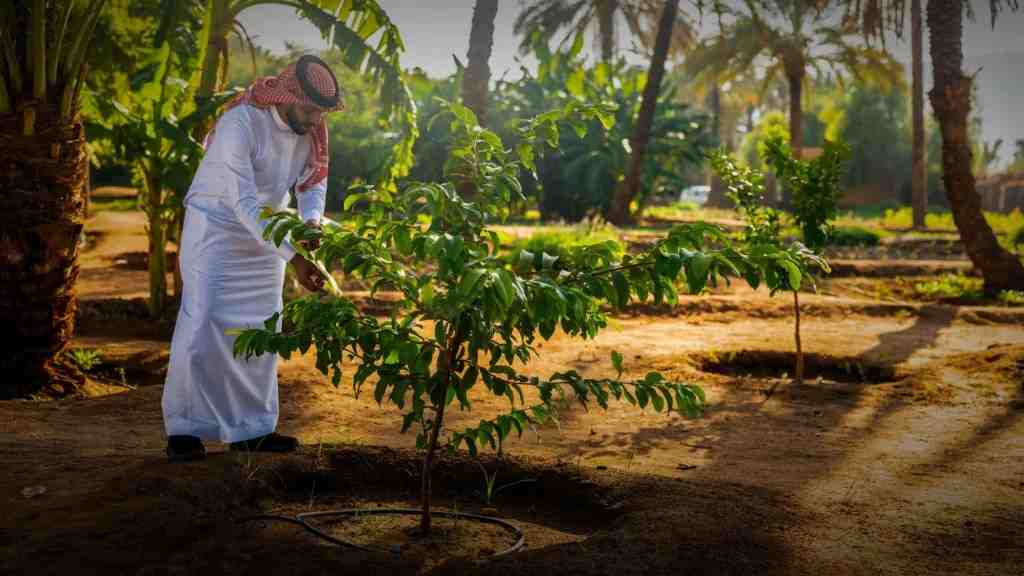
Saudi Arabia, a nation where 95% of the land is desert, has embarked on one of the world’s most ambitious environmental projects: planting 10 billion trees. Launched under Crown Prince Mohammed bin Salman’s Saudi Green Initiative (SGI), the plan aims to combat desertification, restore ecosystems, and support long-term sustainability in one of Earth’s harshest climates.
Redefining the Desert: A Daunting Landscape
The challenge is monumental. Saudi Arabia is home to the Rub’ al Khali (Empty Quarter), a sand desert over twice the size of the United Kingdom, with minimal rainfall and extreme heat. The SGI isn’t merely about planting trees; it’s a science-driven strategy to reverse land degradation, boost biodiversity, reduce dust storms, and build climate resilience.
The Science Before the Scale
Success depends on meticulous planning, not just sheer numbers. Before announcing the target, authorities conducted a two-year feasibility study involving 1,150 field surveys and geospatial analysis of soil, water, wind, and temperature data. The focus is on planting native, drought-resistant species adapted to extreme conditions, avoiding water-intensive foreign plants that strain scarce resources.
A Phased Roadmap to Greening
The initiative follows a structured, long-term approach:
Phase 1 (2024–2030): A nature-based strategy aiming to plant over 600 million trees and rehabilitate 3.8 million hectares of land using sustainable water sources like treated wastewater and rainwater harvesting.
Phase 2 (Post-2030): Scaling up efforts with enhanced technology and management to cover larger areas of the Kingdom.
This phased plan acknowledges that transforming a desert is a decades-long process requiring adaptive strategies and continuous monitoring.
Benefits Beyond Greenery
The SGI is also a social and economic engine. It is expected to create jobs in nurseries, irrigation, and environmental monitoring. In cities like Riyadh, increased urban canopy under the “Green Riyadh” project will lower temperatures and improve air quality. The initiative aligns with Saudi Vision 2030, diversifying the economy away from oil by investing in sustainable industries and expanding protected natural areas.
Major Challenges: Water and Sustainability
The biggest hurdle is extreme water scarcity. Saudi Arabia is investing in innovative solutions like cloud seeding, expanded desalination, water reuse networks, and rainwater harvesting dams to support vegetation. Critics question the feasibility of large-scale greening in a desert, but officials clarify the goal is strategic ecological restoration, not turning the entire desert into a forest. By mid-2025, over 150 million trees had already been planted, showing tangible progress.
A Global Model for Arid Regions?
If successful, Saudi Arabia’s initiative could become a blueprint for other arid nations battling land degradation. It demonstrates how science, technology, and political will can combine to attempt the seemingly impossible: restoring green life to some of the planet’s driest places.
Also Read: Bahrain Golden Visa 2025: Affordable, Tax-Free 10-Year Residency Unveiled
Conclusion: A Bold Step for Environmental Stewardship
While the full 10-billion-tree target is a long-term ambition, the Saudi Green Initiative represents a paradigm shift in desert ecology. It’s a bold commitment to redefine environmental stewardship, proving that even the most arid landscapes can be part of a greener, more sustainable future.


