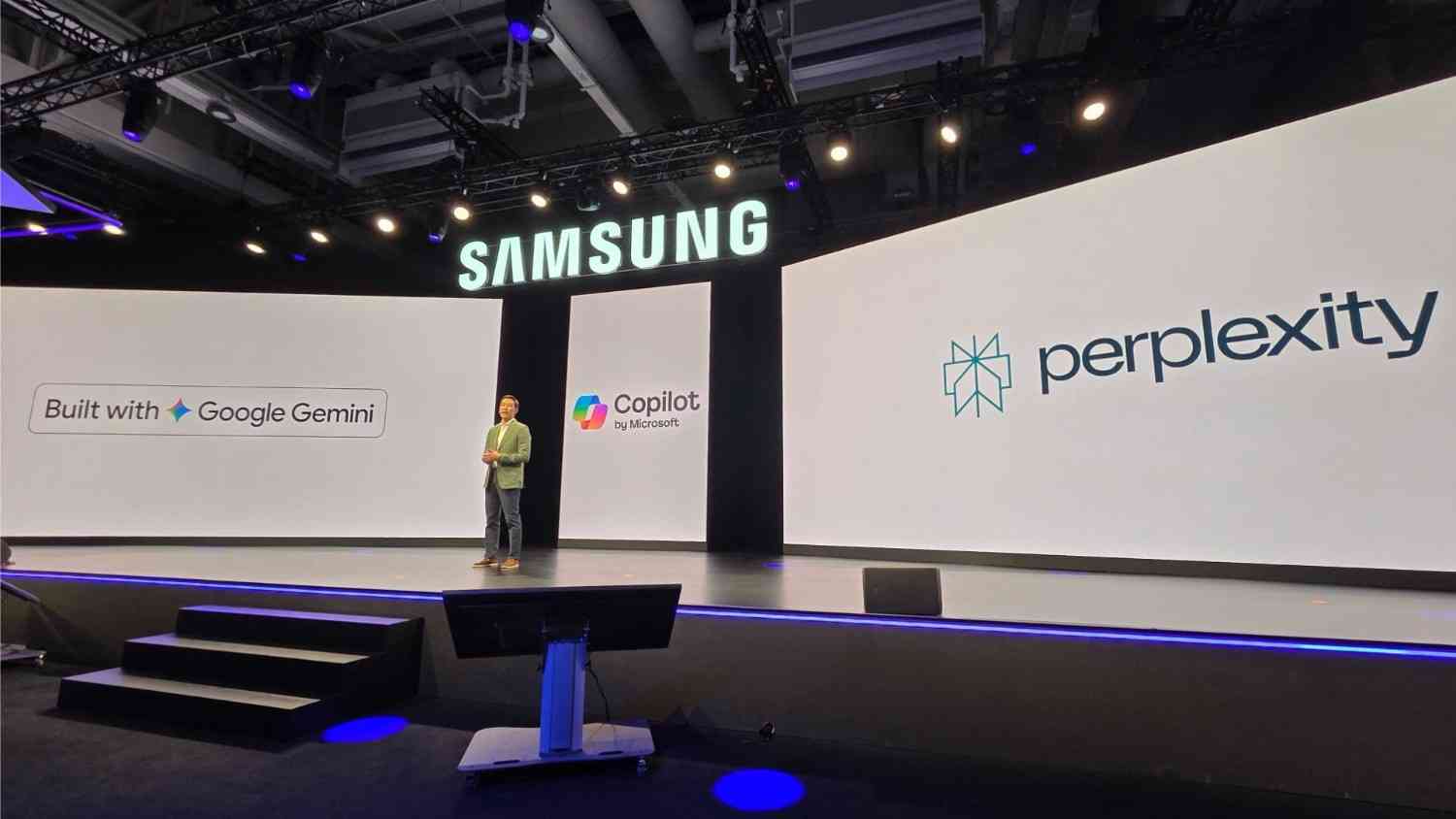
Samsung Bolsters Galaxy AI Ecosystem by Adding Perplexity Alongside Bixby and Gemini
Seoul, South Korea — Samsung is taking a major step in broadening the AI capabilities of its Galaxy smartphones by integrating a third assistant — Perplexity — into its growing Galaxy AI platform. This expansion will see Perplexity join the company’s in-house Bixby and Google’s Gemini as part of a multi-agent AI ecosystem designed to give users more flexibility, choice and smarter performance across everyday tasks on upcoming Galaxy devices, fundamentally reimagining how artificial intelligence operates on mobile phones.
The announcement comes just days before Samsung’s highly anticipated Unpacked event set for February 25, 2026, where the Galaxy S26 series is expected to make its official debut with these expanded AI tools baked into the experience at launch, showcasing Samsung’s vision for the future of mobile intelligence.
A Multi-Agent Approach to Smartphone Intelligence
Rather than relying on a single AI assistant that attempts to handle all tasks with varying degrees of success, Samsung’s strategy with Galaxy AI is to create a multi-agent ecosystem — one in which several AI agents operate in parallel and can be summoned depending on the user’s specific needs and the nature of each task. This approach acknowledges that different AI assistants have different strengths, and users should benefit from the best tool for each job.
Samsung’s own research suggests that a majority of users who rely on AI for everyday tasks tend to use multiple AI agents to accomplish different types of activities, whether it’s web search, scheduling, reminders, creative assistance, or device control. Rather than forcing users to choose one assistant and accept its limitations, Samsung is building a platform where assistants collaborate.
Perplexity — known for its search-oriented AI capabilities that combine conversational responses with real-time web search and citation — will communicate with system-level apps and services such as Samsung Notes, Gallery, Reminder, Calendar and Clock, understanding context across the device. It will also integrate with select third-party apps, allowing a more seamless workflow across the device without having to hop between multiple tools manually or copy-paste information between applications.
Crucially, users will be able to activate Perplexity using a dedicated voice wake phrase, “Hey, Plex,” or by holding the Galaxy’s side button — similar to how other assistants are triggered. This gives Perplexity its own identity within Galaxy AI rather than being buried inside another interface or requiring multiple steps to access.
Samsung says Galaxy AI will act as an orchestrator of these different agents, intelligently routing tasks to the assistant best suited for them while maintaining a unified user experience that feels seamless rather than fragmented. That means you might ask one assistant for scheduling help and another for in-depth research or contextual answers — all on the same device without confusion.
What This Expansion Means for Galaxy Users
This move builds on Samsung’s ongoing efforts to differentiate its Galaxy platform from competitors like Apple and Google itself, creating a distinct value proposition for users who want more from their devices. While most smartphones typically rely on a single built-in AI assistant with limited capabilities, Samsung’s approach gives users genuine choice and flexibility: whether they prefer quick, conversational assistance from Bixby, the generative conversational prowess of Google’s Gemini, or the context-aware search-powered responses of Perplexity.
On the upcoming Galaxy S26 series — expected to include the Galaxy S26, Galaxy S26 Plus and Galaxy S26 Ultra — users will likely see Perplexity deeply integrated into the platform at launch, accessible through multiple entry points across the user interface. Samsung may extend the feature to other devices over time, but details on that are still forthcoming as the company prioritises the flagship launch.
By integrating Perplexity at the system level, Samsung aims to make AI interactions more intuitive and contextual: even mundane tasks like setting reminders, planning trips, managing notifications, or researching topics can benefit from AI assistance that understands context across apps rather than being limited to single-task interactions that require repeated explanations.
The Role of Bixby and Gemini in the New AI Mix
The expansion doesn’t mean that Samsung is moving away from its existing AI partners — far from it, as each assistant brings unique capabilities to the ecosystem. Bixby has been undergoing its own transformation under One UI 8.5, with improvements that emphasize natural language understanding and deep device control that other assistants cannot match.
Recent beta updates have shown Bixby capable of interpreting everyday language better than in the past, and integration with web search and contextual workflows suggests Samsung is doubling down on enhancing the assistant’s capabilities for tasks that require deep system access and control of phone functions.
Google’s Gemini continues to be a core part of Galaxy AI as well, bringing generative AI and large-language-model capabilities to the mix for tasks requiring creativity, conversation, and complex text generation. Gemini excels at tasks like drafting messages, generating ideas, or engaging in extended dialogue.
With three AI agents available, users can leverage a broader range of strengths: Gemini for comprehensive conversation and creative text generation, Bixby for device control and basic tasks, and Perplexity for search and contextual support backed by real-time web access and cited sources.
Looking Ahead: More Flexible, Intelligent Devices
Samsung’s Galaxy AI expansion reflects a broader trend in the mobile industry, where users increasingly expect smart, context-aware assistance that goes beyond simple voice commands and actually understands what they’re trying to accomplish. By enabling multiple assistants to coexist and collaborate intelligently, Samsung is betting that user preferences will drive richer engagement and greater satisfaction with their devices.
The multi-agent approach also acknowledges that no single AI assistant currently excels at everything. Rather than waiting for a hypothetical perfect assistant, Samsung is building a platform that can incorporate the best available tools and adapt as the AI landscape evolves.
Details about rollout timelines, regional availability and deeper integrations are expected to be revealed at Samsung’s Galaxy Unpacked event later this week, where the company will showcase the full vision for Galaxy AI on its new hardware. For now, the move underscores Samsung’s ambition to build one of the most flexible and capable AI ecosystems on mobile devices — one that could reshape how users interact with their phones every day.
A New Paradigm for Mobile AI
The introduction of Perplexity alongside Bixby and Gemini represents a fundamental shift in how smartphone AI is conceptualised. Instead of a single assistant that tries to be everything to everyone, Samsung is creating an ecosystem of intelligence where specialised tools work together.
This approach could prove particularly valuable as AI capabilities continue to evolve rapidly. By building a platform that can incorporate new assistants as they emerge, Samsung future-proofs its devices against the fast-moving AI landscape.
Conclusion
As Samsung prepares to unveil the Galaxy S26 series, the expanded Galaxy AI ecosystem stands as one of the most significant features of the new devices. With three powerful assistants working in concert, users will have unprecedented flexibility in how they interact with their phones.
Three assistants. One platform. Infinite possibilities. Galaxy AI expands with Perplexity.


