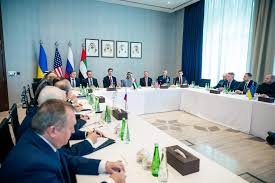
Two days of negotiations in the UAE capital have produced one concrete result: Russia and Ukraine will carry out a large exchange of prisoners of war. The wider question of how to end the conflict, now approaching its fifth year, stayed unanswered.
The US-mediated talks were the first between the two warring sides since February, and they ended on Wednesday without a breakthrough on peace terms.
What was agreed
Vladimir Medinsky, Russia’s chief negotiator, told reporters in Abu Dhabi that both delegations had settled on a large-scale swap and that the sides had reached mutual understanding on certain issues. Ukraine’s team, led by Rustem Umerov, confirmed the planned exchange.
Exact numbers were not announced on Wednesday. US envoy Jared Kushner said the final headcount would be settled on Thursday, while Russia’s state news agency TASS reported the handover could take place within two to three weeks.
That timeline matters to families on both sides who have waited months for news. Prisoner releases rarely happen the day they are announced, because lists must be verified and logistics arranged.
How big could it be?
Whether this becomes a record depends on the final figures. Political analyst Dmitry Medvedenko told Al Jazeera that for it to count as the biggest exchange of the war, it would need to top the 1,000-for-1,000 swap of May last year.
He also offered a sober view of how routine the practice has become. Every two or three months, he said, between 100 and 300 prisoners change hands, making it a channel that reliably functions even when wider diplomacy stalls.
The recent record supports that. Each side freed 200 prisoners in March after talks in Geneva, and last year the two countries each exchanged 146 people following UAE mediation.
The harder questions
Kushner did not oversell the outcome. He described it as a very tough meeting that was nevertheless productive, said territorial questions would be the hardest to resolve, and pointed to progress on a post-war security framework.
The envoy’s next steps show where Washington thinks movement is possible. He and Steve Witkoff plan to travel to Moscow to brief President Vladimir Putin, then fly to Dublin to meet Ukrainian President Volodymyr Zelenskyy.
Europe’s place at the table
One of the most closely watched threads is whether European governments will join the process. Medinsky said further talks would be held soon and that Moscow was not opposed to an EU presence, though he questioned what Russia and the EU would discuss given what he called a lack of European proposals.
Ukraine’s side made the opposite case. Negotiator David Arakhamia said the talks had built good momentum towards a solution before the end of the year and argued that the next round should be multilateral rather than three-way, with Europe represented. Zelenskyy, who is not attending the talks, said European security cannot be discussed without Europe.
Kushner indicated the format question would feature in his conversations with both presidents.
Why Abu Dhabi again
The UAE has become a recurring host for contacts between the parties, and its mediation helped secure an earlier exchange last year. For a country that keeps channels open to Moscow, Kyiv and Washington alike, the role fits a long-running diplomatic style that prefers quiet logistics to public pressure.
It is also a reminder that humanitarian steps and political settlements move at different speeds. A prisoner swap needs only a list and a handover point. A ceasefire needs agreement on borders, guarantees and who polices them.
What to watch next
Three things will show whether Wednesday’s meeting was a pause or a turning point:
- The final numbers. Thursday’s announcement will indicate how large the exchange really is.
- The Moscow and Dublin meetings. They will show whether either leader accepts the ideas Kushner says he is carrying.
- The format of the next round. A move to a multilateral setting would mark a genuine shift.
For now, the Abu Dhabi talks have delivered something small but real, and left everything else for the next round.


Comments 1