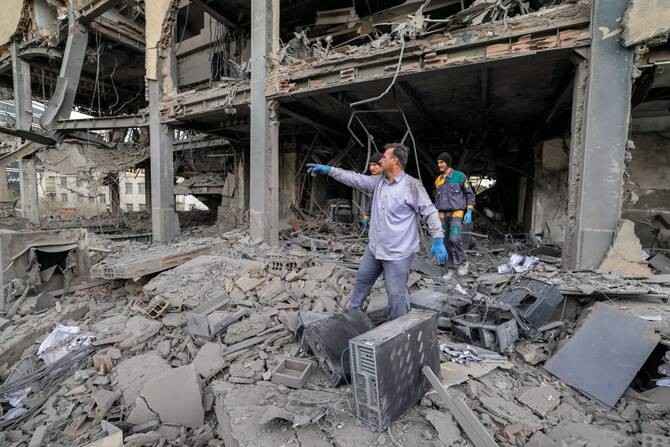
Israel Strikes Tehran’s Sharif University, Causing Gas Outage and Damage to Campus
A fresh wave of airstrikes has intensified tensions in the Middle East after Israeli forces reportedly targeted Tehran, including the prestigious Sharif University of Technology. The strike, which Iranian media say hit parts of the university campus, also triggered gas outages in surrounding areas, further disrupting daily life in the Iranian capital. The attack marks a significant escalation.
According to reports, the attack damaged infrastructure linked to the university, including a nearby gas facility. Iranian state broadcaster IRIB said the strike led to a temporary gas outage in the Sharif neighbourhood, affecting residents and highlighting the vulnerability of civilian infrastructure during the ongoing conflict. The gas disruption added to the chaos.
Videos circulating on social media captured scenes of destruction on and around the campus, with broken windows, debris scattered across buildings, and visible structural damage. Footage from inside the campus also showed parts of a mosque within the university sustaining damage, indicating the wide impact of the strike beyond a single target. The visual evidence is stark.
The incident comes amid a broader escalation in hostilities between Israel and Iran, with both sides engaging in strikes and counter-strikes over recent weeks. Israeli officials have previously justified attacks on certain locations in Iran by alleging that they are linked to military operations or used by the Islamic Revolutionary Guard Corps (IRGC). Israel has not officially commented on this specific strike.
Iranian authorities, however, have condemned the strike, describing it as an attack on a civilian and academic institution. The Sharif University of Technology is one of Iran’s most prominent educational institutions, known for its focus on engineering and scientific research. The reported damage to such a site has raised concerns about the widening scope of targets in the conflict. The university is a national asset.
The gas outage caused by the strike added another layer of disruption. Residents in nearby areas reportedly faced interruptions in cooking gas supply, underscoring how attacks on infrastructure can have immediate consequences for civilians. While officials described the outage as temporary, it has amplified fears of further disruptions if similar strikes continue. Basic services are now at risk.
This development is part of a larger pattern of attacks on energy and infrastructure facilities in Iran. In recent weeks, multiple strikes have targeted fuel depots, gas fields, and other critical installations, significantly affecting the country’s energy network. Analysts say such actions are aimed at weakening Iran’s operational capacity, but they also risk worsening humanitarian conditions. The strategy is becoming clear.
The latest strike also follows reports of Iranian missile attacks on Israeli cities, including Haifa, as both sides continue to exchange blows. The ongoing conflict has already led to casualties, displacement, and damage across multiple countries in the region, raising concerns among global leaders about the risk of a wider war. The cycle of retaliation continues.
Experts warn that targeting areas linked to civilian life, such as universities and residential neighbourhoods, could further escalate tensions and draw international criticism. They also point out that such strikes blur the line between military and civilian targets, complicating diplomatic efforts to de-escalate the situation. International law experts are watching closely.
As of now, there has been no clear indication of an immediate resolution, with both sides maintaining aggressive postures. Diplomatic channels remain active, but progress appears limited as the conflict continues to evolve rapidly. Mediation efforts have yet to yield results.
Also Read: Growing Concern: Bangladesh Slashes Work Hours, Limits Lighting to Tackle Fuel Crunch
In conclusion, the reported bombing of Sharif University and the resulting gas outage mark a significant moment in the ongoing Israel-Iran confrontation. Beyond the immediate physical damage, the incident reflects the deepening intensity of the conflict and its growing impact on civilian infrastructure and daily life in Tehran. The world awaits the next move.


