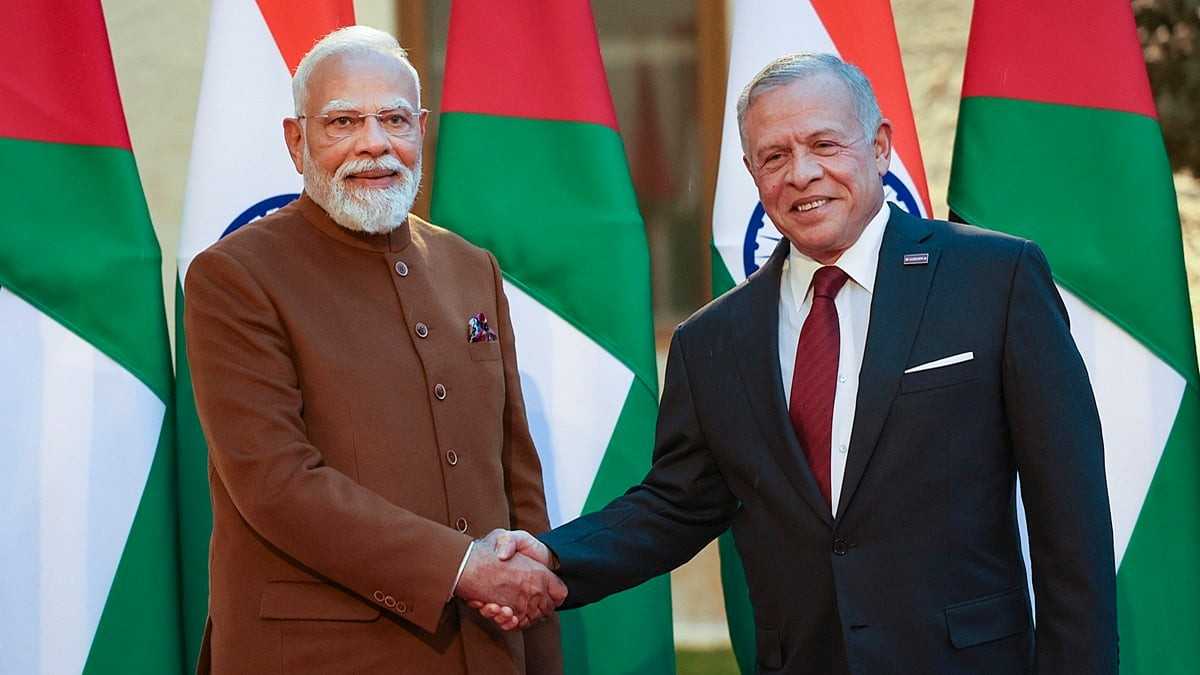
PM Modi Sets Ambitious $5 Billion Trade Target with Jordan, Reinforces Strategic Partnership
In a significant move to strengthen bilateral ties, Prime Minister Narendra Modi has set an ambitious goal of doubling India-Jordan bilateral trade to US $5 billion within the next five years. This major announcement came during PM Modi’s pivotal official visit to Jordan on December 15-16, 2025, marking a new chapter in economic and strategic cooperation between the two nations as they celebrate 75 years of diplomatic relations.
During high-level meetings in Amman with His Majesty King Abdullah II, Crown Prince Hussein, and key ministers, the leaders agreed to deepen collaboration across trade, investment, and innovation. India, already Jordan’s third-largest trading partner, aims to expand this relationship into a broader strategic partnership that leverages both nations’ strengths on the global stage.
A Shared Vision for Economic Growth
Addressing the India-Jordan Business Forum, Prime Minister Modi outlined a forward-looking vision focused on sustainable growth and mutual prosperity. He highlighted India’s position as one of the world’s fastest-growing major economies and invited Jordanian businesses to explore opportunities within India’s vast market of 1.4 billion consumers, robust manufacturing sector, and innovation-friendly policies.
The forum served as a platform to strengthen business-to-business (B2B) connections, with both sides committing to increase private-sector engagement and transform economic potential into tangible outcomes. Key sectors identified for future collaboration include:
Digital Public Infrastructure and Information Technology (IT)
Fintech, Health-tech, and Agri-tech startups
Pharmaceuticals and Medical Devices
Renewable Energy and Green Technologies
Fertiliser and Agriculture Supply Chains
Infrastructure, Logistics, and Manufacturing
Strengthening Ties Through Agreements
The visit resulted in the signing of five Memorandums of Understanding (MoUs) in areas including renewable energy, water resource management, digital innovation, cultural exchange, and heritage conservation. These agreements are expected to accelerate technology transfer, promote sustainable development, and enhance people-to-people ties.
To ensure continued progress, both nations agreed to reconvene the 11th Trade and Economic Joint Committee in early 2026. This committee will monitor the implementation of joint initiatives and explore new avenues for economic cooperation.
Jordan’s Strategic Role and Regional Stability
Beyond trade, discussions also covered regional security, counter-terrorism, and stability in the Middle East. Both leaders reaffirmed their commitment to combating terrorism and promoting peace, highlighting the alignment of their foreign policy objectives. Jordan’s strategic location as a gateway connecting South Asia, West Asia, and Africa further enhances its importance as a key partner for India in the region.
The fertiliser and food security partnership remains vital, with Jordan supplying essential phosphates and fertiliser inputs to support India’s agricultural sector. This existing cooperation provides a strong foundation for scaling up trade and investment in related industries.
Also Read: Indian Army Contingent Deploys to UAE for Joint Military Exercise Desert Cyclone-II
The Road Ahead
The $5 billion trade target signals a confident and proactive approach to building a long-term, multidimensional partnership. By focusing on innovation-driven sectors and sustainable practices, India and Jordan are paving the way for a dynamic economic corridor that benefits both nations.
This visit—marked by warm diplomatic exchanges and cultural engagements—reflects the depth and resilience of India-Jordan relations. As both countries look to the future, this strengthened partnership is poised to play a pivotal role in shaping economic and strategic landscapes across regions.
In summary, PM Modi’s visit to Jordan has not only reinforced decades of diplomatic goodwill but also set a clear, actionable roadmap for transforming bilateral engagement into a powerful engine for shared growth and regional prosperity.


