Table of Contents
ToggleAmid Escalating Middle East Tensions, PM Modi Holds Talks With Saudi and Bahrain Leaders, Thanks Them for Protecting Indian Community
New Delhi, India — With the security situation in West Asia sharply deteriorating following a flurry of military strikes and retaliatory actions that have brought the region to the brink of wider conflict, Prime Minister Narendra Modi on Monday engaged in direct telephone conversations with top leaders from Saudi Arabia and Bahrain, expressing appreciation for steps taken to safeguard Indian citizens living in the Gulf and underlining the critical importance of regional stability for global security.
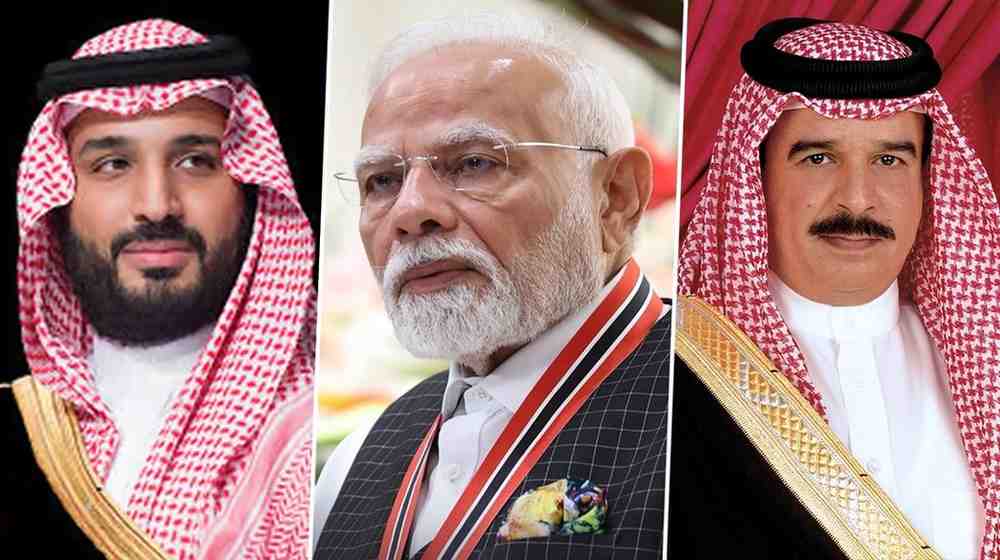
The discussions with Saudi Arabia’s Prime Minister and Crown Prince Mohammed bin Salman bin Abdulaziz Al Saud and King Hamad bin Isa Al Khalifa of Bahrain came against the backdrop of an increasingly fragile security climate in West Asia, where recent hostilities have heightened fears of broader conflict that could draw in multiple nations and threaten global energy supplies.
Modi Condemns Attacks on Saudi Arabia and Bahrain
In his calls, Mr. Modi strongly condemned the recent attacks that struck both Saudi Arabia and Bahrain, describing them as clear violations of each country’s sovereignty and territorial integrity under international law. Such remarks signal India’s firm diplomatic stance and support for the protection of key strategic partners in the Arab world during a time of crisis.
“I discussed the developments in the situation in West Asia,” Mr. Modi wrote on social media platform X following his conversation with Prince Mohammed bin Salman, according to official readouts from the Prime Minister’s Office. He emphasized that restoring peace and stability at the earliest opportunity remained a paramount concern for New Delhi, given the region’s importance to India’s energy security and expatriate population.
With similar gravity, Modi’s conversation with the King of Bahrain highlighted India’s unwavering solidarity with the Bahraini people and leadership amid these trying times, reaffirming the strong bilateral ties between the two nations. In both calls, he specifically expressed gratitude for efforts to protect the large Indian expatriate community living and working in the Gulf kingdoms — a diaspora that numbers in the hundreds of thousands and forms a vital link between India and the region.
Rising Tensions Follow Regional Military Actions
The outreach to Saudi Arabia and Bahrain follows a series of dramatic military developments in the wider Middle East that have fundamentally altered the security landscape. Hostilities intensified after a coordinated military operation involving United States and Israeli forces struck targets within Iran, resulting in the reported death of Iran’s Supreme Leader Ayatollah Ali Khamenei, an event that sent shockwaves through the region.
In response, Iran launched a wave of retaliatory strikes with missiles and drones against several countries across the Gulf, including the UAE, Saudi Arabia, Bahrain, Qatar and Kuwait — citing the need to defend its interests and counter perceived aggression following the leadership strike. These tit-for-tat exchanges have sparked fears of a broader spiral of conflict that could draw in multiple regional and global powers with unpredictable consequences.
Amid this backdrop, India has been walking a delicate diplomatic line — condemning attacks on sovereign states while stressing the need for de-escalation, dialogue and diplomacy as the only sustainable path to peace. New Delhi’s messaging has emphasized the importance of avoiding further escalation and protecting civilians caught up in military confrontations.
Safety of Indians in the Gulf a Central Concern
A core theme in all of Mr. Modi’s recent diplomatic outreach has been the safety and welfare of Indian nationals in the Gulf — a population that includes not only skilled professionals and businesspeople, but also millions of migrant workers whose families in India are increasingly anxious about their wellbeing amid the chaos.
In both conversations with the Saudi and Bahraini leaders, Mr. Modi thanked them for the measures taken by their governments to look after the Indian community during an unstable period when normal life has been disrupted. Such gestures are important for ensuring that the Indian diaspora remains protected, especially as international flights, travel routes and normal economic activity have been disrupted by rising insecurity in the region.
Officials in New Delhi have also been coordinating closely with Indian missions across the Middle East to monitor the situation and provide assistance to those affected. While formal evacuation plans have not been activated, authorities have advised Indian nationals to stay vigilant, follow local security guidance and remain in close contact with their families and employers.
India’s Diplomatic Balancing Act
India’s response to the crisis underscores a broader foreign policy challenge: maintaining constructive ties with a diverse set of countries in a region where interests often collide and alliances shift. India depends heavily on the Gulf for energy supplies and trade, and at the same time seeks stable relations with both Arab states and Iran, requiring careful navigation of competing interests.
This diplomatic balancing act has been evident in India’s simultaneous outreach to multiple regional capitals, ensuring that relationships are maintained across divides. The conversations with Saudi Arabia and Bahrain are part of a larger effort by New Delhi to promote peace, prevent further escalation and support the wellbeing of its citizens abroad.
As tensions in West Asia continue to evolve, India’s foreign policy and diplomatic engagement are likely to remain active and nuanced, reflecting both strategic interests and humanitarian concerns that cannot be separated.
Also Read: Major Security Alert as Taliban Alleges Strikes on Pakistani Military Facilities
Conclusion
PM Modi’s calls to Saudi and Bahraini leaders demonstrate India’s commitment to its strategic partners and its diaspora during times of crisis. As the Middle East teeters on the brink, New Delhi is working diplomatic channels to protect its interests and its people.
Modi reaches out to Gulf leaders. Indian community safety a priority. Diplomacy continues amid Middle East turmoil.


