Drone Strike Hits Oil Storage at Oman’s Port of Salalah, Major Fire Erupts Amid Gulf Tensions
Salalah, Oman — Oil storage facilities at Oman’s Port of Salalah were hit by drones on March 11, triggering a large fire and raising concerns about the security of energy infrastructure in the Gulf amid escalating regional tensions.
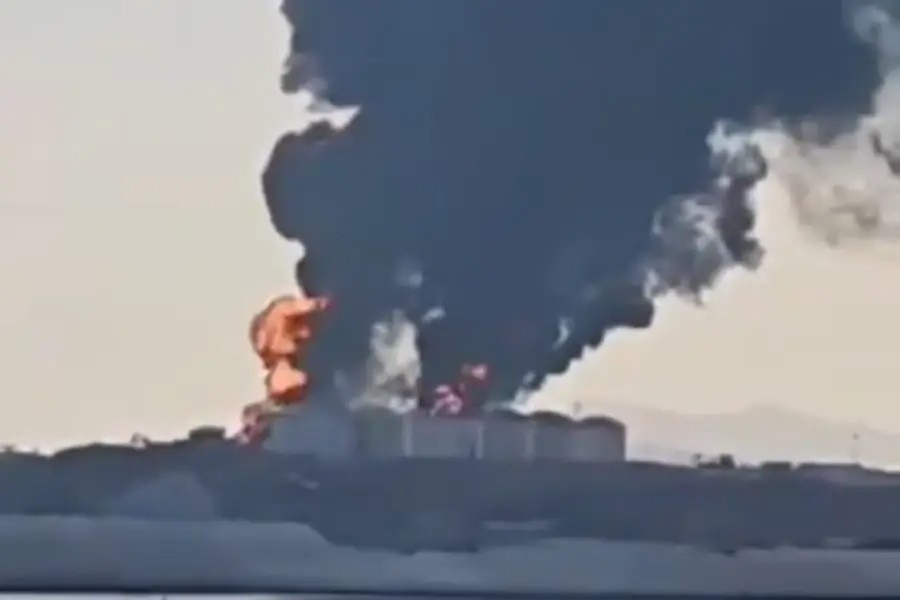
According to Omani state media and maritime security firm Ambrey, several unmanned aerial vehicles struck fuel storage tanks at the port, causing flames and thick smoke to rise from the facility. Emergency response teams, including firefighters and civil defence personnel, were quickly deployed to control the blaze and prevent it from spreading to nearby installations.
Authorities said efforts were underway to contain the fire, with support from the country’s armed forces and companies operating in the port area. Officials warned that extinguishing the blaze could take time due to the presence of large quantities of fuel stored at the site.
The Port of Salalah is one of Oman’s most important maritime hubs and a key logistics and transshipment centre in the Arabian Sea. The port handles a wide range of cargo, including oil and fuel shipments, and serves as a vital link between shipping routes in Asia, Europe and the Middle East.
Video footage circulating on social media and verified by news agencies showed oil tanks engulfed in flames while thick black smoke billowed into the sky. The dramatic scenes highlighted the scale of the damage and the intensity of the fire caused by the drone strike.
Despite the attack, initial reports indicated that no merchant vessels were damaged and there were no immediate reports of casualties. Maritime security sources said the strike mainly affected onshore fuel storage infrastructure.
However, the incident forced authorities to suspend certain port operations as a precaution while emergency crews worked to secure the area and assess the extent of the damage.
The drone strike comes amid a rapidly escalating conflict in the Middle East that has already disrupted shipping lanes and global energy markets. Analysts say attacks on energy facilities and vessels have increased since tensions intensified between Iran and its adversaries in the region.
Since the start of the conflict, several incidents involving drones and missiles have targeted infrastructure and ships in the Gulf. Oman itself has seen multiple strikes on energy facilities and tankers in recent weeks, reflecting the widening scope of the conflict.
The escalation has also affected maritime traffic near the Strait of Hormuz, one of the world’s most crucial oil transit routes. Roughly 20 percent of global oil supplies normally pass through this narrow waterway, making any disruption there a major concern for international energy markets.
Security analysts warn that attacks on energy infrastructure such as oil terminals, refineries and storage facilities could significantly disrupt supply chains if they become more frequent. Even isolated incidents can trigger market volatility because of the Gulf’s central role in global oil trade.
The strike on Salalah port also highlights the vulnerability of critical infrastructure to relatively inexpensive drone attacks, which have become increasingly common in modern conflicts.
Shipping companies and energy firms are closely monitoring the situation as the conflict continues to spread across the region. Any further escalation could force more ports and shipping routes to suspend operations, potentially tightening global oil supplies and pushing energy prices higher.
For now, Omani authorities remain focused on controlling the fire and restoring normal operations at the port while ensuring the safety of workers and surrounding facilities.
Also Read: Rising Risks in the Strait of Hormuz as Naval Mines Threaten Global Oil Routes
The incident underscores how quickly the ongoing Middle East conflict is expanding beyond traditional battlefields and affecting major commercial and energy hubs across the region.
Drones strike Oman’s key oil port: Massive fire at Salalah as Gulf conflict reaches critical energy infrastructure. The war’s economic toll mounts.


