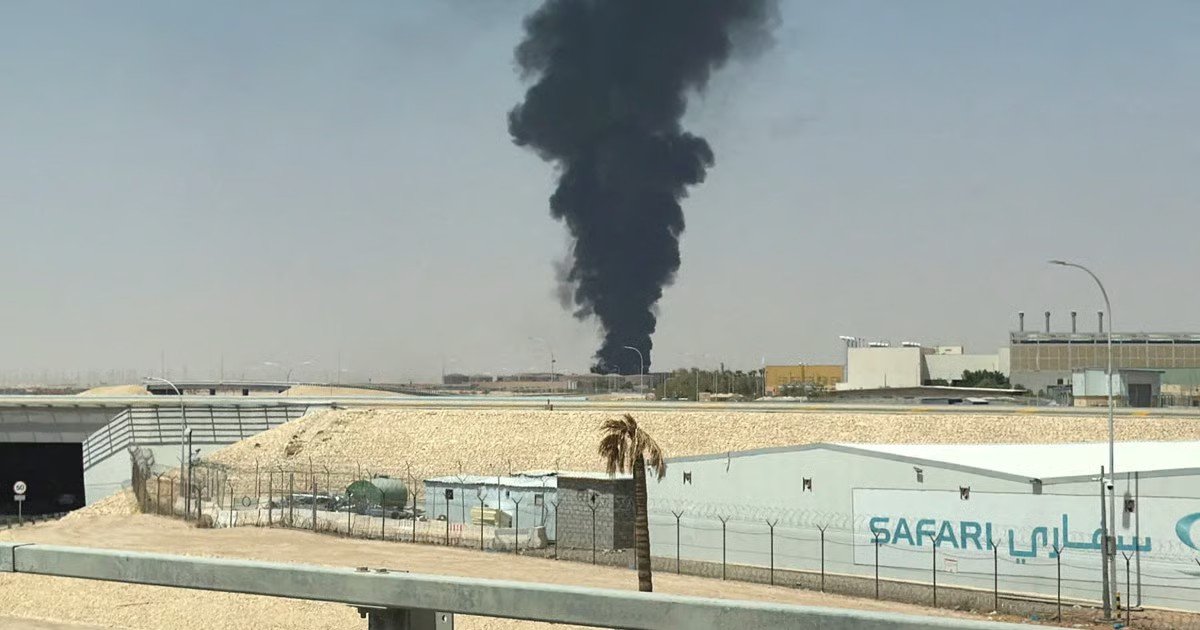
Oil prices rose on Wednesday after Yemen’s Houthi movement claimed a missile strike on Saudi Arabia’s largest refinery, a claim Riyadh has not confirmed.
What the market did
Brent futures for December delivery gained $1.55, or about 1.4 per cent, to $115.43 a barrel, while US West Texas Intermediate rose 1.43 per cent to $101.32. The rise reversed part of the previous session’s losses, when crude fell by nearly $2 a barrel as talks in the Middle East eased concerns about supply.
The claim and the unknowns
Houthi military spokesman Yahya Saree said on X that the group targeted the Ras Tanura refinery in the Eastern Province with a ballistic missile, causing what he described as massive fires. Maritime security agency Vanguard reported a fire in the Ras Tanura area in the early hours of Tuesday. It said the fire had reportedly been contained, but the extent of damage and any effect on loading operations remained unclear.
Saudi authorities have not confirmed the strike or any damage. Aramco, which operates the facility, did not immediately comment. The refinery has a processing capacity of 550,000 barrels a day and sits at one of the kingdom’s main crude export hubs.
Market analysts framed the move as one driven by risk rather than lost supply. Until Riyadh confirms what happened, traders are pricing the possibility of disruption. If damage proves limited, prices could ease. If processing or export capacity has been hit, the reaction could be sharper.
A pattern of attacks
The claim is the latest in a series. A Saudi-led coalition said on Tuesday that its air defences intercepted three ballistic missiles launched towards the Eastern Province and four drones aimed at the south. Earlier this month, the Houthis hit an administrative building at Aramco’s headquarters in Dhahran. On Tuesday, debris from two missiles intercepted over Riyadh also damaged a building, a construction site and a vehicle.
The backdrop is already difficult for the sector. Aramco produced less oil in August than in any month since 1990. Its chief executive has said the company’s East-West pipeline could be expanded to carry 10 million barrels a day. That route matters because it can move crude to the Red Sea coast, away from the Strait of Hormuz.
Why it matters in the UAE
The UAE is both a major producer and a large consumer of fuel, so it feels these swings in several ways. Retail prices at the pump follow the market with a lag. The UAE Fuel Price Committee announces new rates on the final day of each month, and they take effect the next day.
October’s rates were already sharply higher, with Super 98 at Dh4.40 a litre, up 15.8 per cent from Dh3.80 in September. The committee will announce November’s prices at the end of this week. This report does not forecast them. Residents who budget for fuel should watch the announcement.
Aviation and shipping costs also follow oil. Higher crude prices raise airline fuel bills and can push up insurance and freight costs in an area where shipping risk is already high.
Diplomacy and the price of uncertainty
The peace talks had lifted Saudi and other regional stock exchanges on Tuesday, but the latest claim shows how fragile efforts to contain the conflict remain. Analysts noted that talk of negotiations has not generated much selling pressure in oil, because traders are focused on events on the ground.
For now, the market is waiting for two things: confirmation or denial from Saudi Arabia, and the next diplomatic move. Until then, expect crude to react to each headline from the Gulf.


Comments 1