A Fresh Start for More Than a Million Students
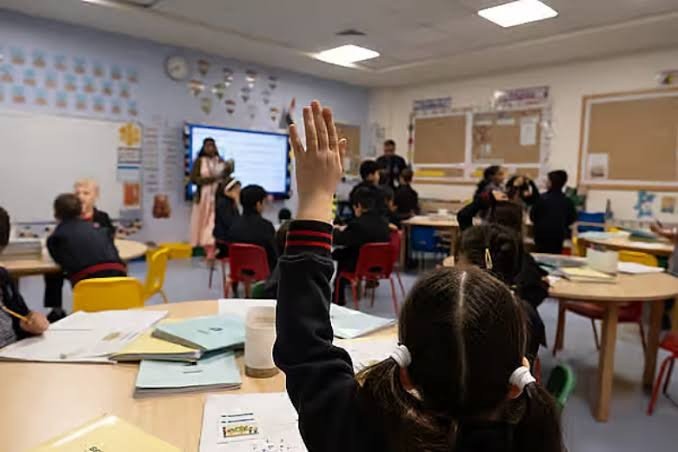
Classrooms across the UAE came alive this week as more than 1.27 million students returned to school for the start of the 2026-2027 academic year, marking one of the most significant back-to-school moments in the country’s recent educational history. The return comes with a fresh three-year academic calendar, sweeping curriculum reforms, and a slogan — “With the Charter, We Reach New Horizons” — meant to capture the spirit of the year ahead.
According to figures released by education authorities, some 1,180 public and private schools following the Ministry of Education curriculum opened their doors this week, welcoming students across all educational stages. The scale of the return reflects just how large and fast-growing the UAE’s education sector has become, with enrolment continuing to climb year after year across both public and private institutions.
A Carefully Structured Calendar
This year marks the first to fall under the UAE’s newly announced three-year academic calendar, which lays out school dates through the 2028-2029 academic year. For 2026-2027 specifically, the school year comprises 185 teaching days spread across three terms: 67 days in the first term, 60 in the second, and 58 in the third. The first term alone spans 13 weeks, with the second and third terms each running 12 weeks.
To help students and families settle back into routine gradually, schools implemented a phased return over the first four school days, with reduced attendance expected during that initial stretch before full official school hours and attendance requirements took effect. Officials say the phased approach is designed to ease the transition after the long summer break and help restore consistent daily routines before the academic pressure of a full timetable begins in earnest.
Attendance on the very first day was reported to range between 80 and 90 per cent among students, while administrative, teaching and technical staff recorded full attendance — a strong start that education officials have pointed to as a positive early indicator for the year ahead.
Key Dates Parents Should Know
The Ministry of Education’s approved calendar lays out a detailed sequence of breaks and milestones for the year. The first-semester mid-term break is scheduled for October 12 to 18, with students returning to classes on October 19. Winter break follows in mid-December, running from December 14 through January 3, with the second term beginning January 4, 2027. Spring break is scheduled for early April, running from April 5 to 11, with the academic year concluding on July 2, 2027.
Families with children enrolled in schools following non-Ministry curricula — including Indian, Pakistani and Japanese curriculum schools — should note that these institutions typically follow different academic cycles, often running from April to March rather than the standard August-to-July format used by most public and private schools following the UAE Ministry curriculum.
A Significant Shift in Admissions Policy
One of the more consequential changes taking effect this academic year involves admissions eligibility for younger children. For schools operating on the standard August or September start, the age cut-off for new admissions has shifted from August 31 to December 31. Under the revised rule, children must reach the required age by December 31 of their enrolment year rather than by the traditional end-of-August cutoff — a change that affects planning for parents of children approaching school age, particularly those whose birthdays fall in the final months of the calendar year.
Curriculum Reforms Reshape the Classroom
Beyond calendar and admissions changes, the Ministry of Education has introduced substantial curriculum reforms for the new academic year, with a particular emphasis on artificial intelligence and technology integration, alongside restructured science instruction. Science curricula for Grades 9 and 10 in the General Education track have been reorganised, as have physics courses spanning Grades 10 through 12 in the Advanced track.
Language of instruction has also shifted for certain subjects within private schools. Science for Grade 9 students in the Advanced track will now be taught in English rather than Arabic, with the same change applied to mathematics for students in the same grade and track. To support the transition, the Ministry has developed comprehensive curriculum guides covering Grades 9 through 11, alongside updated laboratory guides and new assessment guidelines spanning Grades 1 through 12. New diagnostic tools have also been introduced to help determine students’ baseline learning levels across several key grade bands, supporting more targeted instruction from the very start of the year.
A Growing and Diversifying Sector
The scale of this year’s return underscores just how significant the UAE’s education sector has become on a global scale. In Dubai alone, the most recent complete school landscape data recorded more than 387,000 students across 227 private schools, representing continued year-on-year growth even amid a rapidly maturing market. Regulatory authorities have confirmed further enrolment increases moving into the current academic year, alongside the opening of additional new schools across the emirate. Similar expansion has been recorded in Abu Dhabi, where the private education sector has grown to include more than 220 schools.
A Year of Renewed Focus
For many families, this year’s return to school carries added significance following a previous academic year that brought periods of disruption tied to regional conflict, including stretches of distance learning and considerable uncertainty for students, parents and educators alike. Against that backdrop, education officials have framed this year’s opening as a genuine fresh start — one anchored by a stable, clearly communicated three-year calendar and a curriculum designed to prepare students for a rapidly changing technological and economic landscape.
As the year progresses, the true measure of this year’s reforms will lie in how effectively schools translate calendar stability and curriculum ambition into meaningful outcomes for the more than 1.27 million students now settling back into their classrooms across the country. Next Article


