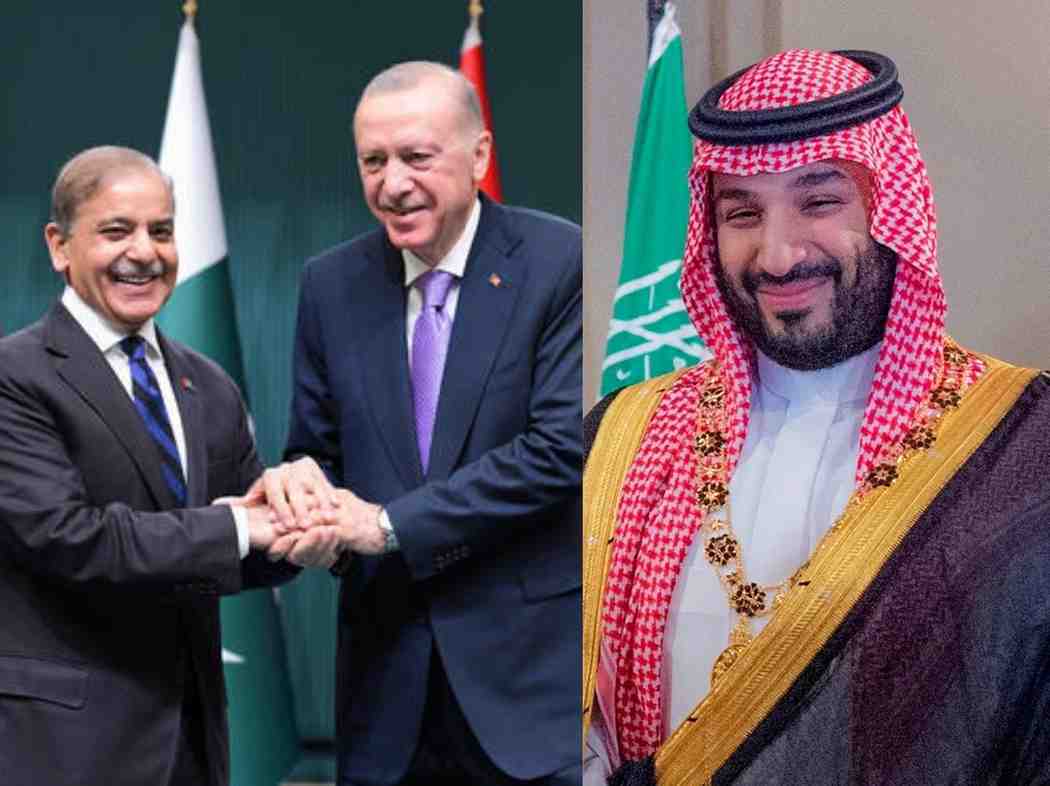
“Islamic NATO” in Making? India Watches as Pakistan, Saudi Arabia & Türkiye Forge Defence Pact
A major new defence framework involving Pakistan, Saudi Arabia, and potentially Türkiye is taking shape, drawing global comparisons to an “Islamic NATO.” This emerging alliance, centered on a collective security pledge, could significantly recalibrate power dynamics in West and South Asia, presenting a complex strategic challenge for India.
The Core of the Pact: A NATO-Style Defence Clause
The foundation was laid in September last year with the Saudi-Pakistan Strategic Mutual Defence Agreement (SMDA). The pact’s key provision treats external aggression against one nation as an attack on both, mirroring the core principle of NATO’s Article 5. This formalizes decades of deep military cooperation, where Pakistan has stationed troops and provided training to Saudi forces.
Why the “Islamic NATO” Label? Türkiye’s Pivotal Role
The framework’s geopolitical weight increased substantially with Türkiye’s advanced talks to join. As an existing NATO member with a formidable conventional military and a robust defence industry, Türkiye’s inclusion would transform the pact into a potent trilateral bloc. Analysts use the “Islamic NATO” tag informally to describe this potential union of Saudi economic power, Pakistani military (and nuclear) capabilities, and Turkish armed strength under a collective defence ethos.
Direct Implications for India’s Security
For New Delhi, this development introduces multifaceted concerns:
Pakistan Factor: The pact could enhance Pakistan’s strategic depth and deterrent posture, indirectly impacting the longstanding India-Pakistan security calculus. Any external security guarantee for Islamabad alters regional equations.
Saudi-India Relations Test: While Saudi Arabia is a crucial Indian partner for energy, trade, and investment, its formal defence pact with Pakistan introduces a delicate balancing act. India will closely watch if this impacts Saudi Arabia’s traditionally neutral stance on Indo-Pak issues.
Türkiye’s Stance: Ankara’s often critical position on Kashmir, combined with its potential membership in a bloc with Pakistan, adds a diplomatic complication for India, despite ongoing bilateral engagements.
Broader Geopolitical Shifts: A Post-US Hedge Strategy
This pact signals a wider trend of Gulf nations, led by Saudi Arabia, diversifying their security partnerships beyond traditional Western guarantees. It reflects a desire for strategic autonomy and a collective hedge against regional instability. For the member states, the benefits are clear: Saudi Arabia gains a security umbrella, Pakistan secures political and strategic reinforcement, and Türkiye expands its influence across Eurasia.
Also Read: Japan Raises Travel Danger Levels for UAE, Qatar, Oman & Iran to Level 1
India’s Strategic Response and the Road Ahead
Officially, India’s Ministry of External Affairs has stated it is “analyzing the implications” of the pact. Experts suggest India’s response will likely involve:
Enhanced Diplomatic Engagement: Strengthening ties with key Arab nations and other global powers to ensure a balanced regional approach.
Accelerating Self-Reliance: Boosting indigenous defence manufacturing under the ‘Make in India’ initiative and modernizing armed forces.
Quad & I2U2 Synergy: Leveraging existing minilateral partnerships like the Quad (with US, Japan, Australia) and I2U2 (with Israel, UAE, US) to reinforce its strategic footprint.
Currently, the framework is more a strategic alignment than a formal treaty organization like NATO. Its ultimate form will depend on member states’ political will and international reactions. However, its very conception marks a pivotal moment, urging India to navigate an increasingly multipolar and complex security landscape with agile diplomacy and strengthened deterrence.


