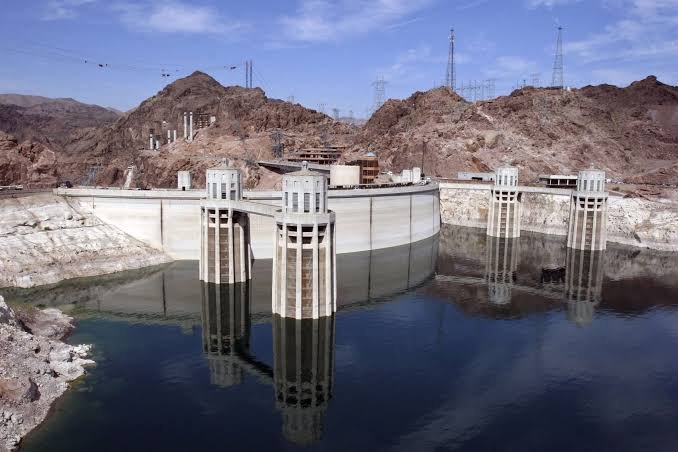
Dubai has switched on a new kind of power plant in the Hajar Mountains, one that works like a giant battery made of water. Sheikh Mohammed bin Rashid Al Maktoum, Vice President, Prime Minister and Ruler of Dubai, opened the Dh1.4 billion hydroelectric station in Hatta on Thursday. He then spent the day reviewing the enclave’s wider development.
How the plant works
The facility, built by the Dubai Electricity and Water Authority (DEWA), is the first pumped-storage hydroelectric plant in the GCC. It has a generation capacity of 250 megawatts and can store 1,500 megawatt-hours of energy. It has an estimated lifespan of 80 years.
The principle is simple. When solar output is high, electricity from the Mohammed bin Rashid Al Maktoum Solar Park is used to pump water from Hatta Dam up to an upper reservoir. When demand rises, or the sun sets, the water is released back downhill through turbines, generating electricity on its way down.
That matters because solar power is abundant at midday but unavailable at night. Storage turns a variable supply into one that can be dispatched when the grid needs it. The project took more than 22 million work hours to complete.
Sheikh Mohammed praised DEWA’s work and said the plant supports the UAE Net Zero 2050 Strategy and the Dubai Clean Energy Strategy 2050.
A master plan for Hatta
The visit was not only about energy. Sheikh Mohammed also checked progress on the Hatta Master Development Plan. It aims to turn the enclave into a year-round destination and to improve life for residents. The plan is expected to generate Dh1.2 billion in economic benefits by 2040.
Mattar Al Tayer, director general of the Roads and Transport Authority and chairman of the Supreme Committee overseeing Hatta’s development, briefed him on current projects. They include:
- Hatta Beach, an integrated tourism, leisure and commercial development
- Hatta District, a commercial centre near Hatta Heritage Village
- A hotel and resort near Wadi Hub
- A service centre with 13 commercial units
- Hatta Wedding Hall
- A 12.5-kilometre mountain hiking trail at Umm Al Nusour
- The redevelopment of Hatta Sports Club
Getting around
Transport upgrades are central to the plan. They include six mobility hubs, more than 17 kilometres of cycling tracks, road improvements and over 660 additional parking spaces. The Hatta Express, which links Dubai Mall directly with Hatta, now carries around 2,000 visitors a day.
Sheikh Mohammed directed government bodies to attract more private-sector investment, diversify the local economy and improve services for residents and visitors alike.
Homes for Emirati families
Housing was also on the agenda. Sheikh Mohammed inspected two projects for Emirati citizens with a combined value of Dh1.1 billion. Makan 1, with 344 villas, was completed three years ago at a cost of Dh600 million. Makan 2 comprises 213 villas and is worth Dh500 million. Together they provide 557 villas.
He asked officials to speed up the allocation of Makan 2 homes so that the project is finished on schedule by the end of December.
Meeting the community, and a look at the past
Sheikh Mohammed met community leaders, business owners and residents to discuss priorities for Hatta’s next phase. Conversations focused on supporting local businesses, encouraging young entrepreneurs and making sure residents benefit from the area’s growing tourism. He also visited Hatta Majlis, a community space designed for around 100 people.
The visit included a look at the area’s history. Sheikh Mohammed viewed artefacts from the late Islamic period found at the Suhaila archaeological site in the Hajar Mountains. They include pottery, metal objects, coins and jewellery. The site holds the remains of around 17 villages, 157 houses, 67 agricultural terraces and seven defensive towers. More than 400 artefacts have been recovered so far.
Why it matters
For the wider region, the plant is a proof of concept. Gulf countries have invested heavily in solar capacity, and the next challenge is storing that power efficiently. A pumped-storage station, which relies on gravity and water, offers a long-life option that complements batteries rather than replacing them. Whether similar projects follow elsewhere in the GCC will depend on suitable terrain and water availability, which are in short supply in the region. In Hatta, however, an existing dam and mountain topography made the project possible.
For Hatta itself, the combination of clean energy, tourism and housing signals an effort to make the mountain enclave self-sustaining. The coming months, particularly the handover of the Makan 2 villas, will show how quickly that vision is moving from plan to reality.


Comments 1