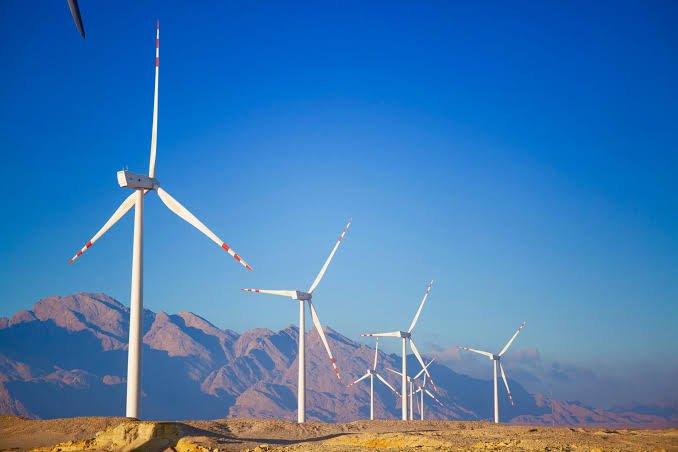
A UAE-based renewable energy company has taken another large step in Egypt. AMEA Power signed contracts this week for a 500-megawatt wind farm on the Red Sea coast and agreed to build a turbine factory that Egyptian officials describe as the country’s first.
The Deals
The signing took place on Wednesday, 18 November, at the cabinet headquarters in Egypt’s New Administrative Capital. Prime Minister Mostafa Madbouly witnessed the ceremony, and the Minister of Electricity and Renewable Energy, Mahmoud Essmat, attended.
The wind farm, known as Amunet 2, will stand at Ras Shukeir on the Red Sea. AMEA Power chairman Hussain Al Nowais said the project will cost $650 million. The company signed an engineering, procurement and construction contract with China’s PowerChina International and PowerChina Huadong. It also signed contracts with the Chinese turbine maker Mingyang. Those cover both turbines and the new factory in the Suez Canal Economic Zone.
AMEA Power is part of Al Nowais Investments. It describes itself as the largest independent renewable power producer in Egypt.
A Growing Footprint
The new project adds to AMEA Power’s existing portfolio. The company had announced another 500 MW project with the same name, Amunet 2, with the turbine maker Envision in June 2026. Once projects are running, AMEA Power’s wind capacity in Egypt is due to reach 1 gigawatt, according to details reported at the time of the signing.
The company’s Egyptian work goes back several years. In 2022, it secured $1.1 billion in financing, with backing from the International Finance Corporation, for a solar plant at Abydos in Aswan and the first Amunet wind farm. Those projects were billed as the largest of their kind in Egypt. The solar plant later opened.
Why a Turbine Factory Matters
Building wind farms is one thing. Manufacturing turbines locally is another. Egypt has strong wind resources along the Red Sea and the Gulf of Suez, but until now the country has relied on imported equipment. A factory in the Suez Canal Economic Zone, a state-run industrial and port area, would aim to localise manufacturing, transfer technology and create jobs. AMEA Power has also said it hopes to make Egypt an export base for Africa.
For Egypt, the logic is straightforward. Electricity demand is rising, summers are hot and the grid has faced shortages in recent years. Wind and solar are quicker to build than most conventional plants, and they reduce exposure to fuel imports. The government has set a target of generating around 42 per cent of its electricity from renewable sources by 2035, according to earlier industry reporting.
What It Says About UAE Strategy
The deal fits a wider pattern. UAE companies, from AMEA Power to Masdar, have been building large renewable portfolios across Africa, Asia and Europe. Investment in energy outside the country gives Emirati firms new revenue and helps strengthen diplomatic and trade ties.
It also comes at a time when the Gulf’s energy sector is under pressure at home. Shipping through the Strait of Hormuz has been disrupted, and UAE energy firms have faced attacks on vessels. Investing in projects elsewhere diversifies exposure. The IMF has also praised UAE efforts to expand trade partnerships and alternative routes as the country responds to regional disruption.
Points to Watch
Large energy projects often face delays, and financing, grid connection and permitting can all slow progress. The timetable for construction and first power has not been detailed in the reports available, and the source of financing for Amunet 2 has not been specified. The factory’s capacity and start date are also unclear in the summary information published so far.
There is another sensitivity: both the wind farm and the factory rely heavily on Chinese contractors and equipment. That is common in the sector, but it shapes who captures the long-term industrial benefit.
For now, the signing is a clear signal that Emirati capital still sees strong potential in Egypt’s renewable sector. If the projects reach completion, an AMEA Power Egypt wind farm of this scale could help power hundreds of thousands of homes and anchor a new manufacturing industry.


Comments 1