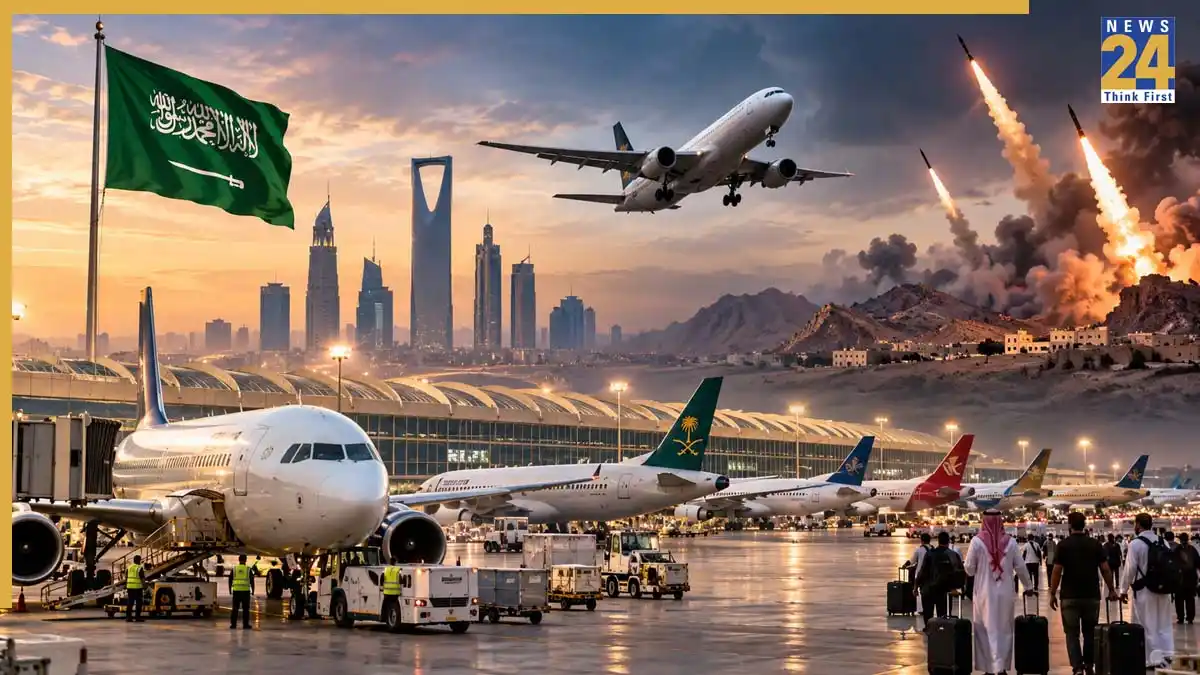
Travellers leaving the UAE faced a patchwork of cancellations on Wednesday as airlines adjusted their Saudi Arabia schedules. Meanwhile, oil prices bounced off two-month lows after fresh attacks on Gulf shipping. Together, the two trends are shaping travel plans and household costs as the US/Israel–Iran conflict enters its 256th day.
Saudi routes bear the brunt
UAE airspace remains open, with carriers finding workarounds amid possible threats. The principal confirmed impact on passengers is on Saudi routes, amid attacks launched by Iran-backed Houthis in Yemen.
Etihad Airways has cancelled all passenger and cargo flights between Abu Dhabi and both Riyadh and Dammam through 19 November. Its Jeddah services, EY601 to EY604, resumed on 6 November. On flydubai’s side, four Dammam flights were cancelled on 11 November: FZ883, FZ869, FZ863 and FZ867. Emirates and Air Arabia have reported selected disruptions on Saudi services.
Foreign carriers are also trimming schedules. Philippine Airlines has suspended Riyadh flights PR654 and PR655 until 29 November. ITA Airways has cancelled Riyadh flights until 18 November. Eurowings expects its Jeddah services to resume on 12 November.
Other affected routes
Iranian-operated flights to the UAE remain suspended, and Emirates and flydubai services to Tel Aviv are affected. The picture shifts from day to day, and several international carriers have pushed back their return dates into late November and beyond.
How airlines are weighing the risk
Carriers are making individual risk assessments, and they are doing so against changing conflict-zone advisories. The European Union Aviation Safety Agency (EASA) keeps advisories in place covering Iran, the UAE, Bahrain, Kuwait, Qatar and Oman. They are listed as valid until 16 November unless revised earlier. Gulf News notes that the arrangements can change quickly as airlines reassess routes and security information.
Oil rebounds on Hormuz worries
On the energy side, oil rose on Wednesday after reaching two-month lows. Traders were weighing the possibility of de-escalation against continuing attacks on Hormuz shipping. By 10.30am Gulf time, Brent crude was up $1.15, or 1.26 per cent, at $92.64 a barrel, while US benchmark WTI had gained 69 cents, or 0.80 per cent, to $86.73.
The UAE’s own benchmark moved the other way. Murban physical crude fell $7.10, or 7.16 per cent, to $92.07. The divergence shows how differently individual grades can react to the same set of headlines, depending on supply, logistics and buyer demand.
Why residents should care
For most people in the UAE, the global benchmark price matters less than how it feeds through to fuel, transport and imported goods. Disruption around the Strait of Hormuz can affect fuel costs, shipping reliability and travel plans all at once.
The latest rebound followed earlier declines, which illustrates how quickly hopes of peace can reverse when tankers are attacked or navigation routes remain restricted. Any confirmed de-escalation could ease the pressure on prices. Continued strikes on vessels would keep navigation, insurance and fuel costs under strain.
Practical steps for travellers
Gulf News has set out some straightforward guidance:
- Check airline apps and official airport channels before travelling, rather than relying on old schedules or social-media posts.
- Confirm itineraries involving Saudi Arabia, Bahrain, Kuwait or Israel directly with the airline, since routes and frequencies can change.
- Follow advisories from the UAE Ministry of Foreign Affairs and local authorities. The ministry lists an active travel ban for UAE nationals travelling to Iran and urges those already there to return promptly.
- Keep emergency contacts, travel insurance details and alternative transport plans to hand, especially for time-sensitive international journeys.
A measured outlook
Gulf News stresses that the latest regional developments do not amount to a general threat to people living in the UAE. The civilian impact is showing up mainly through transport, energy prices and coastal safety, not through a single citywide emergency.
That makes flexibility the watchword for the days ahead. Build extra time into journeys, expect fuel-linked costs to stay volatile while Hormuz remains unsettled, and treat any schedule as provisional until the airline confirms it.


Comments 1