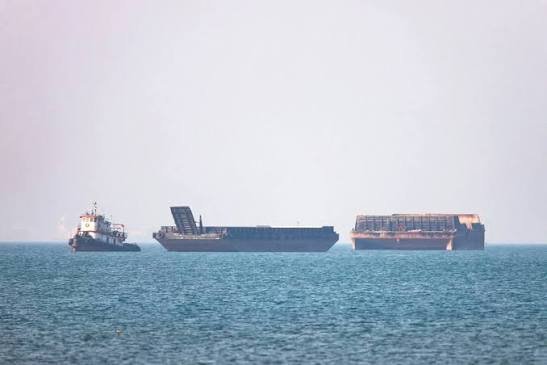
Shipping risks in the Gulf rose again over the weekend, as the UAE condemned an attack on a Qatari gas tanker while diplomats tried to find a way to reopen the Strait of Hormuz.
The UAE’s response
The UAE’s Ministry of Foreign Affairs condemned in the strongest terms the attack on the liquefied natural gas tanker Al Mayeda, owned by Qatar Gas Transport Company. It called the attack a grave threat to the safety of maritime navigation and global energy supplies, with serious environmental repercussions, and a dangerous escalation aimed at undermining the security of critical waterways. The ministry also voiced solidarity with Qatar and urged respect for international law and the safety of commercial vessels and their crews.
This report does not attribute the attack to any party, because the details in public reports remain limited.
A second incident
A separate incident was reported overnight. The UK Maritime Trade Operations centre said a tanker was struck by two unidentified projectiles on its port side, 72 nautical miles east of Ras Al Khafji in Saudi Arabia, on November 1. All crew members were accounted for and no environmental impact was reported. It advised vessels to use caution in the area.
Iranian state media said two oil tankers exploded after striking mines while using what the IRGC Navy described as an unauthorised route through Hormuz. That claim comes from Iranian media and has not been independently verified.
A two-day plan, not yet a deal
Diplomacy is moving in parallel. Iranian Foreign Minister Abbas Araghchi said Qatar-mediated talks have produced a two-day plan. On the first day, the US would implement a set of measures, and on the second, Hormuz would reopen and transit would return to normal. It is a shortened version of an earlier seven-day plan.
The caveats matter. The report stressed that this is a proposal, not an agreed deal. The two-day sequence depends on US action, and Washington has not publicly accepted it. Iranian negotiators were in Doha for a third consecutive day of talks, according to Reuters.
Washington’s two tracks
The US position is mixed. President Donald Trump has renewed his threat of military action, saying Washington may eventually have to give Tehran “the hammer”. Secretary of State Marco Rubio said Trump has not decided whether to launch new strikes and prefers a diplomatic resolution.
Axios, citing sources, reported that Israeli Prime Minister Benjamin Netanyahu is pressing for a strike immediately after Tuesday’s US midterm elections, while Trump wants negotiations to play out for now. Iran’s army spokesman warned that any new war could last longer than the previous one and spread beyond the Middle East.
Oil and the economy
Markets are watching closely. Brent crude was down about 2 per cent at $111.2 a barrel on Monday, and US benchmark WTI fell to $101.7. Murban crude, the grade ADNOC exports, rose 1.85 per cent to $114.8. Prices remain well above $100, and traders say they are reacting to each new headline.
For UAE motorists, higher crude has fed through to pump prices in recent months. The country’s fuel committee sets new rates at the end of each month.
Flights: what has changed
Etihad has extended cancellations on selected Saudi routes until November 5, and Emirates, flydubai and Air Arabia have reported schedule changes. British Airways is due to resume limited services to Riyadh on November 3. Lufthansa has postponed its return until November 25, ITA Airways until November 30, and Singapore Airlines until February 28, 2027. IndiGo, Air India and Air India Express have suspended Saudi services until November 14.
Travellers should confirm the status of any flight with their airline before leaving for the airport.
The UAE’s stance
The UAE says it continues to push for a diplomatic breakthrough while remaining prepared for further escalation. That dual message, hoping for peace while preparing for the worst, has marked its position throughout the conflict.
What to watch
Three things will shape the next few days: whether Washington responds to the two-day proposal, how the US midterm vote on Tuesday affects its calculations, and whether more ships are hit. Each could change shipping, oil prices and flight schedules quickly.


Comments 1