The Emirates Times

Linkedin Twitter Facebook Tumblr

The Emirates Times

– Make It Happen
Enquire Now
Menu
  • HOME
  • INTERVIEW
  • UAE
  • GULF NEWS
    • Dubai
    • Jordan
    • Bahrain
    • Abu Dhabi
    • Saudi Arabia
    • Oman
  • BUSINESS
  • TECHNOLOGY
  • LIFESTYLE
  • EVENT
  • SUCCESS STORIES
  • METAVERSE

The Emirates Times

– Make It Happen
Menu
  • Home
  • Interview
  • UAE
  • Gulf News
    • BUSINESS
    • Dubai
    • Jordan
    • Saudi Arabia
    • Abu Dhabi
    • Bahrain
    • Oman
  • Technology
  • Lifestyle
    • EVENT
  • Metaverse
Home Technology

Dubai Now Has More Than 160 Self-Driving Vehicles, With 4,000 Targeted by 2030

October 29, 2026
in Technology
0 0
1
Dubai Now Has More Than 160 Self-Driving Vehicles, With 4,000 Targeted by 2030

Dubai Now Has More Than 160 Self-Driving Vehicles, With 4,000 Targeted by 2030

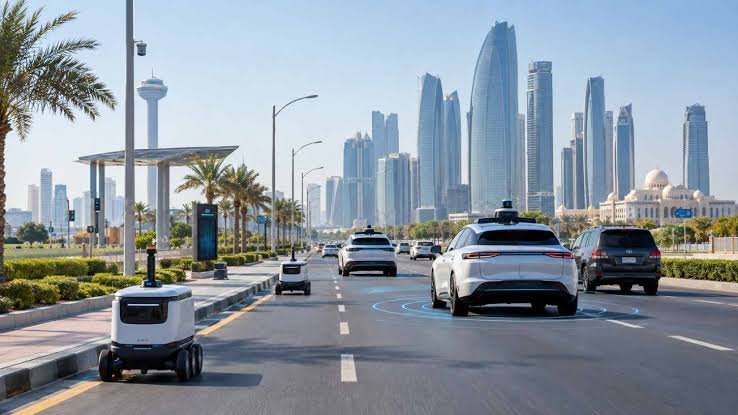
Self-driving cars in Dubai are no longer a pilot project. The emirate’s transport authority says that the number of registered autonomous vehicles has passed 160, and it has set a target of 4,000 by the end of the decade.

The Roads and Transport Authority (RTA) said the figure forms part of the Dubai Autonomous Transportation Strategy, which aims for 4,000 vehicles by 2030.

Table of Contents

Toggle
  • The goal: a quarter of trips
  • How vehicles are tested
  • The safety argument
  • Questions still open
  • What it means for residents

The goal: a quarter of trips

The RTA’s ambition goes beyond fleet size. Adel Shakri, speaking for the authority, said the aim is for 25 per cent of all mobility trips in Dubai to be self-driving by 2030, with more than 4,000 vehicles operating in the taxi and limousine sectors.

That is a large share for a city of Dubai’s size. It would make autonomous travel a routine part of the transport mix alongside the Metro, buses, trams and conventional taxis. The authority has long argued that it can help ease congestion, cut emissions and reduce accidents.

How vehicles are tested

Safety is the central question for any autonomous programme, and the RTA says it is strict. Before licensing, vehicles go through 248 scenarios, including sudden stops, pedestrian crossings and traffic signal recognition.

Shakri said the authority does not grant self-driving operating licences to any company whose vehicles have not passed strict tests that guarantee passenger safety and a smooth journey. Each vehicle also needs a licence under Dubai’s autonomous-vehicle law, which gives the RTA powers to set routes, speeds and areas of operation.

The Dubai Mobility Labs exist to make sure vehicles suit local conditions such as high heat, humidity and fog, and to train their sensors to make the right decisions. That matters in the UAE. Sensors that work well in California or Europe may behave differently in desert dust, strong sun glare or the thick morning fog that can settle on coastal roads.

Fog has been a recurring feature in recent days. Forecasters have warned of reduced visibility on several mornings this week.

The safety argument

The RTA’s case rests partly on a statistic that it says shows what is at stake: human error causes 95 per cent of accidents. The figure is widely used by transport authorities, though experts note that it does not capture every cause of collisions. Even so, the argument is that a well-tested automated system can cut the most common mistakes, such as distraction, speeding and delayed reactions.

Questions still open

Several points are not yet clear from the RTA’s announcement. It has not said how many of the 160-plus vehicles are carrying fare-paying passengers, and not how many are test or demonstration vehicles. The route network and the timetable for expansion beyond the current areas were also not set out in the report.

Cost, pricing and public acceptance will matter too. Residents will want to know whether a driverless ride will be cheaper than a conventional taxi, and how they will be able to book one. Passengers will also look for clear information on what happens in an emergency.

What it means for residents

For most people, the practical effect will be gradual. Autonomous vehicles will appear in more places and on more routes before they become a common choice. The RTA’s licensing and testing rules should give residents some confidence in the early stages.

For businesses, the strategy opens opportunities in technology, charging, mapping and fleet management. Dubai has long used large infrastructure targets to attract investment, and this one fits the pattern.

The next milestones will show whether the 2030 target is realistic: the pace of new registrations, the first large-scale passenger services, and the record on safety.

Next Article

Tags: 000 autonomous vehicles 20304autonomous vehicle licencedriverless taxis UAEDubai Autonomous Transportation StrategyDubai Mobility LabsDubai roadsDubai RTA autonomousDubai smart mobilityDubai transport newsfuture of transport UAErobotaxi DubaiRTA testing scenariosself-driving limousineself-driving vehicles DubaiUAE technology
ShareTweetSend
Next Post
Sanadak Orders UAE Bank to Refund Customer After It Fails to Prove He Authorised Digital Payment

Sanadak Orders UAE Bank to Refund Customer After It Fails to Prove He Authorised Digital Payment

Comments 1

  1. Pingback: Sanadak Orders UAE Bank To Refund Customer After It Fails To Prove He Authorised Digital Payment - The Emirates Times
No Result
View All Result

Latest Posts

Meet the AI Kids: The Virtual Students Turning Learning into Teaching at Crucifer Academy
business

Crucifer Academy sets out Knowledge Guarantee model to make learners prove understanding before progressing

by Editor
October 29, 2026
0

The methodology combines learning-capacity admissions, an AI Kid teach-back assessment, reasoning-led labs and continuing industry input through WITT. Crucifer Academy,...

Read more
Arab Reading Challenge to Crown 10th-Edition Champions in Dubai Today After Record 40 Million Entries

Arab Reading Challenge to Crown 10th-Edition Champions in Dubai Today After Record 40 Million Entries

October 29, 2026
Sanadak Orders UAE Bank to Refund Customer After It Fails to Prove He Authorised Digital Payment

Sanadak Orders UAE Bank to Refund Customer After It Fails to Prove He Authorised Digital Payment

October 29, 2026
Dubai Now Has More Than 160 Self-Driving Vehicles, With 4,000 Targeted by 2030

Dubai Now Has More Than 160 Self-Driving Vehicles, With 4,000 Targeted by 2030

October 29, 2026
Third US Aircraft Carrier Heads to Middle East as UAE Residents Face Continued Travel Disruption

Third US Aircraft Carrier Heads to Middle East as UAE Residents Face Continued Travel Disruption

October 29, 2026

Follow Us

The Emirates Times

– Make It Happen
The Emirates Times is an English Language Internet media with a significant focus on business, technology, news, entrepreneurship, leadership, innovation, prominent business personalities, and many more, majorly in the GCC region. Further, the company publishes interviews, news, business content, press releases, etc. This platform also publishes about real estate, sports, metaverse, business ideas, and more.
Linkedin Twitter Facebook Tumblr

Important links

  • HOME
  • INTERVIEW
  • UAE
  • GULF NEWS
  • TECHNOLOGY
  • LIFESTYLE
  • METAVERSE

Contact Us

  • sales@theemiratestimes.com
  • +91-70-6556-6556

© 2024 theemiratestimes