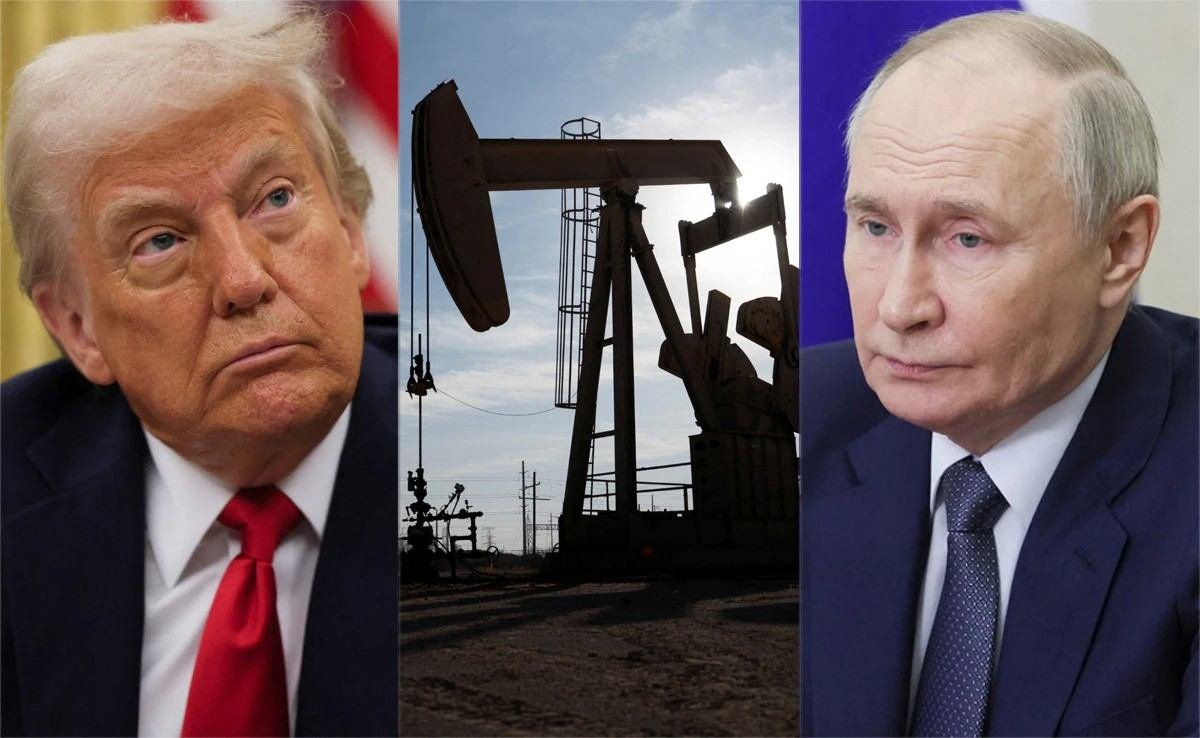
US President Donald Trump has signed an executive order waiving new sanctions and tariffs on Russia that were due to take effect under legislation he signed last month. The move adds another variable to energy markets already unsettled by the war involving Iran and restricted shipping through the Strait of Hormuz.
The measures set aside by the order included tariffs of up to 100 per cent aimed at major buyers of Russian oil and gas. Mr Trump said the waiver was in the United States’ national interest. It follows his recent agreement with Russian President Vladimir Putin to allow Russian diesel supplies onto global markets as governments try to ease fuel prices. The waiver applies only to measures under the new law, and existing US sanctions on Russia remain in place.
Why Gulf markets are watching
Energy traders are weighing a simple question: does extra Russian supply do enough to offset the disruption in the Gulf? Diesel is the product most in focus, because tight supply there feeds directly into transport and airline costs.
This is not the first time Washington has loosened Russian oil restrictions during the Iran conflict. Earlier waivers this year drew criticism from European leaders and from lawmakers in Washington, who argued they eased pressure on Moscow. The latest order is likely to renew that debate.
What UAE motorists are already paying
Pump prices in the UAE have been climbing for months. The Fuel Price Committee raised October rates for a third consecutive month. Super 98 now costs Dh4.40 a litre, Special 95 Dh4.28, E-Plus 91 Dh4.21 and diesel Dh4.80. The National reported that fuel is about 80 per cent more expensive than in February, before the war began, and that Brent crude neared $110 a barrel in September.
The committee reviews prices monthly in line with global benchmarks. Whether the Russia waiver is enough to change the direction of crude is far from clear, and analysts have previously cautioned that earlier Russian supply measures only partly offset the shortfall from the Gulf. Residents should not assume a cut at the pump will follow.
The UAE’s workaround: the east coast
The UAE has been working to reduce its dependence on Hormuz. Speaking at the Rise Summit in Dubai, Economy and Tourism Minister Abdulla bin Touq said the strait will keep mattering, but described the east coast as a side door through which business is already moving.
He pointed to Etihad Rail, which now links Abu Dhabi to Fujairah in under four hours, and said the UAE is building a new pipeline to give Abu Dhabi additional capacity to export oil through the Gulf of Oman. Closing and shrinking the economy, he argued, would not make it safer.
The economic picture
The headline numbers show both strain and resilience. The International Monetary Fund expects the UAE economy to shrink 3.9 per cent this year before rebounding 7.7 per cent in 2027. Even so, the UAE’s real gross domestic product grew 0.4 per cent year on year to Dh961.9 billion in the first half of 2026, driven by non-oil activity despite the war’s impact.
That mix explains the official tone. Policymakers acknowledge the damage from the conflict while pointing to diversified sectors and new trade routes as shock absorbers.
What to watch
Three signals will matter most over the coming weeks. The first is whether Brent eases or climbs in response to additional Russian diesel. The second is how traffic through Hormuz develops, since figures from different sources vary widely. CENTCOM says 400 commercial vessels transited in the past week, while other tracking suggests far lower flows. The third is whether the UAE’s east coast pipeline and rail links reach full capacity.
For households and businesses, the practical message is caution. The waiver may help at the margin, but the main driver of prices remains the security situation in the Gulf.


