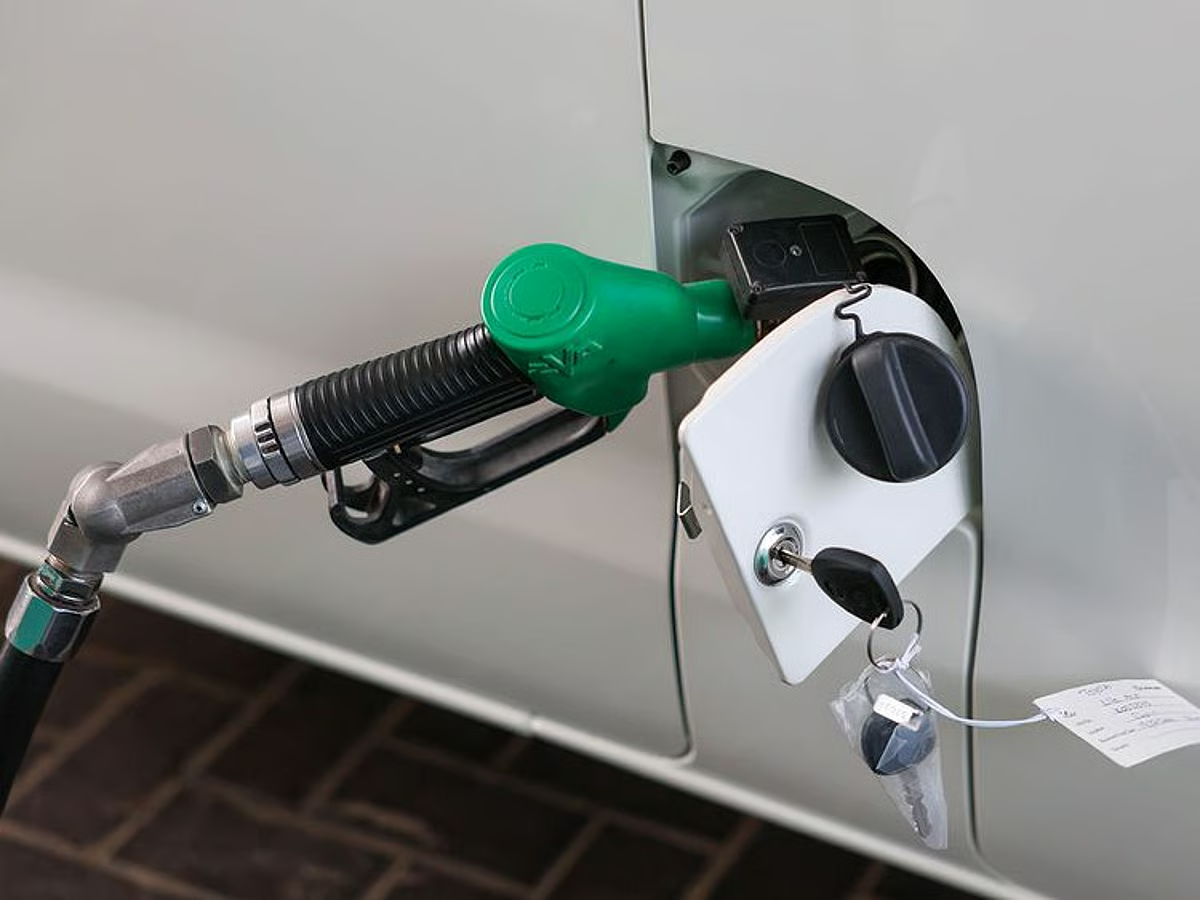
Drivers across the Emirates are paying more at the pump for a third consecutive month. Oil markets show little sign of relief while the US–Iran standoff keeps the Strait of Hormuz at the centre of attention.
The new pump prices
The UAE Fuel Price Committee’s October rates took effect on 1 October. Every grade now costs more than Dh4 a litre.
Super 98 is priced at Dh4.40, up from Dh3.80. Special 95 costs Dh4.28, up from Dh3.69, and E-Plus 91 is at Dh4.21, up from Dh3.61. Diesel is the most expensive at Dh4.80, up from Dh4.30.
Gulf News reports that retail fuel prices have risen by more than 60 per cent since the conflict began in late February. By its estimate, a family filling a 50 to 60 litre tank now pays as much as Dh125 more per fill-up than before the surge.
Why prices keep rising
The committee adjusts prices monthly in line with global benchmarks, and those benchmarks remain high. In early Asian trading on Monday, Brent crude was quoted at $102.31 a barrel, according to Trading Economics data cited by Gulf News. Murban, the Abu Dhabi benchmark, was reported at about $110.
Analysts say Brent carries a wider risk premium than US crude because it is a seaborne benchmark more exposed to shipping disruption. The gap between Brent and West Texas Intermediate has widened to more than $11 a barrel. Tanker shortages, higher insurance costs and longer voyages are also supporting prices, with freight rates for the largest crude carriers at extraordinary levels.
The Group of Seven has agreed to release 100 million barrels of oil and fuel from emergency stocks. That helped shave roughly $5 off prices, but October’s UAE rates still reflect the earlier spike.
Hormuz and the wider region
The Strait of Hormuz is the narrow passage through which a large share of Gulf oil and gas exports travel. Iran’s parliamentary speaker, Mohammad Bagher Ghalibaf, said on Monday that it will remain closed until Washington meets seven conditions tied to a 14-point memorandum of understanding agreed in June. Iran’s foreign minister, Abbas Araghchi, has said there is no military solution to the conflict.
Tracking data presents a more mixed picture. The maritime analytics firm Kpler reported that Middle East oil exports, excluding Iran, rose above pre-war levels last week despite attacks on ships. Shipments are moving, but the risk has not gone away. The UK Maritime Trade Operations centre reported that a tanker was struck in the strait on Monday.
A new front has also opened. Saudi-backed Yemeni forces have launched a major offensive against Iran-aligned Houthi fighters near the Bab al-Mandab route, which could add pressure to another shipping lane.
What it means for households
For most residents, the effect shows up in everyday costs. Commuting, ride-hailing and delivery all become more expensive when fuel does. Businesses that depend on just-in-time deliveries may also see surcharges as insurers raise war-risk premiums on cargo and vessels. Most consumer goods are still arriving as normal.
The conflict is also affecting travel. UAE airports are operating, but schedules on some regional routes can change at short notice.
What to watch
Three indicators will shape the next price announcement. The first is whether tanker attacks in or near Hormuz continue. The second is whether the Yemen offensive disrupts traffic near Bab al-Mandab. The third is whether diplomacy produces a reopening plan that satisfies both Washington and Tehran.
The committee typically announces November’s rates at the end of October. Until then, the numbers on the pump display are likely to stay where they are.


