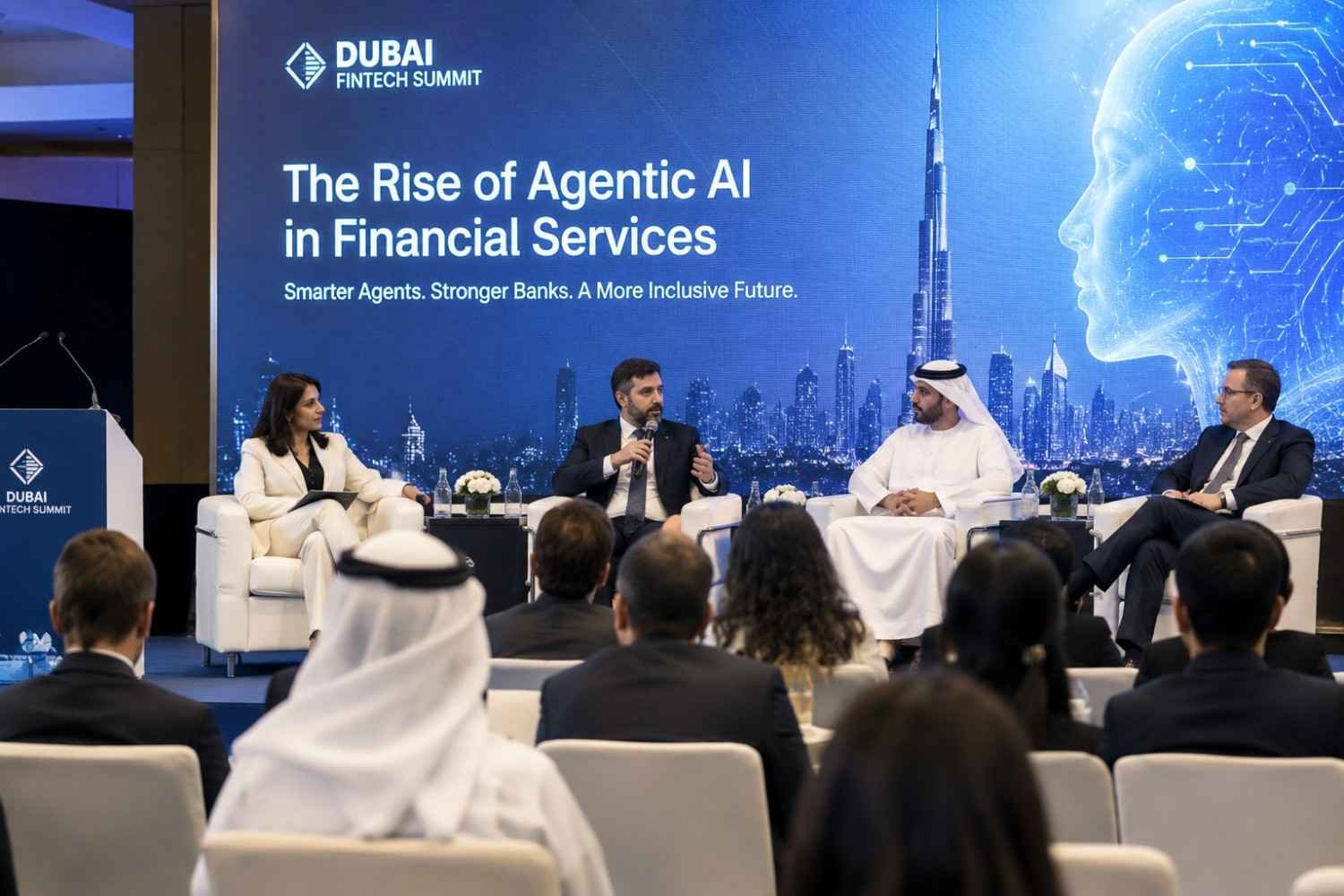
Dubai’s financial district is playing host this week to one of the region’s most closely watched banking gatherings, as senior executives, technology specialists and digital innovators converge to debate a question increasingly dominating boardrooms worldwide: how far, and how fast, should banks embrace artificial intelligence?
The Middle East Banking Innovation Summit, now in its 17th edition, is being held at Jumeirah Emirates Towers, bringing together decision-makers from across the region’s financial services sector to examine the practical implications of AI adoption — from customer-facing chatbots to fully autonomous transaction systems.
From Generative to Agentic: A Shift in Ambition
While earlier waves of banking technology conversations centred largely on generative AI tools capable of drafting reports or answering customer queries, this year’s summit reflects a notable shift in focus toward what industry insiders are calling “agentic AI” — systems capable of independently executing multi-step tasks with minimal human oversight.
Sessions at the summit are exploring how such systems could eventually handle functions ranging from personalised customer service and risk assessment to elements of compliance monitoring and fraud detection, all with limited manual intervention. Proponents argue that agentic systems could dramatically improve operational efficiency, while critics caution that autonomous decision-making in financial services raises fresh questions around accountability, security and regulatory oversight.
Personalisation Takes Centre Stage
Beyond automation, much of the summit’s agenda is dedicated to how AI-driven personalisation is reshaping the customer experience within retail and commercial banking. Institutions across the Gulf have increasingly invested in systems capable of tailoring product recommendations, spending insights and service interactions to individual customer behaviour in real time — a trend banking executives say is becoming a competitive necessity rather than a differentiator.
Delegates are also examining the broader concept of digital ecosystems, in which banks position themselves not merely as financial institutions but as integrated platforms offering a wider suite of lifestyle and commerce-adjacent services, often built in partnership with fintech firms and technology providers.
A Wider Pattern of UAE Investment in AI-Driven Banking
The timing of the summit is no coincidence. It arrives amid a broader national push to position the UAE — and Abu Dhabi in particular — as a global hub for artificial intelligence adoption across both government and private sector operations. Abu Dhabi has separately committed billions of dirhams toward digital transformation strategies aimed at becoming among the world’s first AI-native government administrations, a push that has inevitably filtered into expectations placed on the country’s banking and financial services sector.
Financial institutions operating in the UAE have faced growing pressure — both from regulators and from increasingly digital-savvy customers — to modernise legacy systems and adopt AI-enabled infrastructure capable of competing with fintech disruptors entering the regional market.
Balancing Innovation With Oversight
Even as the summit champions the potential of autonomous banking models, discussions have repeatedly circled back to the question of governance. Senior banking figures attending the event have stressed that operational efficiency gains must be balanced against robust risk management frameworks, particularly as institutions begin trusting AI systems with increasingly sensitive decision-making responsibilities.
This tension between innovation and caution reflects a broader global debate within the financial sector, where regulators in multiple jurisdictions are still developing frameworks to govern the use of autonomous AI systems in consumer-facing financial products.
Why It Matters for the UAE Economy
The summit’s outcomes carry implications well beyond the banking sector itself. As one of the region’s primary hubs for finance, trade and investment, the UAE’s approach to AI adoption in banking is likely to influence broader expectations across adjacent sectors including insurance, real estate financing and wealth management.
For UAE residents and businesses, the practical upshot may be felt gradually rather than immediately — through smarter, faster banking interactions, more tailored financial products, and, potentially, new categories of automated financial services entering the market over the coming years.
As the summit continues through its second day, attention will remain fixed on how quickly the region’s banking institutions translate boardroom discussions on agentic AI into tangible products reaching everyday customers.


Comments 1