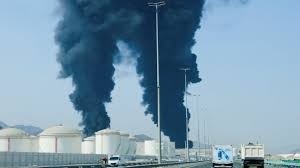
IRGC Claims Major Missile and Drone Assault on Israel and US Bases Across Gulf
Iran’s Islamic Revolutionary Guard Corps (IRGC) has claimed responsibility for a large-scale wave of attacks targeting multiple locations in Israel as well as US military facilities across the Gulf region, marking a significant escalation in the ongoing Middle East conflict. The assault represents one of the largest coordinated strikes in recent weeks.
According to statements carried by Iranian state media and reported by international outlets, the IRGC said the coordinated assault involved more than 100 heavy missiles and attack drones, along with at least 200 rockets. The strikes were reportedly carried out not only by Iranian forces but also in coordination with allied groups described as part of the “resistance front.” The scale of the operation is unprecedented.
The IRGC stated that several sites inside Israel were targeted during the offensive, though specific locations and the extent of damage were not independently verified. The attacks are believed to be part of an ongoing cycle of retaliation between Iran and Israel, which has intensified in recent weeks and drawn in multiple regional actors. The tit-for-tat exchanges continue.
In addition to Israeli targets, the Iranian military also claimed it struck US-linked installations in the Gulf. Among the sites mentioned was a facility in Bahrain that hosts American forces. The IRGC further alleged that a US helicopter unit stationed at the Al-Adiri base in Kuwait was hit during the attack, claiming that at least one helicopter was destroyed. These claims mark a new front in the conflict.
There has been no immediate confirmation from US or Gulf authorities regarding the reported damage to their facilities or equipment. Independent verification of battlefield claims remains difficult due to the ongoing nature of the conflict and restricted access to affected areas. Official responses are expected in the coming hours.
The IRGC, in its official statement, emphasized that the strikes were part of a broader military campaign and warned that operations would continue with what it described as “full intensity and power.” The statement signals Tehran’s commitment to sustained military action.
The latest barrage comes amid a sharp escalation in hostilities involving Iran, Israel, and the United States. Over the past several weeks, the region has witnessed repeated exchanges of missile and drone strikes, with attacks extending beyond traditional conflict zones into Gulf countries such as Bahrain, Kuwait, and the United Arab Emirates. The conflict has widened significantly.
Reports indicate that Iran and its allied groups have increasingly relied on a combination of ballistic missiles, cruise missiles, and unmanned aerial vehicles to target strategic military and infrastructure sites. These tactics are designed to overwhelm air defence systems and expand the geographical scope of the conflict. The use of mass salvos is a key feature of Iran’s strategy.
The growing intensity of the attacks has raised serious concerns about regional stability and the risk of a wider war. Several countries have heightened their alert levels, while air defence systems across the Gulf have been activated to intercept incoming threats. In some areas, sirens have been sounded and residents advised to seek shelter during active attacks. Civil defence measures are in place.
Military analysts note that the use of large volumes of missiles and drones reflects a shift toward sustained, high-intensity warfare, where both sides attempt to assert dominance through repeated strikes. The involvement of multiple actors, including Iran-backed groups in different countries, has further complicated the conflict dynamics. Coordination among these groups appears to be increasing.
The targeting of US military installations in the Gulf is particularly significant, as it underscores the widening scope of the confrontation and raises the possibility of deeper American involvement. Previous incidents in the region have already seen US and allied forces respond to perceived threats, adding to fears of further escalation. The US has maintained a significant military presence in the Gulf.
As tensions continue to rise, diplomatic efforts to de-escalate the situation remain uncertain. While some global powers have called for restraint and dialogue, the ongoing exchange of attacks suggests that a resolution may not be imminent. Mediation attempts have so far failed to produce a breakthrough.
Also Read: Major Geopolitical Shift: Trump Considers NATO Exit, Slams Alliance as ‘Paper Tiger’
The IRGC’s latest claims highlight the volatile nature of the conflict and the increasing risks faced by both military and civilian infrastructure across the region. With no clear end in sight, the situation continues to evolve rapidly, keeping the international community on high alert. Further developments are expected in the coming days.


