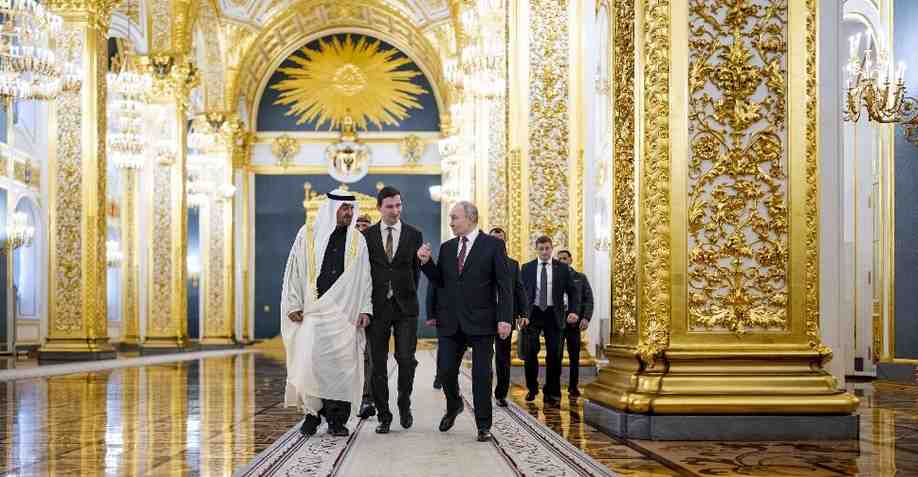
UAE President and Putin Forge Deeper Ties in Moscow Summit
On January 29, 2026, UAE President Sheikh Mohamed bin Zayed Al Nahyan concluded a landmark official visit to Moscow, holding high-level talks with Russian President Vladimir Putin at the Kremlin. The summit reinforced the strategic partnership between the two nations, with a focus on expanding cooperation in trade, technology, energy, and humanitarian diplomacy.
Key Areas of Cooperation Strengthened
The leaders emphasized moving beyond traditional energy ties to build a diversified and resilient economic relationship. Key discussion points included:
Trade & Investment: Building on the 2025 Trade in Services and Investment Agreement to boost commercial exchange.
Technology & Space: Enhancing collaboration in innovation and space exploration.
Energy & Infrastructure: Advancing joint projects in production and sustainability.
UAE’s Humanitarian and Mediation Role Highlighted
A significant part of the dialogue centered on the UAE’s humanitarian diplomacy. Sheikh Mohamed thanked President Putin for supporting the UAE’s role in facilitating prisoner exchanges between Russia and Ukraine since 2024. Putin acknowledged the UAE’s constructive efforts, including hosting trilateral peace talks in Abu Dhabi, reinforcing the Emirates’ position as a credible neutral mediator in global conflicts.
Commitment to Regional Stability and Dialogue
Both leaders stressed the importance of diplomatic solutions to regional conflicts. Sheikh Mohamed reiterated the UAE’s support for a two-state solution to the Israeli-Palestinian conflict and emphasized dialogue as the path to stability.
Also Read: UAE Braces for Ramadan: Do Shorter Work Hours Boost or Hurt Productivity?
A Forward-Looking Strategic Partnership
The visit, marked by high ceremonial honors, concluded with mutual optimism. It signaled a deepening alliance between the UAE and Russia, crafted to navigate a multipolar world through a blend of economic collaboration and independent diplomatic engagement. This partnership stands as a significant model for 21st-century statecraft, balancing national interests with global humanitarian concerns.


