Dubai’s New Drone Delivery Route: How a Mosque is Powering the Future of Smart Logistics
Dubai has officially launched a groundbreaking drone-delivery service in the Nad Al Sheba area, marking a significant leap from testing phases to real-world, community-integrated operations. This initiative, a collaboration between public authorities and private enterprise, connects local restaurants directly with residents, using the Nad Al Sheba Grand Mosque as a central smart hub.
A Public-Private Partnership for Progress
This pioneering project is the result of a strategic alliance between the Dubai Civil Aviation Authority (DCAA), the Islamic Affairs and Charitable Activities Department (IACAD), and the drone logistics company, Keeta Drone. Their shared goal is to deploy a fast, efficient, and environmentally friendly delivery system that enhances daily life for Dubai’s residents.
How the Drone Delivery Service Works
The process is designed for simplicity and speed, offering a glimpse into the future of urban logistics:
Order: Residents in Nad Al Sheba place food and beverage orders from participating cafés and restaurants in the mall zone.
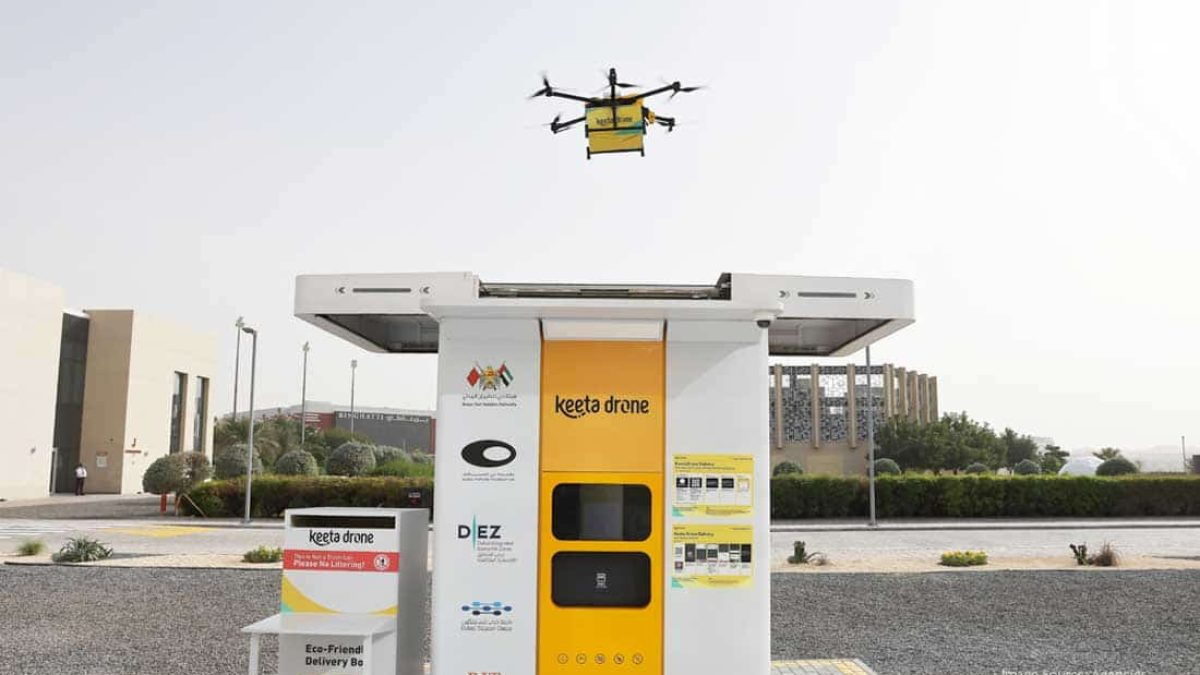
Launch: The orders are prepared, packaged, and loaded onto a Keeta Drone at a dedicated station.
Flight: The drone autonomously flies the order to its destination: the designated landing zone in the courtyard of the Nad Al Sheba Grand Mosque.
Pickup: Customers retrieve their orders from this central, community-focused location.
This model effectively bypasses road traffic, slashing delivery times and introducing a contactless experience.
The Mosque as a Smart Hub: Redefining Community Spaces
The choice of the Nad Al Sheba Grand Mosque as the delivery hub is the most innovative aspect of this project. It transforms a traditional place of worship and community into a dynamic “smart hub,” seamlessly integrating cutting-edge technology into the social fabric.
IACAD states this initiative is designed to “connect technology with community services,” extending the role of mosques in sustainable community development. This reflects Dubai’s broader smart city vision, where everyday infrastructure serves multiple, forward-thinking purposes.
From Campus to Community: Scaling Drone Logistics
For Keeta Drone, this launch represents a major expansion. The company previously operated within the controlled environment of the Dubai Silicon Oasis (DSO) campus under the first commercial drone-delivery licence issued in December 2024.
The Nad Al Sheba route is the first to move beyond a specialized zone into a residential and commercial district, signaling a critical step in scaling drone logistics across the emirate.
Ambitious City-Wide Targets
This route is just the beginning of a much larger plan. The DCAA has set ambitious targets for the future of drone delivery in Dubai. According to official figures, the aim is to have:
30% of Dubai covered by drone-delivery services by 2026.
70% coverage within the next five years.
The infrastructure being built now—including advanced air-traffic management systems and a network of community hubs—is foundational to achieving this rapid scale-up.
Key Benefits: Speed, Sustainability, and Smarter Cities
The advantages of this new delivery model are multi-faceted:
Faster Deliveries: By flying over traffic, drones ensure meals and goods arrive more quickly.
Reduced Congestion: Fewer delivery vehicles on the road means less traffic for everyone.
Environmental Sustainability: Drone deliveries help lower carbon emissions, contributing to Dubai’s green goals.
Community Integration: The service blends into the neighborhood rhythm, using existing spaces intelligently rather than building new, standalone infrastructure.
Conclusion: A Blueprint for the Future of Urban Living
The successful launch of the Nad Al Sheba drone delivery route is more than a local service; it’s a blueprint for the future. It demonstrates how regulatory foresight, technological innovation, and community-centric design can converge to solve urban challenges.
As this model is refined and expanded, the lessons learned in Nad Al Sheba will likely chart the course for the future of logistics not just in Dubai, but for smart cities around the world.


