U.S. Sends Over 50 Fighter Jets to Middle East Amid Iran Nuclear Negotiations
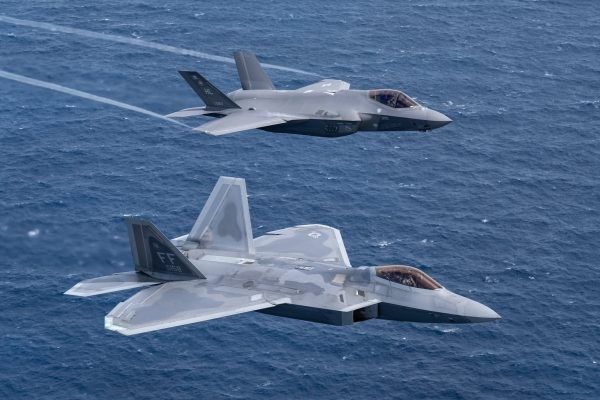
Washington, D.C. — The United States has significantly bolstered its military presence in the Middle East by deploying more than 50 advanced fighter aircraft, including F-22 Raptor, F-35 Lightning II and F-16 Fighting Falcon jets, even as high-stakes indirect nuclear negotiations with Iran continue in Geneva.
According to defence sources and independent flight-tracking data, these jets—among the most capable in the U.S. arsenal—were observed heading toward key regional bases over the past 24 hours, accompanied by aerial refuelling tankers that suggest the aircraft are being staged for prolonged operations.
The deployment underscores a striking convergence of diplomacy and military pressure: while U.S. and Iranian officials are meeting for a second round of indirect talks aimed at curbing Tehran’s nuclear programme, Washington is simultaneously reinforcing its strategic capabilities across the region.
A Strategic Military Surge
U.S. officials describe this rapid buildup as a major reinforcement of both air and naval assets in the Middle East, designed to ensure readiness in a volatile environment. The deployment includes a mix of fifth-generation stealth jets alongside legacy platforms:
F-22 Raptor:
The world’s most advanced air superiority fighter, capable of penetrating advanced air defences with stealth technology. Its presence signals preparation for potential conflict with sophisticated adversaries.
F-35 Lightning II:
Multi-role stealth fighters with advanced sensor fusion, electronic warfare capabilities, and precision strike capacity. These jets represent the cutting edge of U.S. air power.
F-16 Fighting Falcon:
Proven multi-role fighters that provide flexibility and sustained combat capability. Their numbers add depth to the deployment.
These aircraft movements coincide with broader U.S. naval repositioning. The USS Gerald R. Ford aircraft carrier strike group has departed from the Caribbean and is en route toward Middle East waters, further expanding U.S. force posture in the region. Although still several days from arrival, this strike group adds a powerful sea-based component to the U.S. presence.
Several analysts suggest the scale of the deployment—more than 50 jets in such a short period—is unusual outside of active conflict zones and reflects growing concerns within U.S. defence circles about potential regional escalation.
Parallel Tracks: Diplomacy and Deterrence
The military buildup comes against the backdrop of ongoing diplomacy. In Geneva, U.S. and Iranian representatives, facilitated by Oman, convened to address Iran’s nuclear programme in talks described by the Iranian side as “serious, constructive and positive.” Both sides acknowledged some progress compared to earlier rounds, though gaps remain over core issues such as enrichment limits and verification measures.
A U.S. official cited by media outlets noted that while there has been headway toward identifying “general guiding principles,” substantial work lies ahead before a durable agreement can be reached. Iranian negotiators signalled they would return within a fortnight with more detailed proposals aimed at narrowing the differences.
Key issues on the table:
Uranium enrichment levels and stockpile limits
Verification and inspection mechanisms
Sanctions relief sequencing and scope
Regional activity and missile programme discussions
Sunset clauses and agreement duration
Despite the cautious optimism on the diplomatic front, tensions in the region remain high. In recent days, Iran conducted live-fire missile drills in parts of the Strait of Hormuz—a critical maritime chokepoint through which a large share of global oil shipments pass—and senior Iranian leaders have issued stern warnings that any military confrontation would be met with strong resistance.
Balancing Act: Military Posture and Negotiation Goals
The U.S. military posture appears to be driven by dual objectives:
Deterrence:
By deploying advanced jets and reinforcing naval firepower, Washington aims to reassure allies and signal its capacity to respond swiftly if diplomacy falters. The visible presence of fifth-generation fighters sends an unambiguous message about U.S. capabilities.
Leverage:
Maintaining military pressure at the negotiating table is a classic diplomatic tactic. Demonstrating readiness for potential conflict strengthens the U.S. position by making the alternative to agreement clear.
At the same time, U.S. leadership continues to emphasise that diplomatic engagement remains the preferred pathway to address concerns over Tehran’s nuclear capabilities. Officials involved in the talks have stressed that the deployment of military assets should not be interpreted as abandonment of the negotiation process.
The View From Tehran
Iranian leaders have responded to the military buildup with characteristic defiance:
Military exercises continue in strategic waterways
Nuclear programme advances remain a point of leverage
Diplomatic engagement proceeds despite pressure
Regional proxies remain active across multiple fronts
The combination of U.S. military pressure and diplomatic engagement creates a complex calculus for Tehran. Hardliners may view the buildup as confirmation that Washington seeks regime change through pressure. Pragmatists may see it as evidence that serious concessions are necessary to avoid conflict.
Regional and Global Repercussions
The surge in U.S. military activity is unfolding at a time when geopolitical fault lines in the Middle East are intensifying:
Israel:
Israeli officials have consistently warned against a nuclear-capable Iran and support robust U.S. deterrence. The deployment provides reassurance while Israel maintains its own military options.
Gulf States:
UAE, Saudi Arabia, and other Gulf Cooperation Council members watch developments closely. They seek U.S. security guarantees while maintaining diplomatic channels with Tehran.
Global Markets:
The Strait of Hormuz remains a critical chokepoint for oil shipments. Any escalation risks oil price volatility and economic disruption worldwide.
European Partners:
European nations engaged in nuclear diplomacy urge restraint on all sides while supporting diplomatic resolution.
Strategic Implications
The deployment of over 50 fighter jets—marked by high-end capabilities and rapid movement—highlights the intricate calculus facing U.S. policymakers: balancing deterrence, diplomatic engagement, and strategic stability in one of the world’s most fraught flashpoints.
Key strategic questions:
Will the military buildup strengthen or complicate the diplomatic track?
Can Iran’s leadership accept constraints on its nuclear programme?
How will regional allies respond to shifting U.S. posture?
What happens if talks fail despite military pressure?
Conclusion: Dual Tracks, Uncertain Outcome
The convergence of advanced fighter deployments and nuclear negotiations captures the paradox of U.S. policy toward Iran: prepare for the worst while working for the best.
Fifty jets en route to regional bases represent capability and commitment. Negotiators in Geneva represent hope for peaceful resolution. Both tracks operate simultaneously, each influencing the other, neither guaranteed success.
For now, the world watches as the U.S. military builds up and diplomats talk on. Whether these parallel tracks converge toward stability or conflict remains uncertain.


