Saudi Arabia’s $1 Trillion U.S. Investment Pledge: A Strategic Bet on AI, Nuclear & Tech
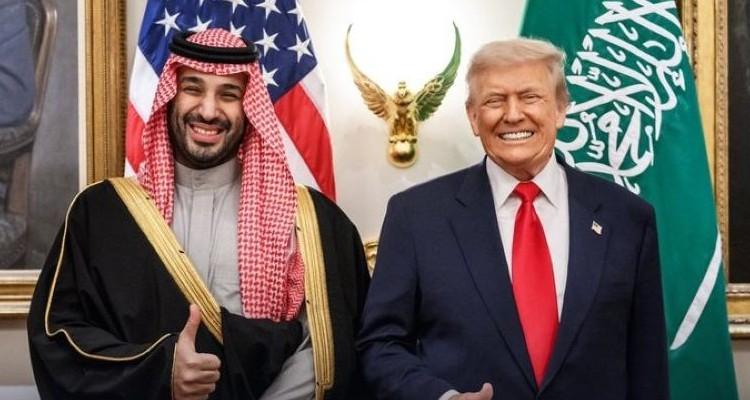
In a move that signals a profound strategic shift, Saudi Arabia announced a commitment to invest nearly $1 trillion into the U.S. economy during a high-profile state visit by Crown Prince Mohammed bin Salman (MBS) in November 2025. This colossal pledge, escalated from a previous $600 billion, underscores the Kingdom’s determined pivot from an oil-dependent economy to a global powerhouse in future-facing technologies and infrastructure.
The Financial Architecture: A Sovereign Wealth Push
The investment is expected to be channeled primarily through the Public Investment Fund (PIF), Saudi Arabia’s $1 trillion sovereign wealth fund, along with other state-linked entities. The PIF, a central engine of the Vision 2030 economic transformation plan, has the financial capacity for such an undertaking. However, analysts caution that deploying capital of this magnitude internationally carries inherent risks, including potential opportunity costs for domestic projects and vulnerability to any sustained downturn in oil revenues, the state’s primary income source.
Strategic Sectors: Targeting the Future Economy
The pledged capital is strategically earmarked for sectors deemed critical for long-term global dominance, reflecting Saudi Arabia’s ambition to secure influence in the foundational industries of the 21st century:
Artificial Intelligence & Computing: A primary focus, with investments in AI firms, semiconductor supply chains, and energy-intensive data centers. The state-backed AI company HUMAIN, under the PIF, is a key vehicle in this strategy.
Nuclear Energy & Critical Minerals: Investments aim to secure technology for civil nuclear power and secure access to minerals essential for batteries, chips, and renewable tech.
Advanced Infrastructure & Capital Markets: Targeting deals in transportation, logistics, and deepening ties with Wall Street to facilitate larger capital flows.
The “Why Now?” – Vision 2030 and Global Positioning
This unprecedented pledge is a direct extension of Saudi Arabia’s Vision 2030 blueprint to diversify its economy. The strategy is twofold:
Economic Diversification: To build sustainable revenue streams beyond hydrocarbons by owning stakes in the high-growth tech and green energy sectors.
Geopolitical Influence: To embed Saudi capital and strategic partnerships at the core of U.S. technological and industrial leadership, ensuring the Kingdom a seat at the table in shaping global standards, particularly in AI.
Saudi Arabia’s natural advantages—abundant cheap energy for power-hungry data centers, vast sovereign capital, and strategic land—position it uniquely to become a significant player in the global AI infrastructure race.
The High-Profile Forum: Sealing the Deal
The announcement was cemented at a major investment forum in Washington D.C., which convened CEOs from leading firms like Blackstone, Nvidia, Tesla, and Salesforce alongside Saudi executives. This gathering was not merely ceremonial but a clear signal to the global business community of Saudi Arabia’s serious intent and its desire for joint ventures and technology transfer.
Potential Gains vs. Inherent Risks
Potential Gains:
Technology Transfer & Sovereignty: Gaining expertise and partial ownership in cutting-edge sectors to build a domestic knowledge economy.
Financial Returns: Positioning the PIF’s portfolio to capture value from the tech-driven economic transformation.
Strategic Security: Reducing long-term oil dependency and securing supply chains for critical future technologies.
Key Risks & Criticisms:
Execution Risk: Skepticism exists over whether the full $1 trillion will materialize or remain a headline-grabbing pledge. Deployment will be scrutinized deal-by-deal.
Geopolitical & Regulatory Scrutiny: Such large-scale foreign investment, particularly in sensitive sectors like AI, nuclear, and defense, will face intense regulatory review in the U.S. and could become entangled in political tensions.
Domestic Trade-offs: Critics argue capital could be better spent accelerating domestic reforms, education, and SME growth within the Kingdom itself.
Human Rights Concerns: The announcement reignited calls from human rights organizations for the U.S. to leverage the partnership to advocate for reforms within Saudi Arabia regarding political expression and detainees.
Conclusion: A Defining, High-Stakes Gambit
Saudi Arabia’s $1 trillion U.S. investment pledge is more than a financial headline; it is a defining gambit for the nation’s future identity. It represents a decisive bet that sovereign wealth can buy a transition from a petro-state to a technology and industrial stakeholder in the global order.
The success of this strategy hinges not on the announcement, but on the execution, partnership quality, and navigation of complex geopolitical currents. If successful, it could fundamentally reshape Saudi Arabia’s economy and its role on the world stage. If it falters, it risks being remembered as an overambitious diversion of national wealth. The world will be watching closely as the first deals emerge from this historic commitment.


