Table of Contents
ToggleMajor Muslim-Majority Countries Agree to Join U.S.-Led Peace Initiative Aimed at Gaza
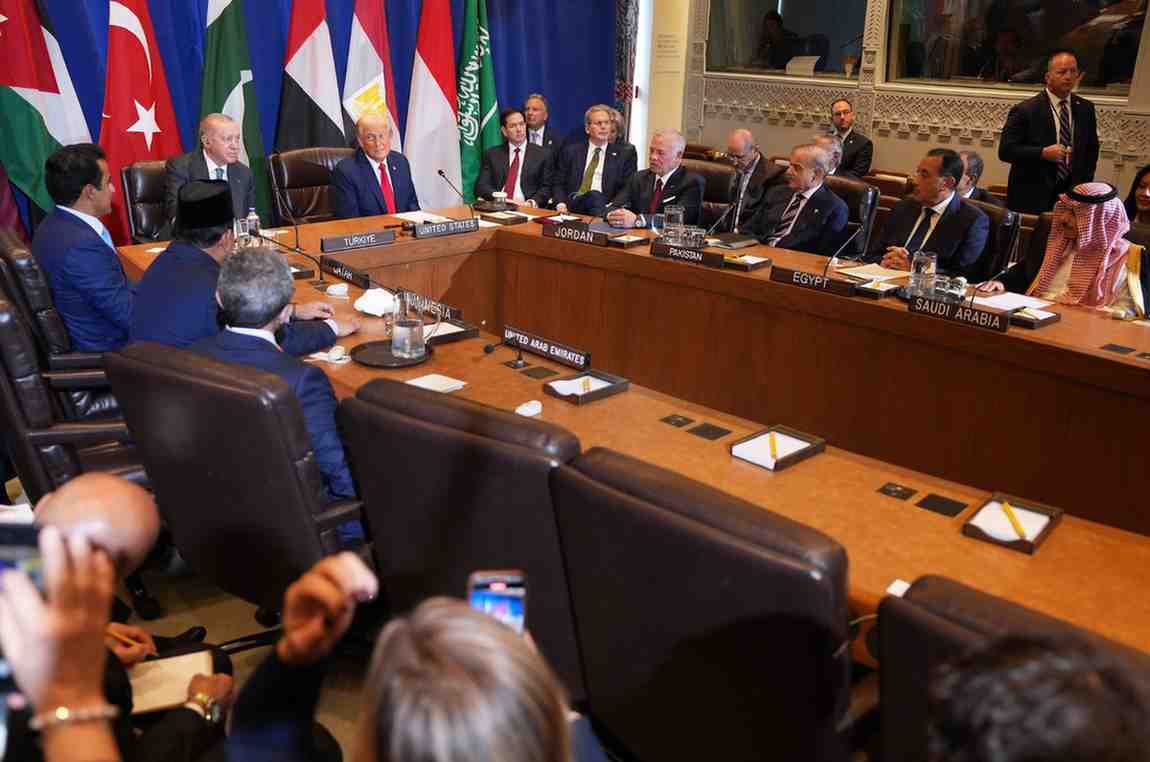
In a landmark diplomatic move, eight influential Muslim-majority nations have formally agreed to join a U.S.-led international “Board of Peace” aimed at resolving the Gaza conflict. The group—comprising Saudi Arabia, Turkey, Egypt, Jordan, Indonesia, Pakistan, Qatar, and the United Arab Emirates—announced their collective commitment, lending significant regional weight to the initiative spearheaded by U.S. President Donald J. Trump.
A Unified Diplomatic Front
The foreign ministers of the eight nations issued a joint statement confirming they would proceed with domestic legal procedures to finalize membership. This coordinated action marks a substantial diplomatic endorsement of the U.S. peace framework, moving beyond individual acceptances to a unified regional stance.
Objectives of the ‘Board of Peace’
The board is a central component of President Trump’s broader peace plan for Gaza, with a mandate focused on:
Facilitating a permanent ceasefire.
Coordinating humanitarian aid and reconstruction.
Supporting political arrangements for a lasting peace that respects Palestinian rights.
Mobilizing international investment and oversight for Gaza’s recovery.
The initiative has been acknowledged in UN Security Council Resolution 2803, which endorsed its transitional governance role.
Strategic Significance of the Members
The participation of these specific countries is strategically crucial:
Saudi Arabia & Turkey: Provide substantial regional political and economic clout.
Egypt & Jordan: Offer geographic and diplomatic centrality as key neighbors.
Qatar: Brings its established experience as a mediator in the region.
Pakistan & Indonesia: Demonstrate broad Islamic world support, extending the initiative’s legitimacy beyond the Middle East.
International Context and Reactions
The formation of the board has elicited a mixed global response. While these eight nations have thrown their support behind it, several European powers have declined to participate. President Trump has positioned the board as a more pragmatic alternative to traditional, slower-moving multilateral diplomacy. Critics, however, emphasize that the board’s success will ultimately depend on the cooperation of on-the-ground actors like Hamas, the Palestinian Authority, and Israel, as well as deeper integration with UN and Arab League frameworks.
Also Read: UAE & Bahrain Join US-Led ‘Board of Peace’ for Gaza Conflict Resolution
The Path Forward
Each member state must now complete its domestic ratification processes. The board’s immediate challenges will be to define its operational structure, secure reconstruction funding, and build consensus among all stakeholders.
If successful, the Board of Peace could mark a historic shift in Middle East peacemaking, offering a new mechanism to translate diplomatic agreements into tangible stability and recovery for Gaza. Its formation represents one of the most significant coordinated diplomatic efforts in recent years, placing major Muslim nations at the heart of a U.S.-led initiative to end one of the world’s most intractable conflicts.


