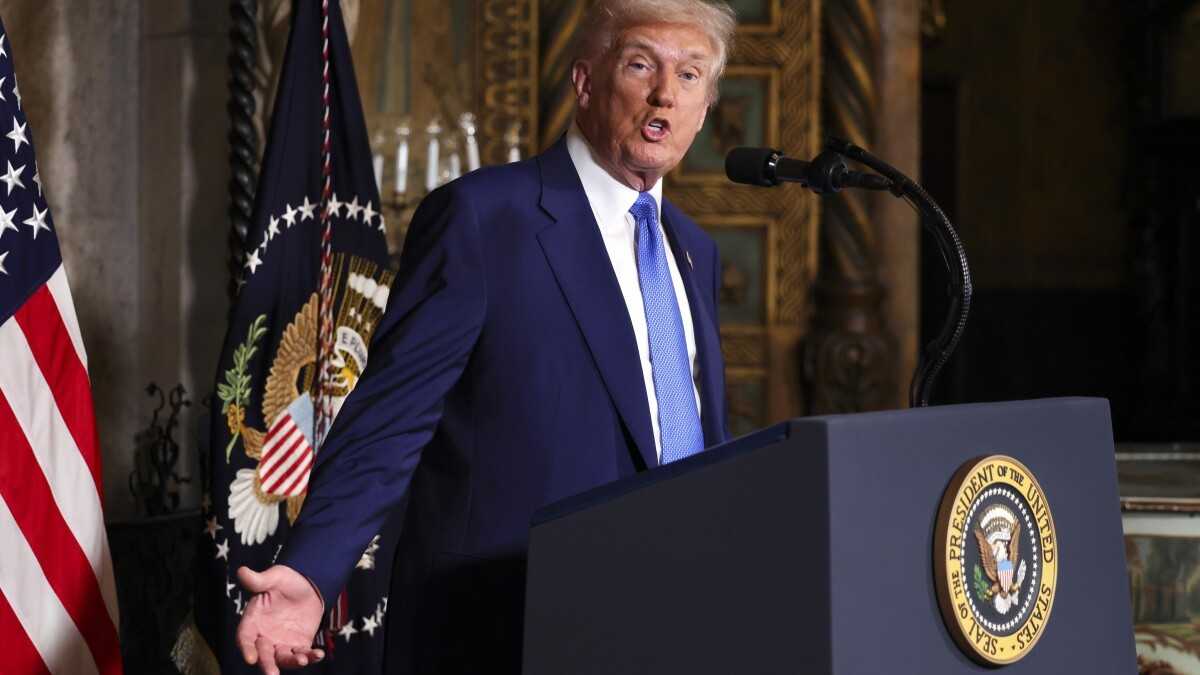
Trump Signals Possible NATO Exit, Calls Alliance ‘Paper Tiger’ Amid Iran War Dispute
US President Donald Trump has sparked global concern after indicating that the United States may consider withdrawing from the North Atlantic Treaty Organization (NATO), sharply criticizing the alliance for its lack of support in the ongoing conflict with Iran.
In recent remarks, Trump described NATO as a “paper tiger,” accusing member nations of failing to stand with the US during a critical geopolitical crisis. His comments come as tensions escalate over the Iran war, where several European allies have shown reluctance to participate in US-led military efforts. The remarks have sent shockwaves through diplomatic circles.
The growing rift appears to center on NATO countries’ refusal to join or fully support operations against Iran, particularly in securing key strategic areas such as the Strait of Hormuz. This vital maritime route is crucial for global oil supply, and disruptions there have already triggered economic concerns worldwide. Despite repeated appeals from Washington, many allies have declined to get directly involved, citing national interests and concerns about escalation.
Trump has expressed frustration over what he perceives as an imbalance in the alliance, arguing that the US has historically provided military protection to its partners without receiving equivalent support in return. He suggested that NATO has become ineffective in responding to urgent global threats and questioned its overall relevance in the current geopolitical climate. His tone reflects a deepening dissatisfaction.
The US president’s criticism marks one of the most serious challenges to NATO in recent years. His stance reflects long-standing skepticism toward the alliance, which he has previously labeled as outdated and overly dependent on American resources. However, the current dispute over Iran appears to have intensified these concerns to a new level, threatening the foundation of transatlantic security cooperation.
Adding to the tensions, US officials have also raised doubts about the alliance’s future. Secretary of State Marco Rubio recently hinted that Washington may reassess its NATO commitments, describing the relationship as potentially one-sided if allies continue to avoid supporting US military initiatives. This marks a significant shift in official rhetoric from the administration.
European leaders, on the other hand, have taken a cautious approach. Several countries have made it clear that they do not wish to be drawn into the conflict with Iran, emphasizing that it is not their war. Some nations have even restricted the use of their military bases or airspace for US operations, further straining relations within the alliance. This has created a palpable rift between Washington and its traditional allies.
The divide has also exposed broader disagreements over global security priorities. While the US has pushed for a more aggressive stance against Iran, many NATO members have prioritized diplomatic solutions and regional stability. This difference in approach has highlighted underlying fractures within the alliance, raising questions about its unity and purpose.
Meanwhile, the ongoing Iran conflict continues to impact global markets, particularly in the energy sector. Disruptions in oil supply chains and uncertainty surrounding the Strait of Hormuz have raised fears of prolonged economic instability, adding urgency to the situation. The strategic waterway remains a flashpoint in the conflict.
Despite his strong rhetoric, Trump has not made any final decision regarding NATO membership. However, his statements have intensified debates about the future of the alliance and the role of the United States in global security frameworks. The coming weeks will be critical in determining whether the rift can be bridged.
Also Read: Strict Move: Qatar Halts Visa on Arrival for Pakistanis, Citing Regional Concerns
Analysts warn that a potential US exit from NATO could have far-reaching consequences, weakening collective defense mechanisms and reshaping international alliances. For now, the situation remains fluid, with both the Iran conflict and transatlantic relations hanging in a delicate balance. The world watches closely as one of the most consequential alliances faces its greatest test in decades.


