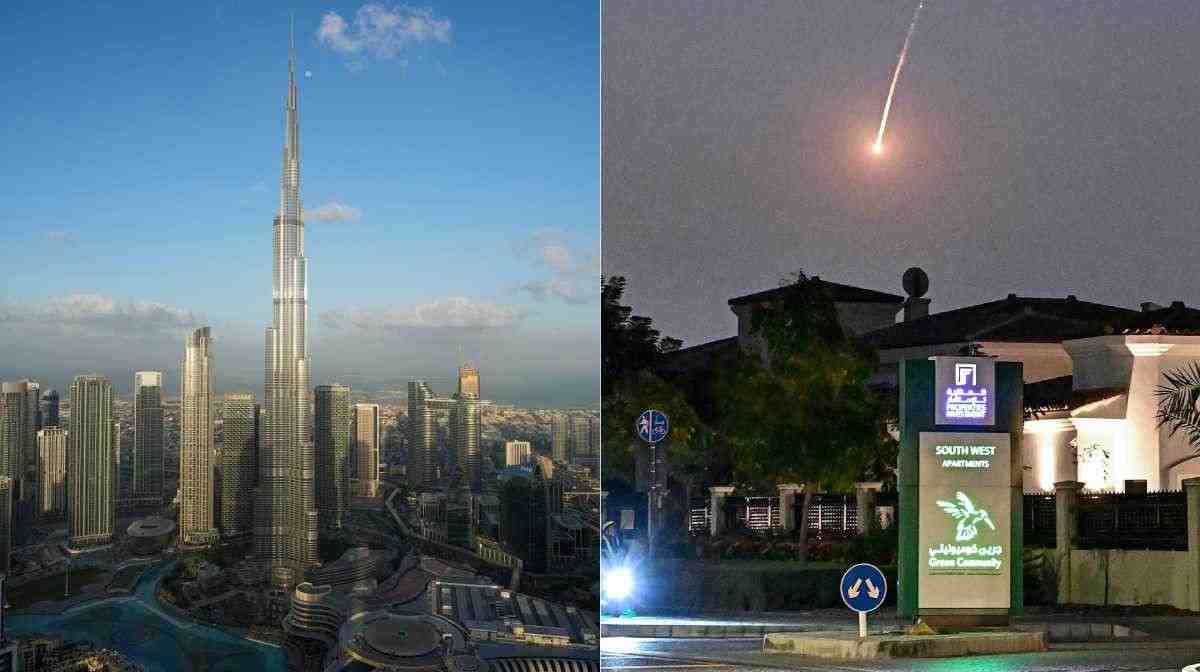
Gulf Conflict Disrupts Dubai, Abu Dhabi: Missile Attacks, Flight Cancellations, Burj Khalifa Evacuated
Dubai/Abu Dhabi — The escalating conflict involving Iran, the United States, and Israel has triggered widespread disruption across several Gulf countries, including the United Arab Emirates, Qatar, Kuwait, and Bahrain, bringing war to the doorstep of some of the world’s most stable and prosperous nations. Missile attacks, airspace closures, and flight cancellations have created a tense atmosphere in the region, affecting residents, travellers, and global aviation networks in unprecedented ways.
The situation intensified after the United States and Israel launched major military strikes on Iranian targets, prompting Tehran to retaliate with missile and drone attacks across parts of the Gulf, bringing the conflict directly to civilian populations. Explosions and aerial interceptions were reported in several cities, including Dubai and Abu Dhabi in the United Arab Emirates, as air defence systems responded to incoming threats.
UAE Under Attack: Interceptions and Casualties
Authorities in the UAE said their air defence forces intercepted multiple missiles launched from Iran, demonstrating the effectiveness of their systems. Despite successful interceptions, some incidents caused damage and injuries, proving that no defense is perfect. A fatality was also reported in Abu Dhabi during the attacks, underscoring the human cost of the widening conflict.
Dubai, a major global tourism and business hub, witnessed particularly tense scenes that shocked residents and visitors alike. Residents reported hearing loud explosions and seeing missiles streak across the sky as defence systems attempted to neutralise incoming projectiles, creating a surreal atmosphere in a city known for its safety.
Some areas of the city experienced panic as sirens sounded and security measures were tightened, with people seeking shelter. Reports also indicated that parts of the famous Palm Jumeirah area were targeted during the attacks, bringing the conflict to one of Dubai’s most iconic landmarks.
Burj Khalifa Evacuated
The situation also affected iconic landmarks in Dubai, demonstrating that no location is immune. The towering Burj Khalifa was reportedly evacuated as a precautionary measure amid concerns over potential strikes and falling debris from intercepted missiles, sending thousands into the streets.
The evacuation of the world’s tallest building served as a powerful symbol of how the conflict has reached the heart of the UAE’s global image.
Air Travel Chaos Across the Gulf
The conflict has had a major impact on air travel across the Middle East, creating chaos for passengers. Airlines suspended numerous flights as several countries restricted or closed their airspace due to security concerns, with authorities prioritising safety.
Airports in Dubai and Abu Dhabi faced major disruptions, with airlines cancelling or delaying services to ensure passenger safety, leaving thousands stranded. India was also affected by the airspace restrictions, with its carriers heavily impacted. Flights from major cities such as Delhi, Mumbai, and Bengaluru to the Gulf region were cancelled in large numbers, disrupting travel plans for thousands of passengers.
At least 180 flights from these Indian airports were cancelled as the conflict intensified, stranding travellers.
Major airlines operating in the region announced temporary suspensions as the situation deteriorated. Etihad Airways said its scheduled commercial flights to and from Abu Dhabi would remain suspended until March 6, leaving passengers scrambling for alternatives. Meanwhile, Emirates also suspended all flights to and from Dubai until March 7 due to the evolving security situation and airspace closures.
Indian carriers were also forced to adjust operations, with cascading effects. IndiGo cancelled more than 500 flights to West Asian destinations in just four days as regional airspace conditions became increasingly uncertain. Similarly, SpiceJet cancelled several flights between India and the UAE, adding to the chaos.
Evacuations and Diplomatic Efforts
As travel disruptions mounted, governments around the world began working to evacuate their citizens from the region, recognising the growing danger. Special flights were arranged to bring stranded travellers home while authorities monitored the evolving security situation.
The ongoing conflict has also raised concerns about the safety of expatriate communities in the Gulf, including millions of Indians living and working there. Indian Prime Minister Narendra Modi held discussions with regional leaders, including the Sultan of Oman and the Crown Prince of Kuwait, focusing on the safety and welfare of Indian citizens amid the crisis.
Iran Threatens Further Escalation
Meanwhile, Iran’s Revolutionary Guard issued strong warnings, saying it could target military and economic infrastructure across the region if the conflict continues to escalate. Such threats have heightened fears of a wider regional war that could further disrupt global energy supplies, trade routes, and aviation networks.
Also Read: PM Modi Strengthens Gulf Engagement, Prioritises Safety of Indians Amid West Asia Crisis
Conclusion
As the confrontation enters another day with no end in sight, governments across the Gulf remain on high alert, monitoring every development. Security forces continue to monitor the skies while airlines and authorities issue frequent updates to travellers.
With tensions still rising, the situation across Dubai, Abu Dhabi, Qatar, Kuwait, and Bahrain remains uncertain, and the region is bracing for further developments in the rapidly unfolding conflict.
Missiles over Dubai. Burj Khalifa evacuated. Flights cancelled. The Gulf conflict escalates with no end in sight.


