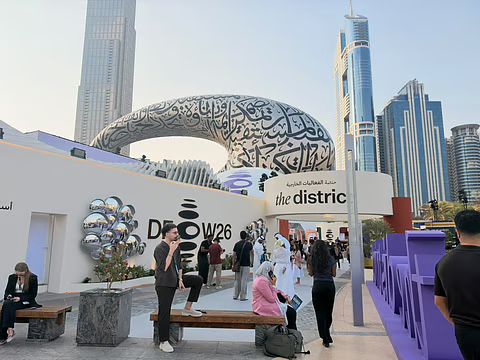
Dubai has spent years describing itself as a city that builds the future rather than waits for it. This week, it has given that claim a four-day stage.
Dubai Future Week, the first edition of a combined event bringing together several of the Dubai Future Foundation’s gatherings, opened on Wednesday and runs until 21 November at Emirates Towers and the Museum of the Future. It has drawn more than 10,000 participants, according to organisers.
A theme that asks about people, not just machines
The event is held under the title “For the Human of the Future” and is organised around five questions: how we will live, think, innovate, feel and do business.
Speaking at the opening, the Foundation’s chief executive, Belhoul, urged participants to look beyond the pace of technology. The future, he said, cannot be understood through individual technologies or sectors alone. AI will intersect with healthcare, science with identity, urban development with quality of life, and technological innovation with jobs and human relationships.
Mohammad bin Abdullah Al Gergawi, Minister of Cabinet Affairs and Managing Director of the Foundation, said the world needs a new era of global partnerships and dialogue about the future of humanity. The aim, he said, is to turn foresight into action.
Sheikh Hamdan backs a City AI Agent
The Crown Prince of Dubai, Sheikh Hamdan bin Mohammed bin Rashid Al Maktoum, attended the opening and also watched the AI Grandmaster challenge. He approved a City AI Agent initiative, which will bring new AI systems to support government operations. Details on how the system will work were limited in the early reports, and more is likely to emerge as the week goes on.
The week has already produced investment news. On Wednesday, Uber announced plans to put AED184 million into expanding autonomous mobility services in Dubai over the next two years, and Sheikh Hamdan was briefed on the plans. Mattar Al Tayer of the Roads and Transport Authority said it marks a move from pilots towards wider commercial deployment, supporting Dubai’s target of making a quarter of all trips autonomous by 2030.
What is on the programme
The event is built around several distinct “concepts” rather than a single conference hall:
- The Big Stage: talks and discussions with global leaders, scientists and innovators at the Museum of the Future auditorium and across Emirates Towers.
- The Prototype Floor: more than 100 prototypes from universities and innovators around the world, part of a “Prototypes for Humanity” exhibition.
- The Pitch: a platform that connects start-ups with investors, with the leading teams facing a “Shark Tank Dubai” panel on the final day.
- The Policy Room: sessions on AI, data governance and emerging technologies, including an AI Retreat for senior government leaders held on 18 November.
- The Challenge: AI Grandmaster 2026, with a grand prize of AED1 million, plus the Emirates Robotics Competition.
- 500 Future Minds: 500 professionals from five sectors exploring the emirate’s future.
- The District: public experiences in technology, art, sports and food.
Debates that matter beyond the venue
Some of the most useful conversations are happening in the policy sessions. At the AI Retreat, the head of the Dubai Health Authority discussed who is responsible when AI contributes to a wrong diagnosis, arguing that responsibility is likely to be shared between doctors, hospitals and developers. That is the type of practical question regulators everywhere are now grappling with.
For the UAE, such questions are not abstract. The country has made AI a pillar of its national strategy, and its government departments, hospitals, police forces and transport agencies are all experimenting with the technology. The test, increasingly, is not whether the tools work but whether they are trusted.
Why this edition feels different
Earlier events from the Foundation, including Dubai Future Forum and Dubai AI Week, were more specialised. By bringing them together, organisers say they want to create a single platform linking foresight, technology, policy and everyday experience. The public-facing elements also make it less of an insiders’ conference than previous gatherings.
For readers who want to attend, the programme continues through Saturday, with the final day centred on the start-up pitches.
Whether the week produces lasting results will depend on what happens after the stage lights go down. Announcements such as the Uber investment and the City AI Agent initiative suggest that some ideas are already moving from conversation to implementation, but their real impact will be measured over months and years rather than days.


Comments 1