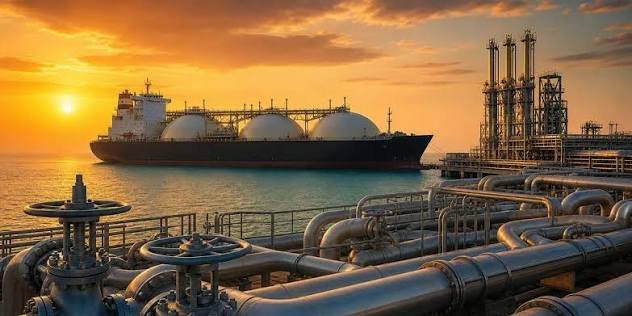
ABU DHABI — As the ADIPEC energy conference winds down, one of its more significant commercial announcements concerns gas. ADNOC Gas and TotalEnergies have agreed a five-year supply deal for liquefied natural gas, a sign of how Abu Dhabi wants to compete in a market that has become more important since the disruption to shipping in the Gulf.
The deal
ADNOC Gas PLC and its subsidiaries have reached a five-year agreement to supply TotalEnergies with up to 1.6 million tonnes of LNG. Supplies are due to begin in 2026. The contract is a modest one by the standards of the global LNG trade, where annual volumes run into the hundreds of millions of tonnes, but it illustrates the model ADNOC is trying to build.
Financial terms were not disclosed in the coverage reviewed for this report. Neither were the delivery points, the pricing formula or whether the volumes are tied to a specific source of supply.
A new trading platform
The agreement was announced as ADNOC advances a new integrated LNG marketing and trading platform. According to industry reports, the platform combines the marketing activities of ADNOC Gas and of XRG, ADNOC’s wholly owned international investment company, with those of ADNOC Trading.
The scale of ambition is notable. ADNOC intends to transact 47 million tonnes a year of LNG through the platform beyond 2030. That is a target, not a current volume, and it depends on the company bringing new gas supply and export capacity on stream.
The logic of the structure is straightforward. Rather than selling LNG through separate arms, ADNOC would have a single commercial desk able to buy, sell and trade cargoes from its own projects and from partners around the world. Large international oil and gas companies, including TotalEnergies, have taken the same approach, because a diversified portfolio lets a trader redirect cargoes to wherever prices are highest.
New gas supply
Supply is the other side of the equation. Earlier this week, ADNOC took a final investment decision on its Ruwais Diyab unconventional gas development. Unconventional gas, which comes from tight rock formations that need more advanced drilling, is a growing part of the UAE’s plan to reduce its need to import gas and to free up more for export.
The decision, taken while ADNOC was hosting ADIPEC, signals that the company is willing to commit capital to the project despite a volatile market. The coverage reviewed for this report did not give the development’s cost or expected output.
TotalEnergies’ side
TotalEnergies has its own supply plans. During the same week, the company acquired an operated interest in the Lang Lebah-B14 gas resource offshore Malaysia. The move is part of an effort to create a large-scale gas hub in the country, which would supply the Malaysia LNG plant, a facility with 30 million tonnes a year of capacity.
For TotalEnergies, a contract with ADNOC adds another source of supply to a portfolio that spans several regions. For ADNOC, a customer such as TotalEnergies provides a reliable buyer and a route into Europe and Asia.
Why the timing matters
LNG has become one of the most strategically important energy commodities. Buyers in Asia and Europe have spent recent years looking for dependable supply, and the regional conflict has put a spotlight on routes that avoid choke points. Shipping from the Gulf faces risks when the Strait of Hormuz is disrupted. ADNOC has said it plans to move more oil outside the strait, and new gas projects follow a similar logic of diversification.
At ADIPEC, which has hosted more than 2,000 exhibitors and tens of thousands of delegates, energy security has been the dominant theme. Deals such as this one give a concrete example of what the phrase means in practice: long-term contracts, flexible trading and new supply.
What remains to be seen
Several questions will determine whether the 47 million tonne target is credible. How much supply will ADNOC secure from its own projects, and how much from partners? How will the platform manage the price risks of trading? And how quickly will new capacity come online?
Analysts will also watch whether other buyers follow TotalEnergies with similar agreements. A string of contracts would show that the platform has commercial traction. A single deal, on its own, is a start.
For now, the agreement confirms that Abu Dhabi intends to be a larger player in the LNG market, as a supplier, a trader and a partner for the world’s biggest energy companies.


