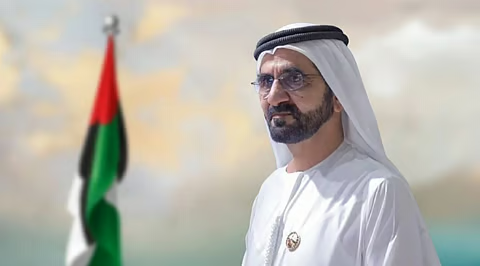
The UAE has published the latest scores for how well its federal government serves the public, and a traffic office in Fujairah has come out on top. On Wednesday, Sheikh Mohammed bin Rashid Al Maktoum, Vice President, Prime Minister and Ruler of Dubai, approved the results of the sixth edition of the Government’s Global Star Rating System for Services. It covers 179 service channels across 27 federal entities.
The top performers
The Traffic and Licensing Service Centre in Fujairah, which belongs to the Ministry of Interior, earned seven stars, the highest classification in this assessment. Sheikh Mohammed congratulated Lieutenant General Sheikh Saif bin Zayed Al Nahyan, Deputy Prime Minister and Interior Minister, and his team on the result.
Two other channels earned six stars: the General Directorate of Identity and Foreigners Affairs in Fujairah and the Customer Happiness Centre in Ras Al Khaimah. Both are affiliated with the Federal Authority for Identity, Citizenship, Customs and Port Security. A call centre run by the Ministry of Human Resources and Emiratisation received five stars.
The spread of winners matters. The top results came from centres in Fujairah and Ras Al Khaimah, not only from the larger emirates, which suggests service quality is being lifted across the federation.
What the rating system measures
The Global Star Rating System is designed to assess and improve public services, with customer experience as the central yardstick. Channels are rated in a way that lets the government compare them and track progress from one edition to the next, rather than relying on self-reported performance.
The latest round shows movement in the right direction. Call centre performance improved by 13 per cent, service centre performance by 5 per cent and digital service channels by 4 per cent. The larger gain in call centres will be noticeable to residents who still prefer the phone for questions about visas, licences or labour matters.
The vision behind it
In a post on X, Sheikh Mohammed said the UAE set out its vision for government services years ago. He described the aim as services that match the best hotels for reception and hospitality, the best banks for accuracy and reliability, and the best airlines for speed and round-the-clock availability. He added that the government should anticipate people’s needs and exceed their expectations.
That ambition has been a consistent theme in the UAE’s administrative approach. Other recent Gulf News coverage has pointed to Dubai’s overhaul of 1,474 government services under its “360 Services Policy”, and to a UAE ranking at the top of a global survey on satisfaction with digital government. Gulf News has also reported that a major government services transformation is planned for this month.
What it means for residents
Ratings can seem remote, but they affect everyday life in practical ways:
- Faster transactions: Centres that score well tend to shorten queues and cut the number of visits needed to complete a task.
- Better phone support: The 13 per cent improvement in call centres suggests shorter waits and clearer answers.
- Accountability: Public ratings give residents a reference point if a service falls short, and give agencies a reason to improve.
- Digital progress: The smaller 4 per cent gain in online channels shows there is still room to improve apps and portals.
Remaining questions
The announcement leaves some questions open. The published summary does not list the full ranking of all 179 channels, nor explain how the star bands are set. Residents who want detail on a specific service will need to check with the relevant entity. The government has also not said whether the lowest-rated channels face specific improvement targets.
Still, the headline message is clear. The UAE continues to treat service delivery as a measurable goal, and the latest results show both progress and a visible standard that other centres are being asked to reach.


Comments 1