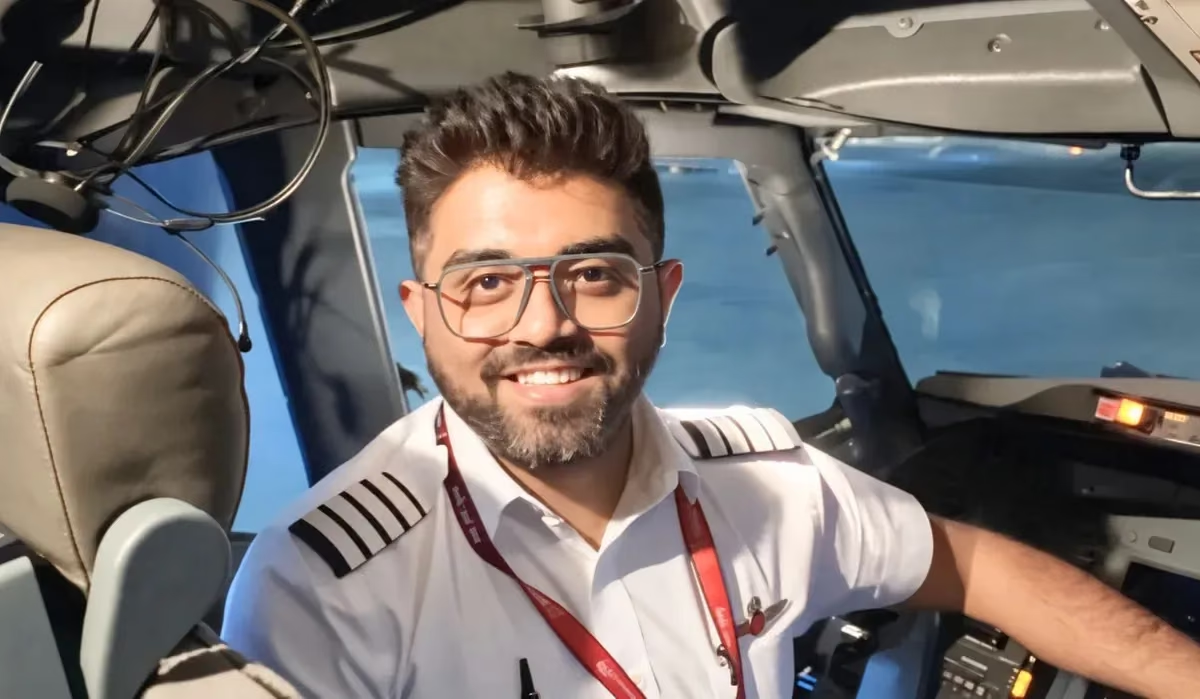
The flydubai captain who stopped a co-pilot’s attempt to take down a passenger jet has described the moments he fought to stay conscious, reached the cockpit door and called for help.
Capt Smit Machchhar, speaking from hospital in Abu Dhabi to The National, said he was struck on the back of the head while flying flight FZ1073 from Dubai to Tel Aviv on September 30. He said his vision narrowed as the blows continued, and that he did not at first understand what had hit him.
What happened on board
The Boeing 737 was in Saudi airspace at about 34,000 feet when the attack began, according to the captain’s account. The co-pilot allegedly used a crash axe, a tool kept in cockpits for emergencies, and then sent the aircraft into a steep dive. More than 170 people were on board.
Capt Machchhar said he tried to block the blows, then managed to release the locked cockpit door from inside and shouted for help. Passengers and off-duty crew entered the cockpit and restrained the co-pilot. A hijacking distress signal was transmitted. Other flydubai pilots who were travelling as passengers helped stabilise the aircraft, and the plane made an emergency landing at Tabuk in north-western Saudi Arabia.
The captain has been widely described as a hero for opening the door. He said he had no suspicion of the co-pilot beforehand and that the man had shown no sign of unusual behaviour. He told The National the attack made no sense to him.
The official response
The UAE’s prosecutor general, Hamad Saif Al Shamsi, said in early October that the co-pilot attempted to carry out a terrorist act and tried to take control of the flight controls. He said an investigation was under way to establish the circumstances and motives, along with any connections, and that technical examinations and the review of physical and digital evidence were continuing.
Saudi authorities arrested the co-pilot after the landing and handed him over to the UAE, which is leading the investigation. Prosecutors have said they believe he was radicalised through online extremist content and at a religious study centre in Australia, according to The National’s reporting. The accused has not been convicted, and the investigation has not concluded.
Questions over cockpit security
The case has revived debate on cockpit procedures. The captain said he expects the airline industry to carry out a security review, and he acknowledged scrutiny over the presence of an axe in the cockpit. Such tools are standard emergency equipment on many aircraft, intended for use in situations such as fires or the need to cut through panels.
Aviation security specialists have long weighed the safety value of emergency tools against the risk of misuse. After incidents involving pilots, some regulators have introduced rules such as requiring two crew members in the cockpit when one leaves. Whether any new measures follow this case will depend on the investigation’s findings and regulators’ assessments.
Recovery and return to flying
Capt Machchhar, who lives in the UAE with his wife and children, faces a long recovery. He has said he still loves flying and wants to return to the cockpit.
Flydubai has not been accused of wrongdoing in the reports reviewed, and the investigation’s technical findings, including the condition of the aircraft after the dive, have not been fully published. Further details are expected once the UAE’s authorities complete their work.
For passengers, the episode is a reminder of the role that ordinary travellers and off-duty crew can play when something goes wrong. For the aviation industry, it will keep attention on how airlines screen, monitor and support flight crew, and on how cockpit doors and emergency equipment are managed.


Comments 1