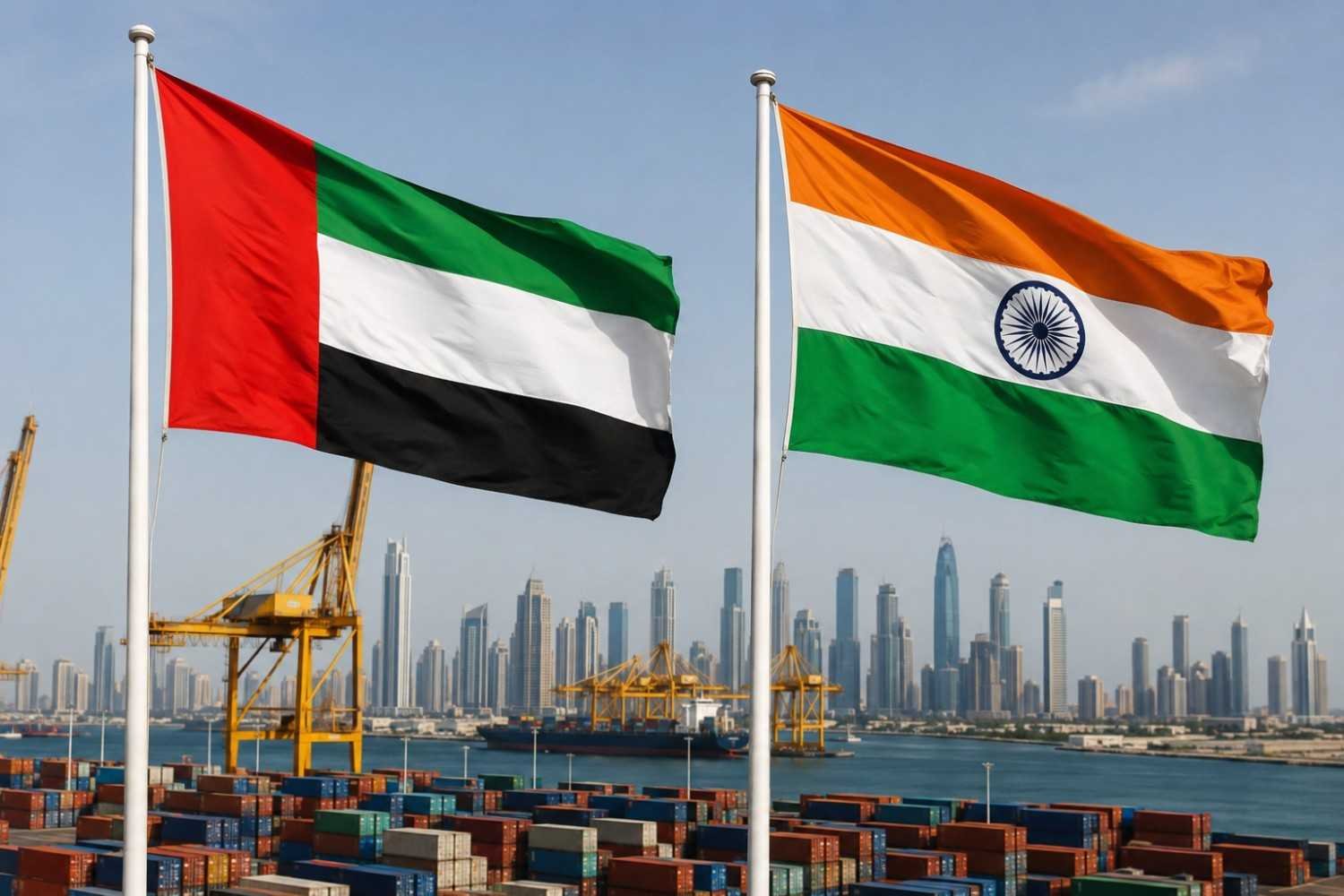
A Partnership Built on More Than Oil
Four years after the UAE and India signed their landmark trade pact, the results are becoming difficult to ignore. Bilateral trade between the two nations has surged past the $100 billion mark, a milestone reached years ahead of the original schedule set when the Comprehensive Economic Partnership Agreement, or CEPA, came into force in 2022.
The growth has been striking. Trade between the two countries stood at around $60 billion when the agreement was signed; it has since climbed by roughly two-thirds to exceed $100 billion by the close of the most recent financial year. Officials from both governments now say they are targeting a far more ambitious figure: $200 billion in annual bilateral trade by 2032.
From Energy Ties to a Diversified Economy
For decades, the economic relationship between the UAE and India leaned heavily on energy exports. That picture has changed substantially. Today, the trade relationship spans petroleum products, gems and jewellery, food and agricultural goods, textiles, chemicals, electronic goods and engineering equipment — a diversification that officials on both sides point to as evidence of a maturing, resilient partnership rather than one dependent on a single commodity cycle.
Non-oil trade in particular has expanded rapidly, growing by close to 20 per cent in recent measured periods and now representing a substantial share of overall bilateral commerce. That shift has been driven in part by simplified customs procedures, reduced tariffs and clearer regulatory pathways introduced under CEPA — changes that officials say have made it significantly easier for businesses on both sides to trade and invest across borders.
Investment Flows in Both Directions
The relationship is no longer just about the movement of goods. Investment has grown substantially in sectors including energy, infrastructure, private equity, financial services and real estate. Leading Emirati conglomerates have signalled ambitious plans to deepen their footprint in India, with one major UAE-based investment holding company targeting more than $100 billion in Indian investments over a five-year horizon.
From the Indian side, cumulative direct investment into India from the UAE has reportedly reached close to $26 billion since the turn of the millennium, positioning the Emirates among India’s top overseas investors. The UAE currently ranks as India’s third-largest trading partner overall and its second-largest export destination, while India holds the position of the UAE’s second-largest trading partner after China.
A Relationship Rooted in People, Not Just Policy
Officials from both sides have been quick to point out that the economic partnership is underpinned by something less easily quantified: a deep and long-standing people-to-people connection. India’s large expatriate community in the UAE — one of the biggest in the country — has long served as a human bridge between the two economies, contributing to trade, remittances and cross-border business networks that predate the formal trade agreement by decades.
Government representatives from both countries have used recent public forums to emphasise that the partnership extends well beyond a simple trade balance sheet. Discussions between commerce officials have touched on cooperation in pharmaceuticals, streamlined certificates of origin, coordination on financial regulation, and progress toward a memorandum of understanding on food safety standards — all technical steps aimed at removing friction from cross-border commerce.
Looking Toward New Frontiers
Beyond the traditional pillars of trade, both governments have signalled interest in expanding cooperation into critical minerals, rare earths and energy security — areas seen as increasingly vital to global supply chain resilience. Connectivity is also emerging as a strategic priority, with officials highlighting efforts to strengthen maritime links between India’s western ports and UAE facilities such as Khor Fakkan and the Port of Fujairah.
The UAE has also positioned itself as a key partner in the proposed India-Middle East-Europe Economic Corridor, a multimodal connectivity initiative intended to link South Asian, Gulf and European markets more efficiently. Business leaders on both sides have additionally pointed to opportunities for UAE-India collaboration in third markets, particularly across Africa, in sectors ranging from infrastructure and healthcare to digital ecosystems and sustainability.
A Model Others Are Watching
As the UAE continues to position itself as a global hub for trade, finance and logistics, the trajectory of its economic relationship with India is increasingly cited as a template for how Gulf nations can build durable, diversified partnerships with fast-growing Asian economies. With both governments publicly committed to doubling trade within the next several years, businesses on both sides are likely to see continued momentum — provided the broader economic and geopolitical backdrop remains stable enough to sustain it.
For UAE-based exporters, investors and logistics firms, the message from officials is clear: the $100 billion milestone is being treated not as a finish line, but as a waypoint on a much longer journey. Next Article


Comments 1